
A finished master and a raw mix can come from the same session, the same monitors, the same room, and still sound like they belong to different worlds. More often than not, the thing that made the difference was equalization.
Mastering EQ isn’t about fixing problems the way mixing EQ is. It’s about sculpting tone across an entire stereo file, nudging the overall frequency balance until the track sits exactly where it needs to. The moves involved are typically tiny. A shelf boosted by 0.7dB. A gentle dip at 3kHz to take the edge off a vocal-heavy mix. Work that small demands tools built for precision.
What makes a mastering EQ different from the one you’d slap on a kick drum? Character, mostly. The way filter curves behave at low gain settings. How neighbouring bands interact. Whether the harmonics the circuit adds feel like warmth or like distortion. These subtleties matter far less on an individual track, but across a full mix they define the entire listening experience.
The good news is that you no longer need a six-figure studio budget to access world-class mastering equalization. Several plugins on this list are painstaking models of boutique analogue hardware. Others take a purely digital approach with features no physical unit could deliver. And three of them are completely free.
These are the best mastering EQ plugins worth knowing about, whether you’re just starting out or you’ve been cutting masters for years.
1. Pulsar MP-EQ
- Compatibility: Windows/macOS
- Format: VST3, AU, AAX
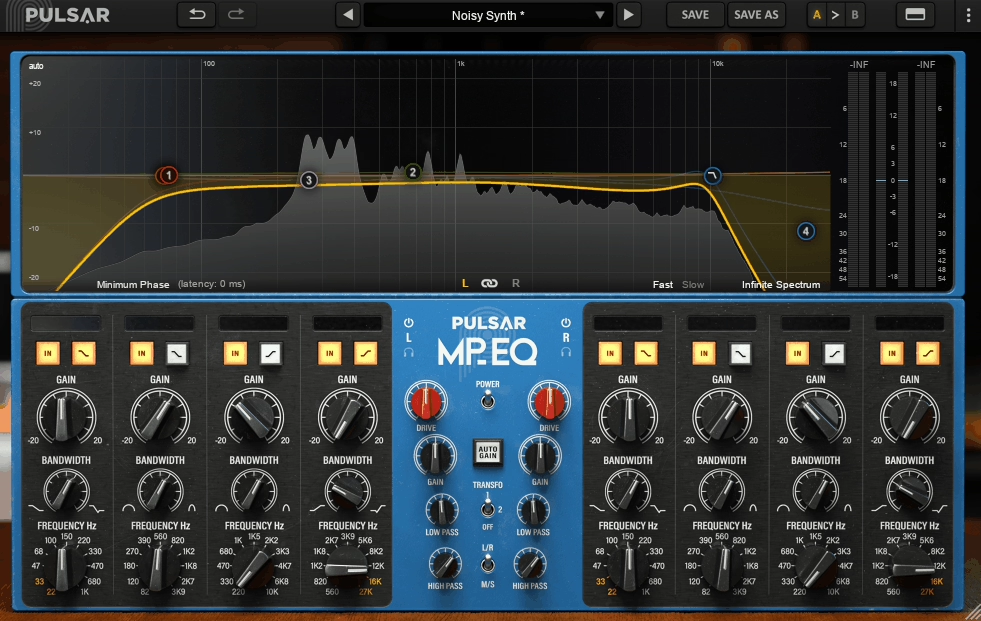
Passive tube EQs have been experiencing a quiet renaissance in mastering circles, and the MP-EQ from Pulsar is one of the strongest arguments for why. Modelled on a revered unit found in high-end mastering facilities worldwide, it recreates a parallel circuit topology where boosting adjacent bands doesn’t stack gain the way a series design would. The bands recombine at the output, producing interactions that sound organic even when you’re pushing things harder than you normally would on a master bus. Pulsar’s own contributions go well beyond a straight hardware copy: a linear phase correction mode eliminates the phase smearing inherent to analogue-style filters, a real-time spectrum analyser with curve overlay gives visual confirmation of your moves, and the Drive knob lets you push the modelled tubes and transformers from clean all the way through to a thick, warm saturation. Mid/side processing with solo buttons, auto-gain compensation, and a centre-zeroed control layout round out a feature set that feels thoroughly contemporary.
If you’ve been working with Pultec-style plugins but wished they could also run in linear phase with proper M/S control, this is where to look.
2. TOMO Audiolabs LISA
- Compatibility: Windows/macOS
- Format: VST, VST3, AU, AAX
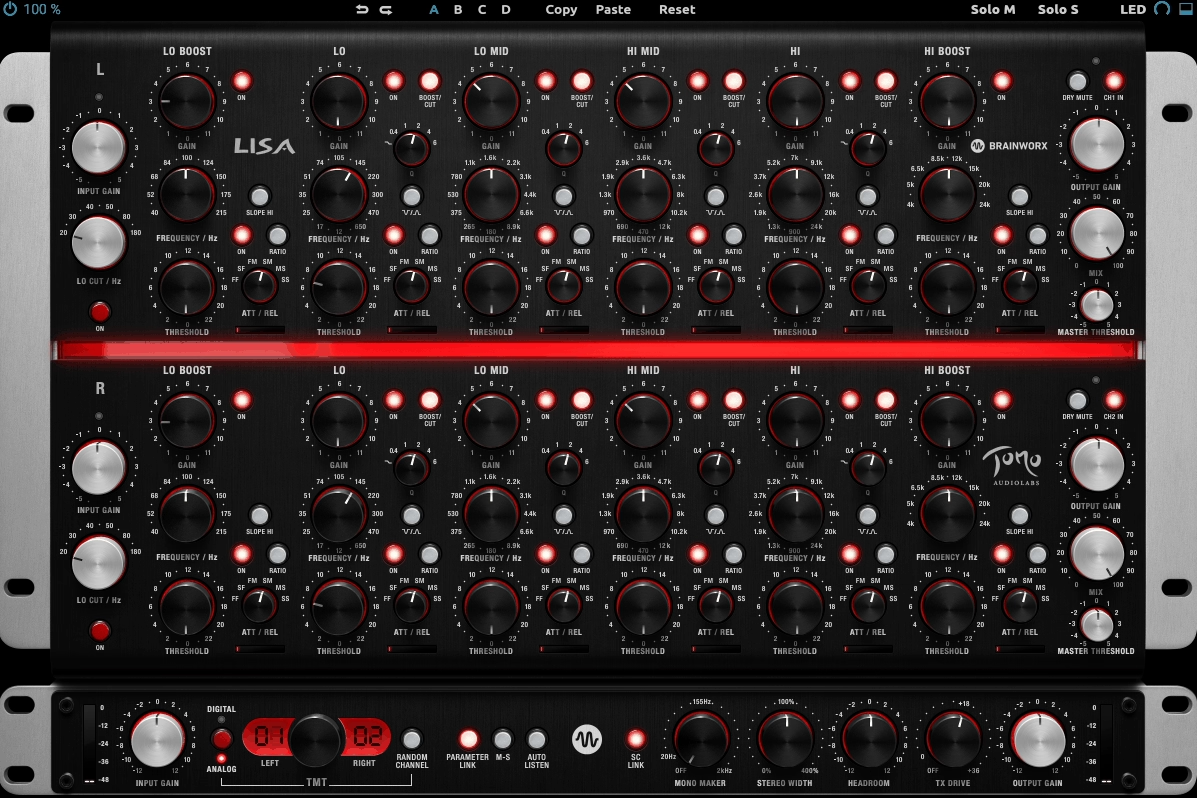
Roughly $15,000 gets you the original hardware unit from boutique German manufacturer TOMO Audiolabs. Handbuilt, highly specialised, and found almost exclusively in top-tier mastering studios, the LISA is one of those pieces of equipment that most engineers only ever read about. Brainworx’s plugin version, developed with TOMO’s direct involvement, brings every aspect of that signal path into your DAW for a fraction of the cost.
At its core, LISA is a six-band-per-channel dynamic EQ where each band runs through its own completely isolated parallel circuit with a dedicated opto compressor and expander. Because the bands never share a signal path, pushing one frequency range has absolutely no effect on how the others behave. That isolation is responsible for the hardware’s famously spacious, three-dimensional sound.
Dynamics default to a smooth 3:1 soft knee, but a 10:1 ratio is available for heavier control. Time constants are set via a six-position selector rather than continuous knobs. Proportional bandwidth keeps the Q musical by automatically adjusting relative to gain. It’s a design philosophy built around speed and sonic quality rather than surgical precision.
Brainworx layered on TMT modelling, Mono Maker, Stereo Width, and a TX Drive control for adding transformer colour independently from the EQ. The learning curve is real, but the payoff is a sound that genuinely stands apart from anything else in this price range.
3. Knif Audio Soma
- Compatibility: Windows/macOS
- Format: VST, VST3, AU, AAX
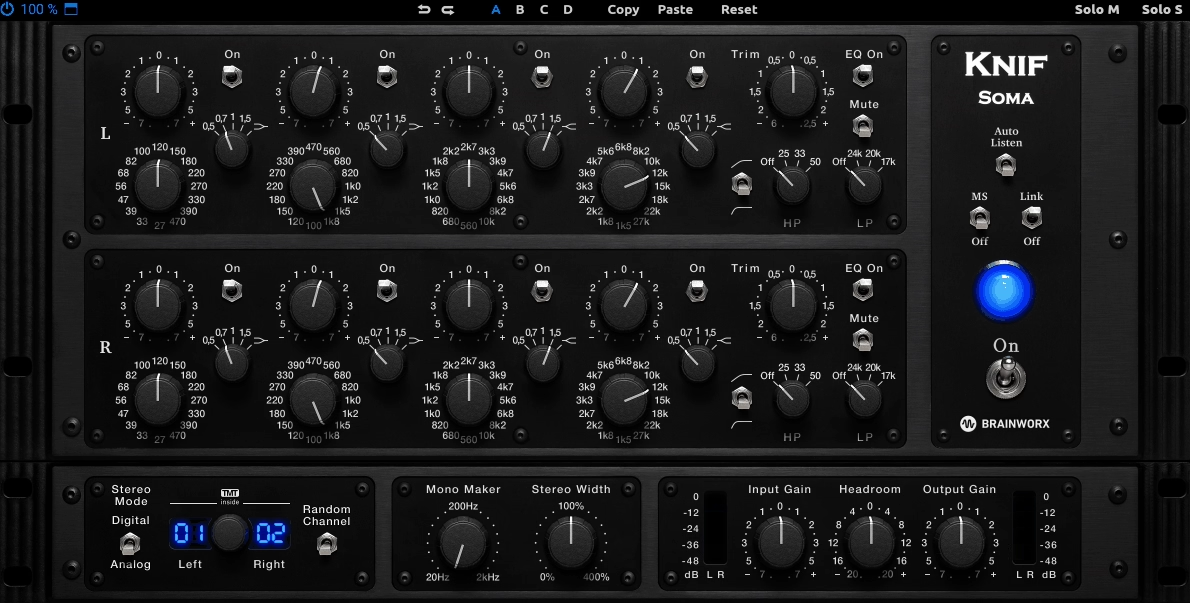
Anyone who has spent time with traditional passive tube EQs will recognise a particular frustration: adjust the bandwidth on a band, and the gain shifts underneath you. It’s an unavoidable side effect of how these circuits work, and it makes careful mastering adjustments harder than they need to be. The Soma from Knif Audio was built to solve exactly that problem. Its proprietary Real Q Adjustment decouples bandwidth from gain completely, a first for any passive tube equalizer. Narrow a band as much as you like; the boost stays exactly where you set it.
The hardware behind this plugin is handmade in Finland by Jonte Knif, featuring over 150 gold-plated subminiature relays, hand-wound inductors in mu-metal housings, and teflon wiring throughout. Brainworx describes the emulation as their most technically demanding modelling project to date. Four parametric bands with elliptic high-pass and low-pass filters, independent headroom, input and output drive controls for variable saturation, and a characterful tube stage give you plenty to work with.
The Brainworx feature set includes M/S processing, Mono Maker, Stereo Width, TMT component modelling, and an Auto Listen function that isolates each band’s contribution in real time.
Soma lands in a tonal sweet spot that makes it unusually versatile. Warmer and more coloured than a clean digitla parametric, but noticeably more transparent than a Pultec or Massive Passive emulation. For mastering engineers who work across a broad range of genres, that flexibility matters enormously.
4. Brainworx AMEK Mastering EQ 200
- Compatibility: Windows/macOS
- Format: VST2, VST3, AU, AAX
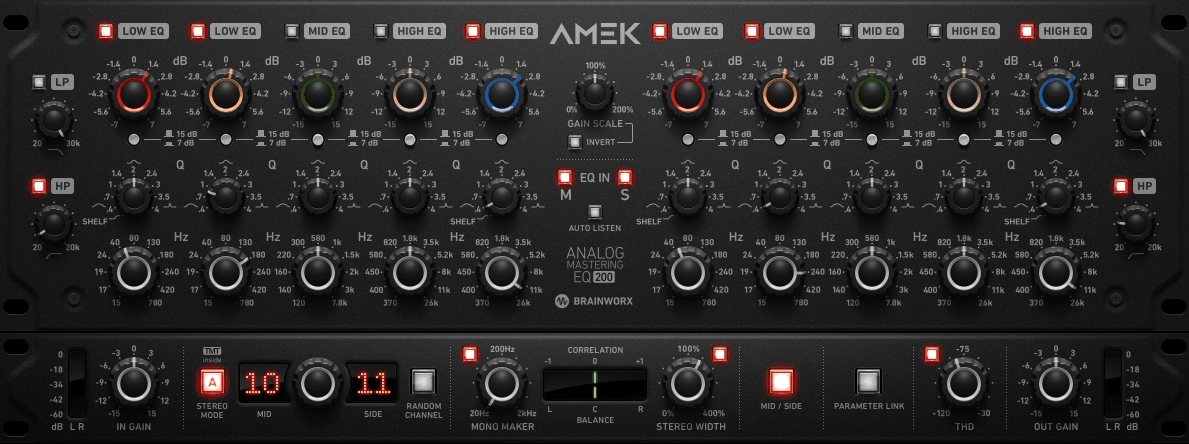
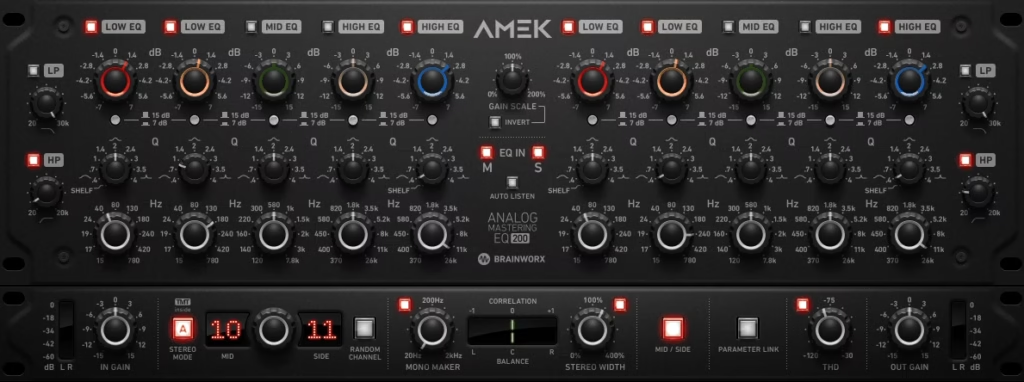
No spectrum analyser. No curve display. No visual feedback at all. The AMEK EQ 200 presents you with knobs, LEDs and nothing else, and that’s entirely by design. Brainworx founder Dirk Ulrich built this as a tribute to the two EQs he considers the finest ever made for mastering: the GML 8200 and vintage Sontec units that defined the clean, transparent mastering aesthetic of a generation.
Rather than cloning either piece of hardware, the plugin combines their strongest qualities into a hybrid. Five fully parametric overlapping bands cover the full frequency range, with the outermost bands switchable to shelving mode. Gain range extends to 15dB, and bandwidth adjusts from 0.4 to 4. A gain scaling switch drops everything to +/-7dB for the kind of delicate work mastering demands. Auto Listen isolates each band so you can hear exactly what you’re adjusting without guessing.
Through the Brainworx Extra Unit panel you get M/S processing, Mono Maker, Stereo Width, and variable THD for introducing harmonic colour when the material calls for it.
Available through Plugin Alliance as part of the MEGA subscription bundles, or as a standalone perpetual licence. Either way, it’s a plugin that quietly builds your confidence in making decisions by ear.
5. FabFilter Pro-Q 4
- Compatibility: Windows/macOS
- Format: VST, VST3, AU, AAX, CLAP
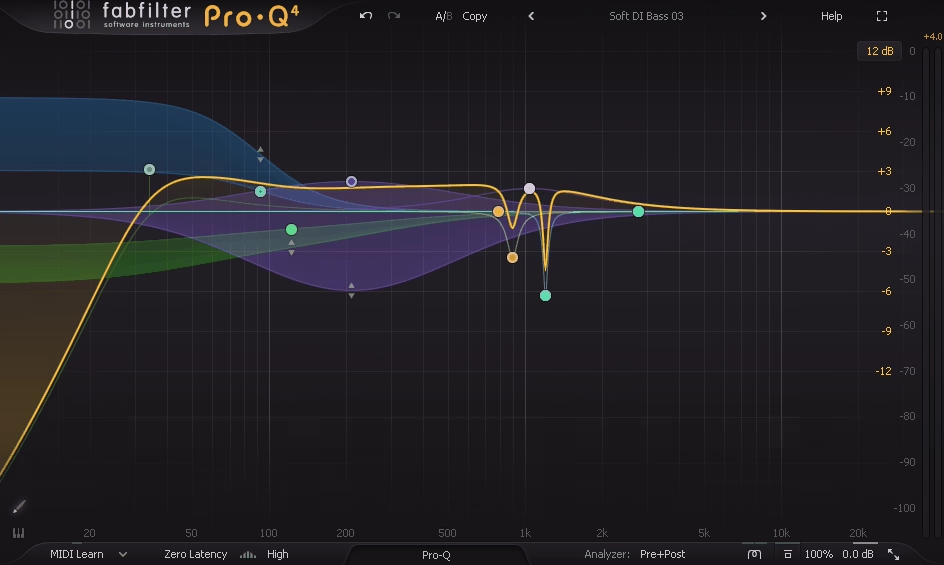
The jump from Pro-Q 3 to Pro-Q 4 added capabilities that matter specifically for mastering work. Spectral Dynamics is the headline feature: rather than compressing or expanding everything within a frequency band equally, it identifies and processes only the individual frequencies that cross the threshold. On a dense stereo mix, that distinction is enormous. A harsh resonance that shifts around in the upper mids can be controlled without dulling everything around it. Character modes called Subtle and Warm introduce analogue-style harmonic content. EQ Sketch lets you draw broad tonal curves quickly, and a new Instance List shows every Pro-Q 4 in your session within a single resizable window.
The trade-off is deliberate. Pro-Q 4 doesn’t impart vintage colour or harmonic warmth the way a modelled tube EQ does. Its strength is transparency, precision, and speed. Pair it with something like the MP-EQ or Soma for tonal character, and let Pro-Q handle the corrective and surgical side. That combination covers a remarkable amount of ground.
Dynamic processing uses program-dependent timing by default, and the whole thing still runs with the lightweight efficiency FabFilter are known for.
6. Lindell Audio EQ825
- Compatibility: Windows/macOS
- Format: VST2, VST3, AU, AAX
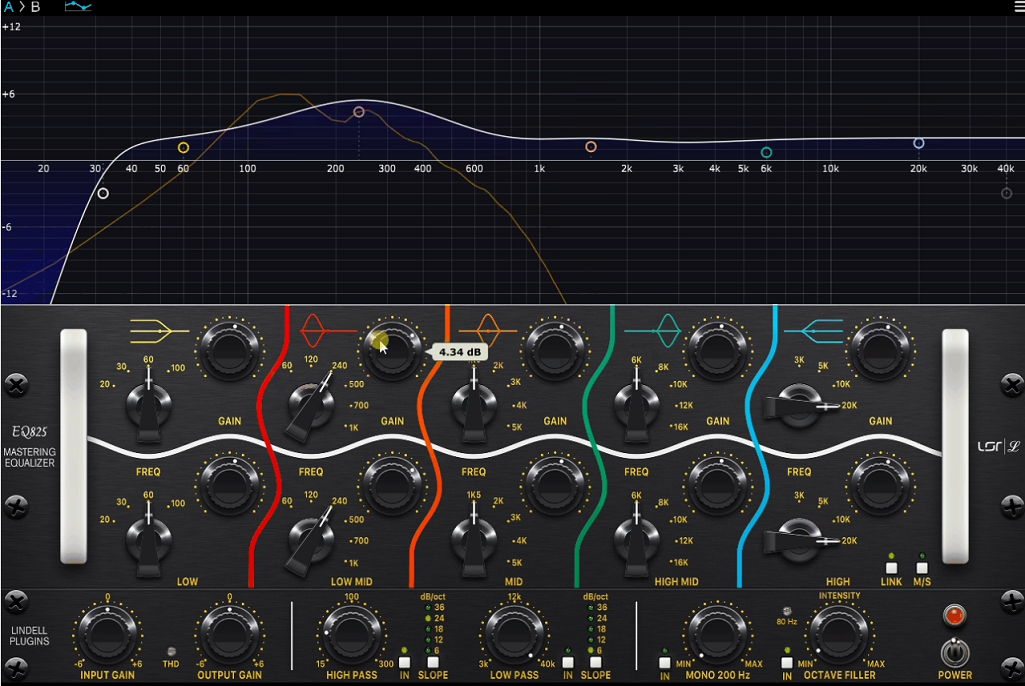
The hardware EQ825 is based on barely exists. A boutique tube mastering EQ from the 2010s, handbuilt with components sourced from specialist manufacturers across multiple countries, it changes hands for roughly $20,000 on the rare occasions one appears for sale. Lindell Audio’s plugin is the first and only emulation, capturing all five bands of its transformer-balanced Class-A tube signal path along with the proportional Q response that widens curves at low gain and tightens them as you push harder. The continuous-gain version modelled here provides finer control than the stepped hardware variants, where certain gain positions sounded so consistently musical that engineers dubbed them the “cheat control.” A variable THD knob introduces tube harmonics on their own terms, separate from any EQ adjustment. M/S processing, Mono Maker, up to 16x oversampling, an FFT analyser, and switchable Classic/Modern voicings complete the package.
One feature you won’t find on any other mastering EQ plugin: the Octave Filler. It generates a synthesised sub-octave below your existing bass content, adding physical low-end weight to kicks, 808s and bass-heavy material in a way that no amount of EQ boosting can achieve.
7. Relab Maselec MEA-2
- Compatibility: Windows/macOS
- Format: VST, VST3, AU, AAX
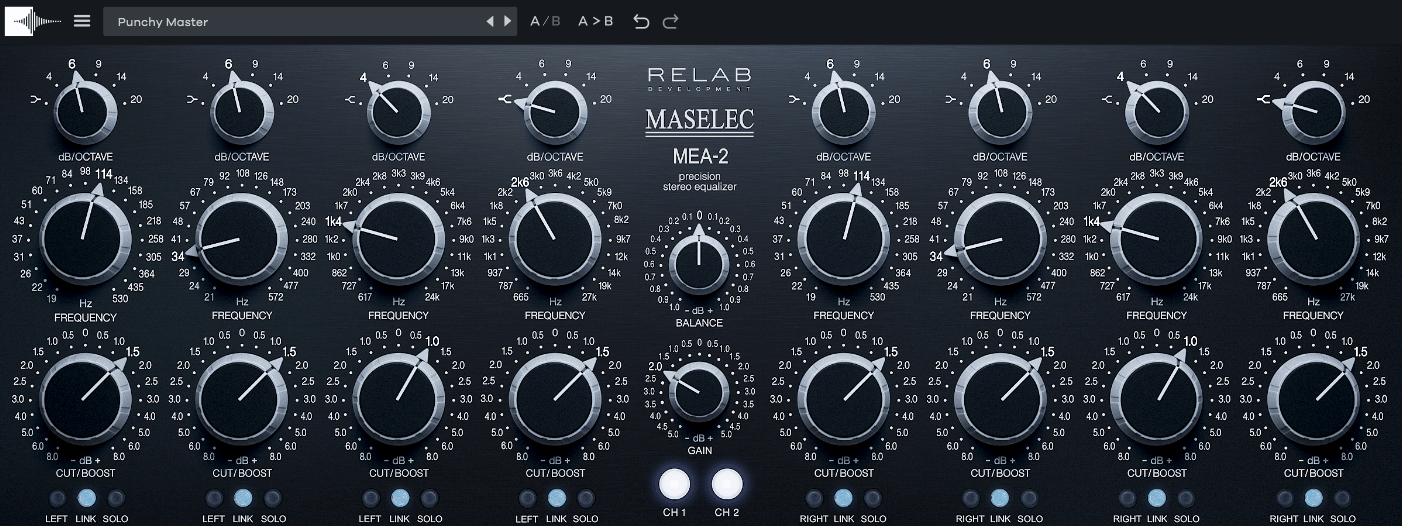
Spend enough time visiting professional mastering rooms in the UK and you’ll start recognising the same hardware in almost every rack. The Maselec MEA-2 is one of those units. Designed by Leif Mases, who previously built bespoke EQ circuitry for SSL mixing desks, the hardware earned its reputation through a particular quality: everything you do with it tends to sound right.
Relab’s MEA-2 plugin was developed in direct collaboration with Mases himself. Robotic measurement rigs captured more than 2.9 million data points from a purpose-built reference unit, producing an emulation that reportedly tracks the hardware to within 0.018dB across the entire audible spectrum.
The controls are straightforward: four bands, each with frequency, gain and bandwidth adjustment. What makes them special is the hand-tuned asymmetrical Q curves that Mases developed by ear across many years. Boost and cut produce deliberately different filter shapes at identical settings, and the broad shelving covers a wider frequency span than most competing EQs, avoiding the harsh tonal edges that can creep in with tighter designs. Relab extended the hardware’s capabilities with per-band M/S processing and a Solo Isolation feature for auditioning individual band contributions.
An EQ that consistently steers you toward good-sounding decisions. That’s a rarer quality than it might seem.
8. SPL PQ
- Compatibility: Windows/macOS
- Format: VST, VST3, AU, AAX
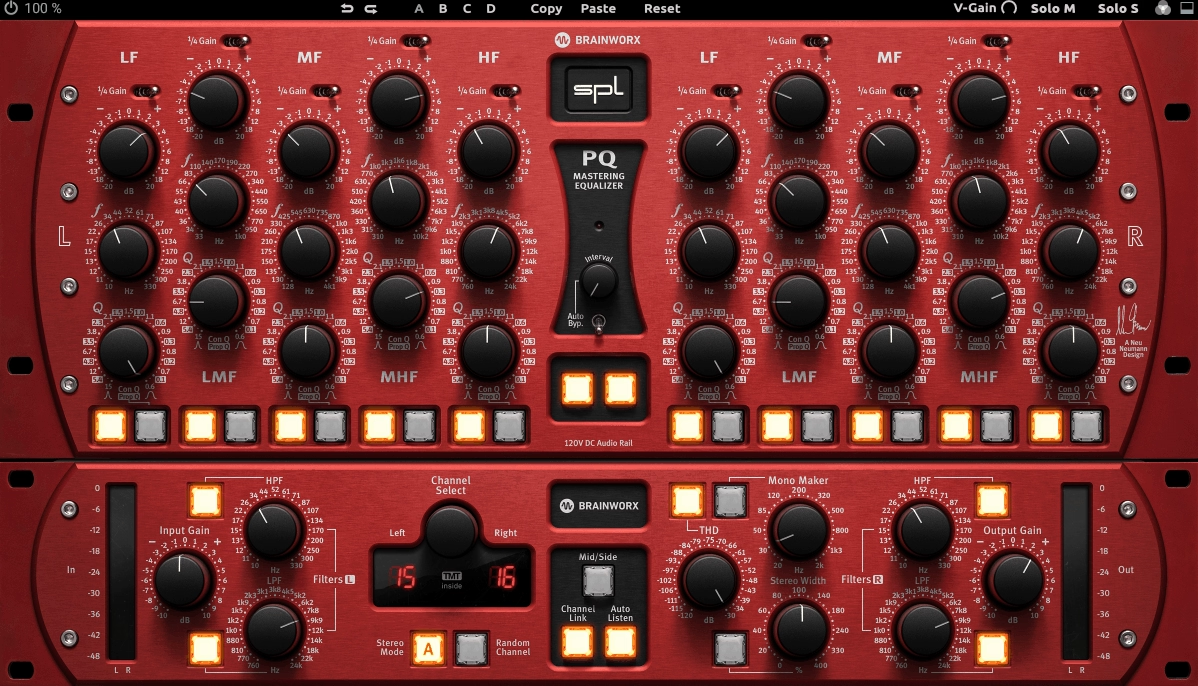
SPL’s 120V rail technology gives their analogue circuits approximately ten times the dynamic headroom of a standard operational amplifier design. That extra room translates directly into a signal path that stays clean, detailed and open even when you’re pushing significant gain through the EQ stages. The SPL PQ plugin, developed by Brainworx, captures the full character of that circuit across five fully parametric bands.
The standout design choice is the ability to toggle each band independently between Constant Q and Proportional Q. Constant Q locks the bandwidth regardless of gain, ideal for precise corrective moves. Proportional Q lets the bandwidth respond to gain, widening at subtle settings and narrowing as you push harder, which produces smoother, more musical curves for broad tonal adjustments. Being able to assign different Q behaviours across all five bands within a single instance gives the PQ a flexibility that very few mastering EQs can match.
Brainworx’s Extra Unit panel adds M/S processing, Mono Maker, Stereo Width, variable THD, Auto Listen, and TMT component variation. The interface is densely packed with controls, though an alternative red colour scheme improves readability on smaller displays.
The 1/4 Gain Switch narrows the entire output range to +/-5dB, and for the kind of precision mastering demands, that single feature alone justifies spending time with this plugin.
9. Audified RZ062 Equalizer
- Compatibility: Windows/macOS
- Format: VST, VST3, AU, AAX
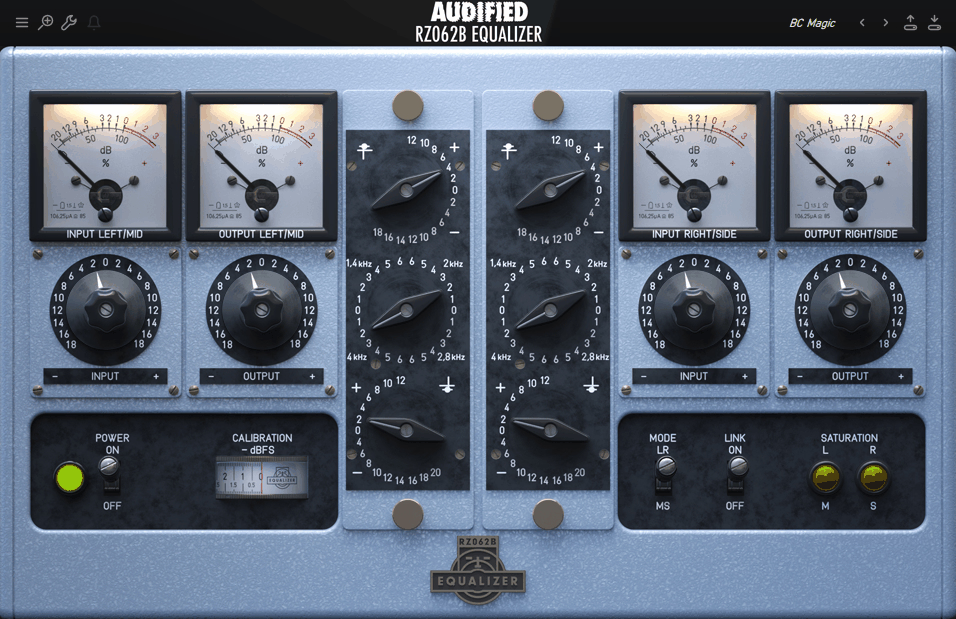
Originally manufactured in the late 1950s for Siemens’ Klangfilm broadcast mixing desks, the RZ062 was never designed with mastering in mind. But word spread among engineers over the decades that its broad, gentle curves and modelled valve saturation had an uncanny ability to make full mixes sound more polished. Today, surviving hardware modules are collector’s items.
Audified’s RZ062 packages both the A and B hardware variants. The A version provides bass and treble controls alongside a tilt EQ centred at 650Hz that shifts the entire frequency balance around that point. The B version replaces the tilt with a combined frequency-and-gain dial that steps through 28 preset combinations. Both variants model the original EF804S and ECC81 valve amplifiers, and even with every band zeroed the modelled tube circuitry adds a warmth that immediately flatters most material. A Drive control pushes the valves from gentle colouring to more obvious saturation.
Frequency selection is deliberately limited. There are no continuous sweeps, no adjustable Q values, no visual displays. That austerity is the point. With only a small number of well-chosen options available, the RZ062 keeps you making musical decisions rather than analytical ones. M/S processing and stereo channel linking are built in, though CPU demand runs higher than average, so plan your session accordingly.
10. IK Multimedia Lurssen Mastering EQ
- Compatibility: Windows/macOS
- Format: VST2, VST3, AU, AAX
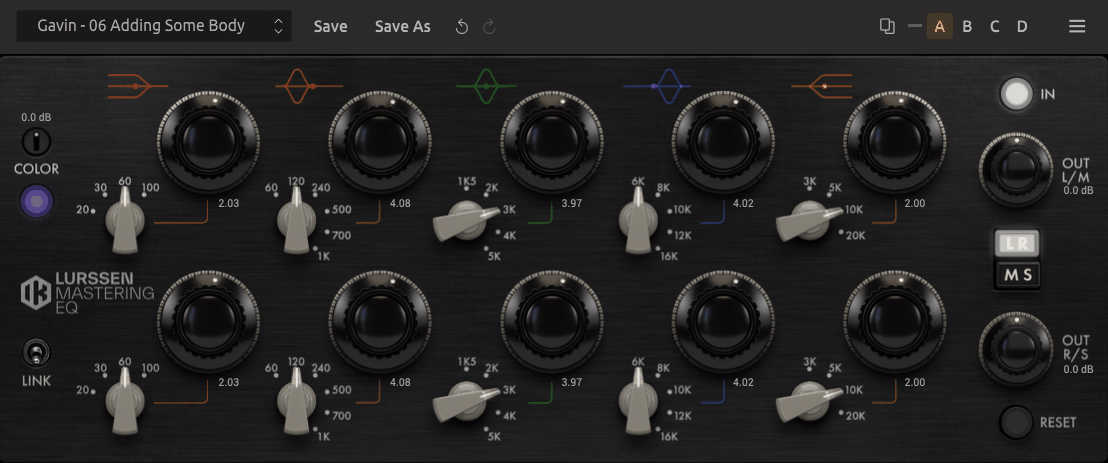
Before this plugin ever reached the public, it spent years as a private tool. IK Multimedia originally modelled the EAR 825Q, a limited-production inductor-based tube equalizer from Esoteric Audio Research, exclusively for Grammy-winning mastering engineers Gavin Lurssen and Reuben Cohen at Lurssen Mastering in Los Angeles. They used it on every session. When IK eventually decided to release it commercially, the plugin arrived with an unusual level of real-world validation behind it.
The Lurssen Mastering EQ gives you five bands: two shelving filters flanking three semi-parametric mids with fixed frequency points selected specifically for mastering applications. Fixed frequencies might sound restrictive, but the carefully chosen values speed up decision-making considerably. Proportional Q widens at lower gain and tightens as you boost, and the natural interaction between adjacent bands reproduces the organic behaviour of the analogue circuit, where adjusting one band subtly influences its neighbours.
A Color knob controls the preamp’s harmonic saturation from transparent to richly coloured. Mid/side processing, channel parameter linking, and adjustable preamp input levels were all added at the request of the Lurssen team. The plugin ships with presets Lurssen and Cohen created from their own mastering sessions.
Works standalone or inside IK’s T-RackS 6 mastering environment, and for the asking price, the modelling quality and professional pedigree represent outstanding value.
Freebies:
1. iZotope Ozone EQ
- Compatibility: Windows/macOS
- Format: VST3, AU, AAX
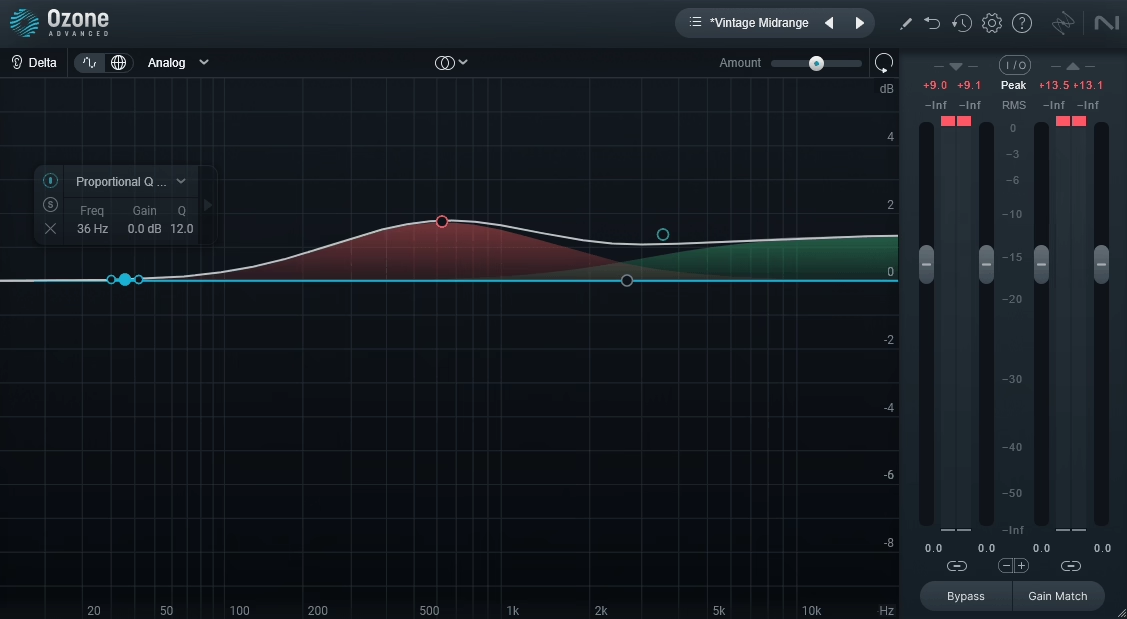
Free. Genuinely free. The standalone EQ module from Ozone 12 is available right now at no cost through Native Instruments’ Komplete Start bundle, and the Ozone EQ is far more capable than that price tag suggests.
You get up to eight bands, a full selection of filter shapes, mid/side processing, and a feature called Transient/Sustain channel modes that changes how you think about EQ altogether. It separates the transient attack of your audio from the sustained body and lets you equalise each component independently. Sharpen the snap of a snare without making the room reverb harsh. Tame sustained sibilance on a vocal without softening the consonants. No standard parametric offers that kind of separation. For anyone building their first mastering chain on a budget, downloading this should be the very first step.
The full Ozone 12 Advanced tier unlocks a 20-module mastering suite with the new Stem EQ (independent EQ of vocals, drums, bass and instruments within a stereo file), Spectral Shaper, Vintage EQ modules, the AI-powered Master Assistant, and the redesigned IRC 5 Maximizer. A serious investment, but the most comprehensive mastering toolkit currently available in a single package.
The free EQ alone is enough to produce professional-sounding masters. Upgrade when and if you outgrow it.
2. Analog Obsession OAQ
- Compatibility: Windows/macOS
- Format: VST3, AU, AAX
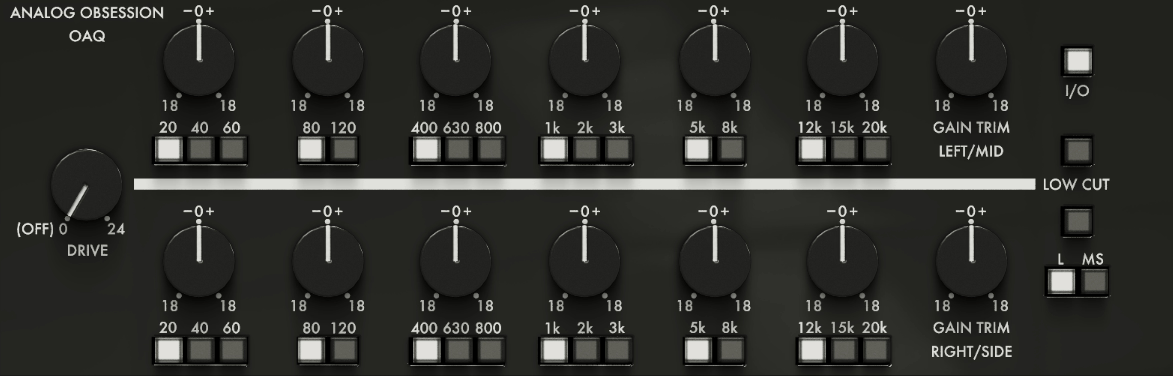
What separates OAQ from the rest of Analog Obsession’s prolific free catalogue is the design intent. This wasn’t adapted from a mixing tool or stripped out of a channel strip. It was purpose-built for mastering from the start, and the choices reflect that. Six bands with switched frequency points rather than continuous dials cover the range from 20Hz to 20kHz. The fixed values were chosen to fall at frequencies that matter most for mastering work, and the deliberate absence of a continuous sweep encourages you to commit to broad, musical moves instead of hunting for the mathematically perfect centre point.
A 50Hz low cut handles the sub-bass. The Drive section introduces analogue-style saturation progressively up to 24dB of input gain, with 4x oversampling keeping things clean. Stereo, dual-mono and mid/side modes are selectable, with an optional channel link that ties the right or side channel to the left or mid for matched adjustments. The low-end bands in particular draw consistent praise from users, who describe the bass response as among the most controlled and natural-sounding in any free EQ plugin.
No analyser. No curve display. Just ears and knobs. There’s something refreshing about that.
Available via Patreon at no charge, though contributions are entirely deserved given the quality on offer here.
3. TDR Nova
- Compatibility: Windows/macOS
- Format: VST, VST3, AU, AAX
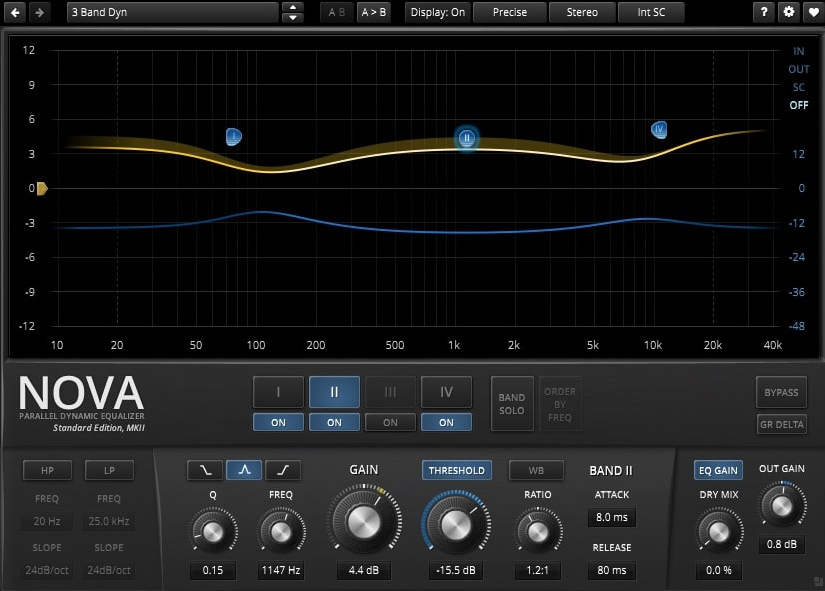
“Parallel dynamic EQ” is a term that sounds more complex than it needs to. In practice, TDR Nova gives you four parametric bands that each double as a full dynamics processor with independent threshold, ratio, attack and release. Any band can be set to perform downward compression, upward compression, upward expansion or gating on its assigned frequency range. The filters work as standard parametric EQ at the same time, so you get static tonal shaping and dynamic frequency control from a single interface. High-pass and low-pass filters adjustable from 6 to 24 dB/oct sit at either end of the spectrum, and a W-Band handles everything your active bands don’t cover.
Built-in equal loudness compensation removes the psychoacoustic trick where louder always sounds better, helping you evaluate your processing honestly. The entire thing runs cleanly with a professional, well-thought-out interface that belies the zero price tag. Tokyo Dawn Labs have iterated on this plugin for years, and it shows.
The paid Gentleman’s Edition (around €60) adds extra bands, a spectral matching tool, automatic resonance detection, and frequency-dependent ratio. It’s a worthwhile upgrade if Nova becomes part of your daily workflow. But for anyone looking to start mastering with dynamic EQ, the free version leaves almost nothing to be desired. Just watch CPU usage if you’re running several instances at once.
Hello, this blog is about more than just chorus, bass and synths. In fact, I started it to cover best VST plugins and Kontakt libraries, so you have easier time finding the right tools and instruments for your music production needs, mixing, as well as mastering. New tools and instruments are constantly evolving and need to get in front of audience, because even some of the best brands like Antelope Audio aren’t talked about enough – that’s what I want to change. I want to promote plugins that are less known but are perfectly relevant for certain topics.