
For a growing number of guitarists and bass players, the days of relying solely on hardware amps and pedalboards are long gone. Amp simulation plugins have become a standard part of the modern recording setup, letting you plug straight into an audio interface, load up a plugin in your DAW, and access convincing amp tones without a cabinet in sight.
You’ll hear these referred to as amp sims, amp modellers, or simply guitar plugins, but they all work in broadly the same way. Once installed on your PC or Mac, each one can be loaded onto a track in your DAW, letting you play and record through it in real time. Most come with banks of presets that can be loaded up and used straight away, but you can also tweak the controls yourself to dial in the exact tone you’re after.
Neural DSP has carved out a particularly strong position in this space. The Finnish company uses machine learning to model the behaviour of real amplifier circuits, and the results have earned a loyal following among guitarists and producers for their responsiveness and realism. Rather than packing dozens of amps into a single plugin, Neural DSP builds each product around a specific amplifier, artist collaboration, or tonal concept.
The typical layout includes amp models, a set of stompbox effects, a cabinet simulation with impulse response support, and a rack of post-effects, all contained within a single interface. Many of the plugins in the Archetype range are also available on the Quad Cortex hardware unit.
More recently, the company branched out beyond guitar with Mantra, its first dedicated vocal processing plugin, which applies the same modelling approach to a completely different area of production.
Before we get into the list, one practical note: all Neural DSP plugins share the same format support and system requirements. Every plugin here runs on Windows and macOS (with native Apple Silicon support), comes in 64-bit VST, VST3, AU and AAX formats, and includes a standalone application for use without a DAW. You’ll need a free iLok account for activation (no physical dongle required), and Neural DSP offers a 14-day free trial on every plugin, so you can try before you buy.
Here are 11 of the best Neural DSP plugins available right now.
1. Mantra
- Compatibility: Windows 10+, macOS 13+ (Intel & Apple Silicon)
- Format: VST, VST3, AU, AAX, Standalone
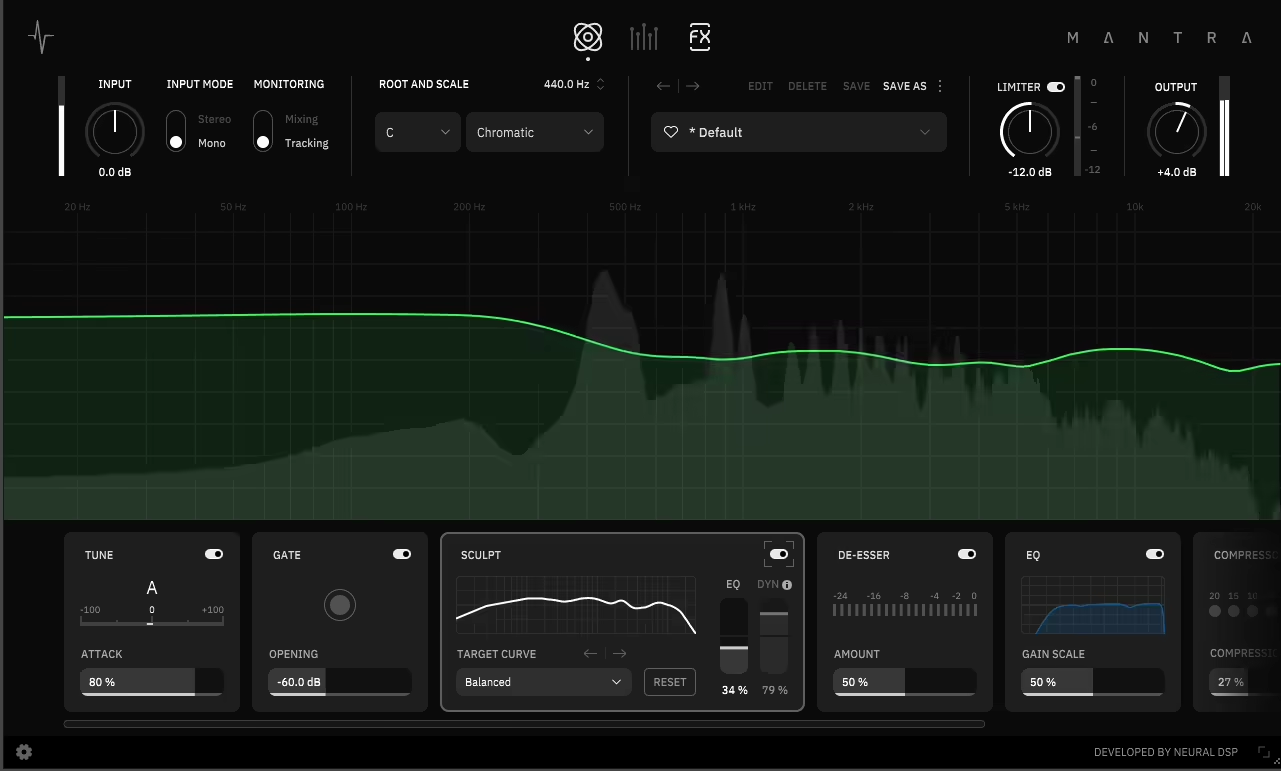
Neural DSP made its name modelling guitar amps, so the arrival of Mantra came as something of a surprise. This isn’t an amp sim at all. It’s an all-in-one vocal processing plugin that brings together pitch correction, EQ, compression, de-essing, gating, saturation, harmonies and effects in a single interface. The idea is to give singers, producers, podcasters and streamers a complete vocal chain without needing to stack half a dozen separate plugins on a channel.
The plugin is organised across three main sections: Correction, Harmonies and Post FX. The Correction section is where the technical work happens. You get pitch correction, a noise gate, a de-esser and the Sculpt module, which analyses your voice and microphone in real time and applies a refined tonal curve automatically.
In practice, it’s a genuinely fast way to get a workable vocal sound up and running. There are also multimode compression and saturation modules, each offering three distinct flavours. The compression modes are Tube, Stress and Multi, while saturation offers Tape, Tube and Digital. All of these were modelled using Neural DSP’s proprietary technology, and the character they add is noticeable without being heavy-handed.
The Harmonies section allows you to stack up to eight pitch-shifted voices with natural variation, which is useful for everything from subtle thickening to full choir-style arrangements. The Post FX section, meanwhile, is stocked with four delay types (Analog, Circular, Tape and Dual), three reverb modes, studio-grade chorus, flanger and phaser effects, and a proprietary Doubler for realistic stereo width without the need for second takes.
A low-latency Tracking mode delivers as little as 3ms latency for recording and live use, while a full-resolution Mixing mode unlocks the plugin’s complete processing depth. Despite being Neural DSP’s first foray outside of guitar and bass, Mantra is a confident and well-thought-out product. At €199, it sits competitively against the likes of Pulsar Vocal Studio, and the sheer amount of processing packed into a single window is impressive.
2. Archetype: Rabea X
- Compatibility: Windows, macOS (Intel & Apple Silicon)
- Format: VST, VST3, AU, AAX, Standalone
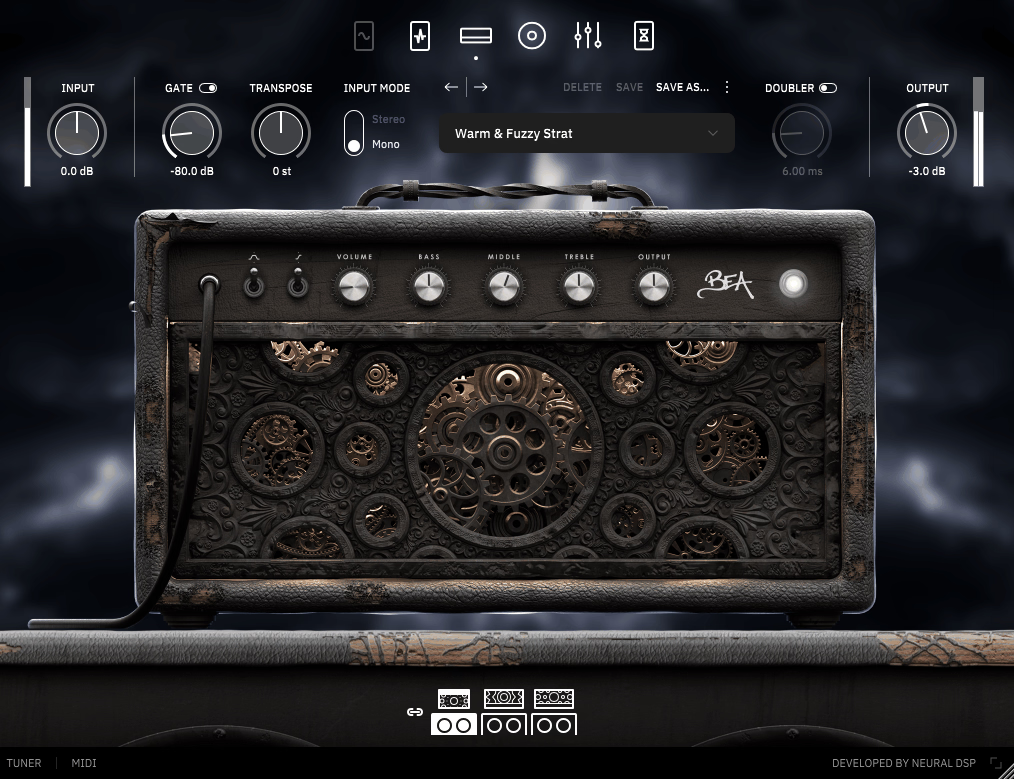
There are plenty of amp sim plugins that give you a selection of amps, a pedalboard and a cab sim. Archetype: Rabea X does all of that too, but it also does something that no other commercial guitar plugin currently offers: it includes a fully-featured built-in monosynth.
Developed in collaboration with guitarist Rabea Massaad, known for his work with Dorje and Toska as well as his prolific YouTube presence, the plugin features three amp models: Clean, Crunch and Lead.
The Clean channel offers traditional Californian cleans with a modern chime, the Crunch is a genuine all-rounder that handles everything from edge-of-breakup to searing gain, and the Lead amp delivers a malleable high-gain tone built for tight, aggressive playing. Pre-effects include overdrive, octaver and fuzz stompboxes, while the post-effects section features a stereo delay with Icicles and Cross-feed controls for dreamy ambient repeats, and a reverb with a Freeze button that suspends a chord in space, letting you jam over it as a sustained pad.
The standout feature, though, is the Overlord monosynth. This is a subtractive synthesizer that converts your guitar signal into synth tones in real time using Neural DSP’s proprietary pitch-tracking and envelope-detection algorithms. No MIDI keyboard or programming required.
You get dual oscillators with unison options, a ladder-style filter, and a built-in arpeggiator, along with a Pre/Post switch that lets you route the synth through the plugin’s amps and effects. The X update brought a redesigned interface with visual waveform feedback, white and pink noise options for the oscillators, and a Glide knob for smoother transitions between notes.
Whether you’re looking for atmospheric ambient textures, aggressive high-gain rhythm tones, or something genuinely experimental, Archetype: Rabea X covers an unusually wide range of territory. The synth alone makes it worth a trial.
3. Soldano SLO-100 X
- Compatibility: Windows, macOS (Intel & Apple Silicon)
- Format: VST, VST3, AU, AAX, Standalone
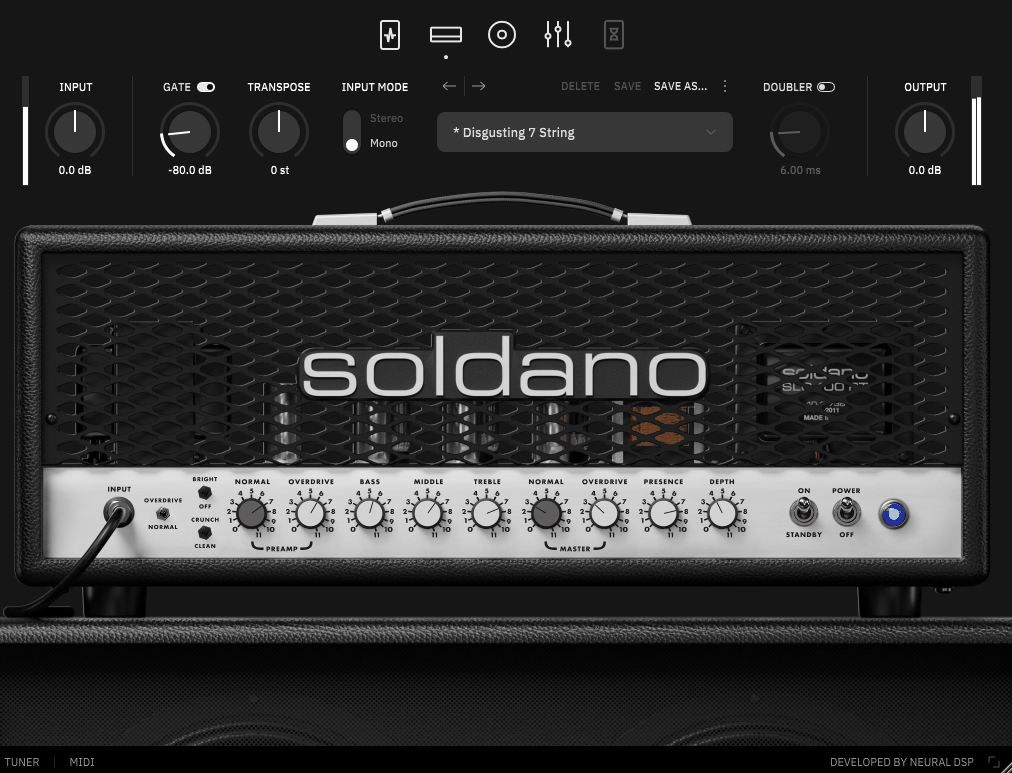
In the world of high-gain amplifiers, few names carry as much weight as the Soldano SLO-100. Designed by Mike Soldano in the late 1980s, it’s widely credited with originating the American high-gain sound. Its distinctive cascading-gain circuitry has shaped the tone of everyone from Vivian Campbell and Warren DiMartini to Mark Knopfler, and its influence on the amps that followed it is difficult to overstate.
Neural DSP’s Soldano SLO-100 X is a faithful recreation of both channels of the original amplifier. The Normal channel handles cleans with a crystalline quality that can be shaped using Bright and Crunch switches, while the Overdrive channel is where the magic lives, delivering that signature thick, saturated tone with loads of harmonic content and sustain. What makes this plugin particularly effective in a recording context is the note separation. Even at high gain settings, individual notes within chords remain clearly defined. This translates directly into cleaner double-tracking and quad-tracking, which is where many darker, more saturated amp sims start to fall apart.
Complementing the amp are four pre-effects: a Compressor, OD1 (boost), OD2 (overdrive) and Vintage Chorus, all developed in conjunction with Soldano. A 9-band graphic EQ provides detailed frequency shaping, and the cab sim module includes six virtual microphones with hundreds of impulse responses captured by Neural DSP. The X update added Transpose for pitch-shifting your guitar up or down by up to 12 semitones and Doubler for simulating a double-tracked stereo field, both of which are useful studio tools. There’s also a live tuner built into the interface and a metronome for the standalone version.
If you’ve always wanted the SLO-100 sound but couldn’t justify the cost, weight, or volume of the real thing, this is about as close as software currently gets.
4. Archetype: Petrucci X
- Compatibility: Windows, macOS (Intel & Apple Silicon)
- Format: VST, VST3, AU, AAX, Standalone
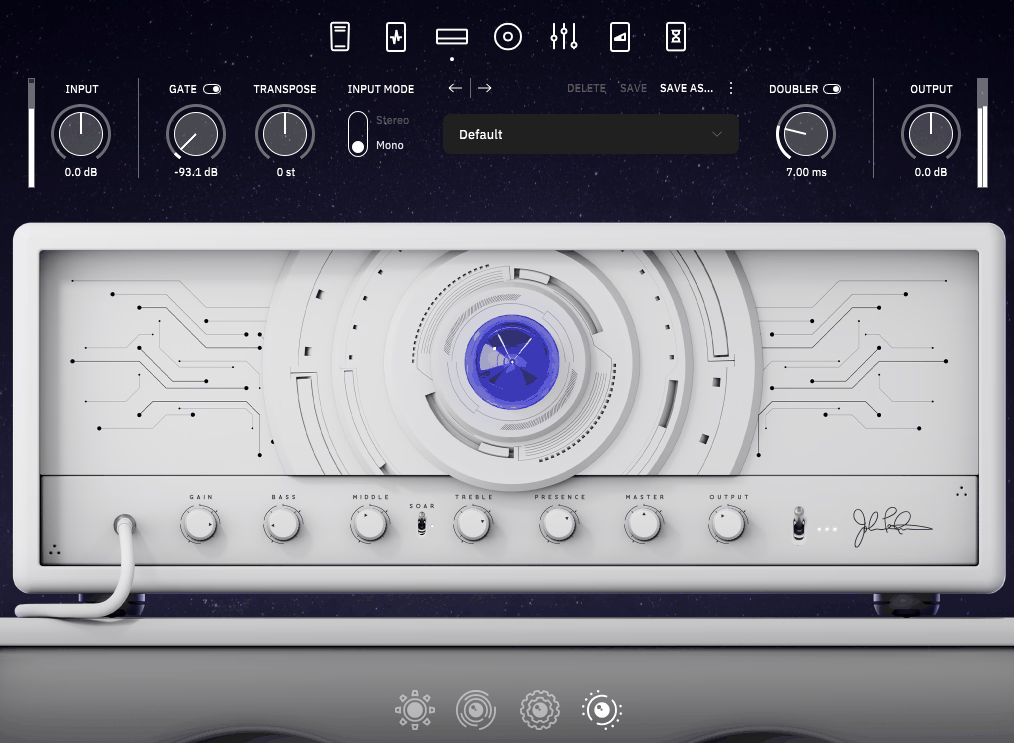
John Petrucci’s guitar tone has been one of the defining sounds in progressive metal for over three decades, shaped by his work with Dream Theater and an extensive solo career. Archetype: Petrucci X sets out to capture that sound, and for players of technical, high-gain guitar, it’s one of the most capable plugins in the Neural DSP range.
The plugin features three amp models tailored to the breadth of Petrucci’s playing. The clean channel is warm and articulate, with a fullness that works beautifully for ballad passages and arpeggiated clean sections. The rhythm channel offers a tight, focused high-gain tone with exceptional note separation, even when you’re playing complex extended chords at speed. The lead channel, meanwhile, delivers a thick, sustain-rich saturation that sings on the upper frets and handles legato runs with remarkable smoothness. The way these high-gain channels manage fast alternate picking without losing definition is one of their strongest qualities. Where many amp sims blur into an indistinct wash at extreme gain levels, this one keeps individual notes distinct.
The effects section is more extensive than some of Neural DSP’s more focused offerings. You get a comprehensive set of stompboxes and rack-style post-effects including delays, reverbs and modulation. The cab sim module includes Neural DSP’s dual cab engine with IR support, and the factory presets are clearly voiced with progressive metal in mind. This is a plugin built for players who demand clarity, articulation and dynamic response from their high-gain tones, and it delivers on all three.
5. Archetype: Tim Henson X
- Compatibility: Windows, macOS (Intel & Apple Silicon)
- Format: VST, VST3, AU, AAX, Standalone
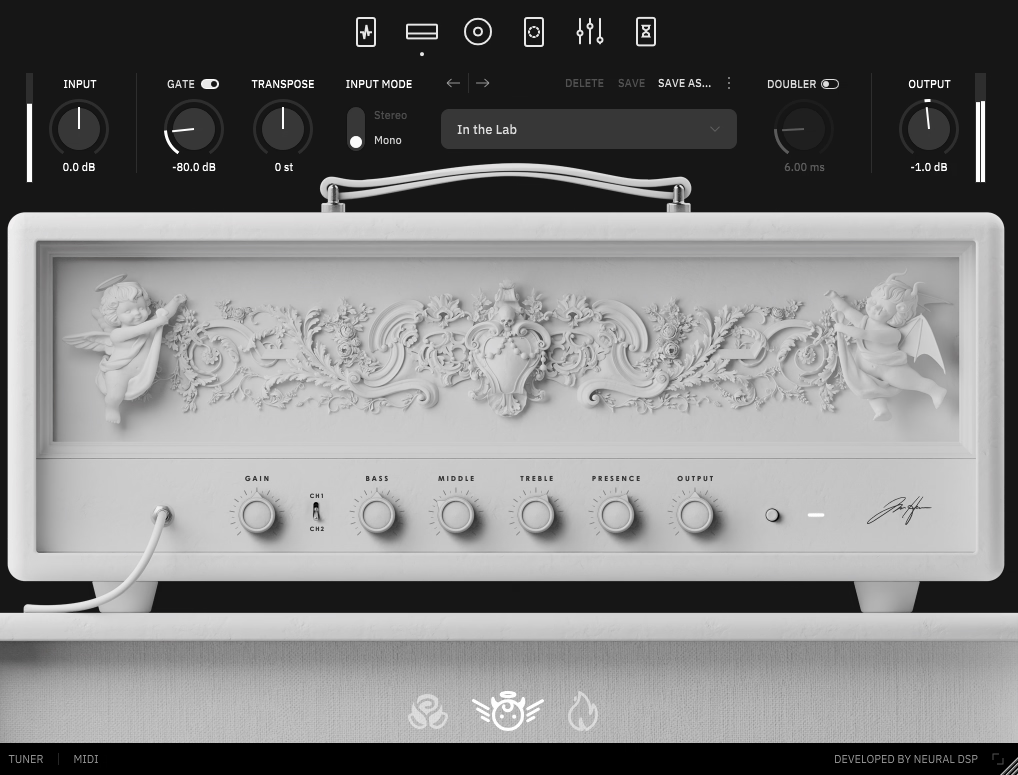
Much of Neural DSP’s catalog is geared towards high-gain tones, which makes Archetype: Tim Henson X something of an outlier. Built around the tonal world of the Polyphia guitarist, whose playing blends clean, percussive techniques with hip-hop, R&B and math-rock influences, this plugin leans heavily towards clean and low-gain territory, filling a gap in the range that the heavier offerings simply don’t cover.
The plugin features three amp models, but the balance is different from most Neural DSP plugins. The clean channel is pristine, detailed and responsive, with a clarity that rewards fingerstyle, hybrid picking and percussive techniques. The crunch channel adds a subtle edge without sacrificing that articulate quality. The lead channel pushes into higher gain territory for moments when you need it, but this plugin’s identity is firmly rooted in its clean tones. It’s here that Neural DSP’s modelling technology gets to show off in a different way. The responsiveness to picking dynamics and playing nuance at lower gain settings is genuinely impressive.
The effects section leans into the creative side, with pitch effects, modulation and ambient reverbs that suit Henson’s modern, texturally rich approach. The factory presets cover everything from glassy clean tones to lush, layered ambient sounds, and there’s a lot of territory to explore between them. If your playing gravitates towards tapping, hybrid picking and percussive techniques, or if you simply want a Neural DSP plugin that proves the company’s technology works just as well with the gain turned down, this is well worth trying.
6. Archetype: Nolly X
- Compatibility: Windows, macOS (Intel & Apple Silicon)
- Format: VST, VST3, AU, AAX, Standalone
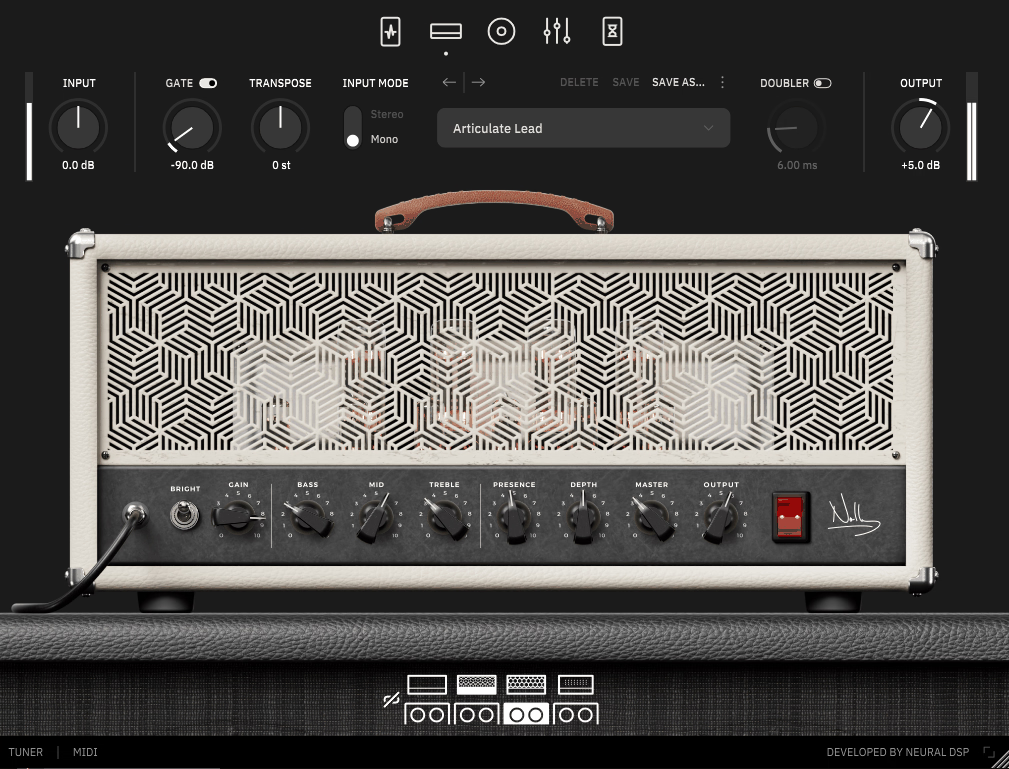
Adam “Nolly” Getgood wears two hats in the music world. He’s the former bassist of Periphery, but he’s arguably better known these days as a mixing and production engineer whose work has helped define the sound of modern djent and progressive metal. Archetype: Nolly X reflects that dual expertise, and of all the plugins in Neural DSP’s range, this is arguably the most production-minded.
The plugin features three guitar amp models and a dedicated bass amp, which immediately sets it apart from most of the Archetype range. The guitar amps cover clean, crunch and high-gain territory, with the high-gain channel delivering that tight, scooped modern metal tone closely associated with Nolly’s production work on records by Periphery, Monuments and others. The bass amp is a genuine bonus, not a token afterthought. It provides a solid, aggressive bass tone that holds up well enough to be used for finished bass tracks, making this plugin unusually versatile if you’re producing a full mix.
What really distinguishes this plugin from others in the Neural DSP lineup, though, is the way everything has been voiced with the final mix in mind. The factory presets sound polished and mix-ready straight out of the box, sitting well in dense arrangements without needing extensive post-processing. The cab simulations and effects are clearly tuned by someone who understands how guitar and bass tones need to behave in a modern metal production. If you’re producing djent or progressive metal and want guitar and bass sounds that are designed to work together in a mix, this is a strong and practical choice.
7. Fortin Nameless Suite X
- Compatibility: Windows, macOS (Intel & Apple Silicon)
- Format: VST, VST3, AU, AAX, Standalone
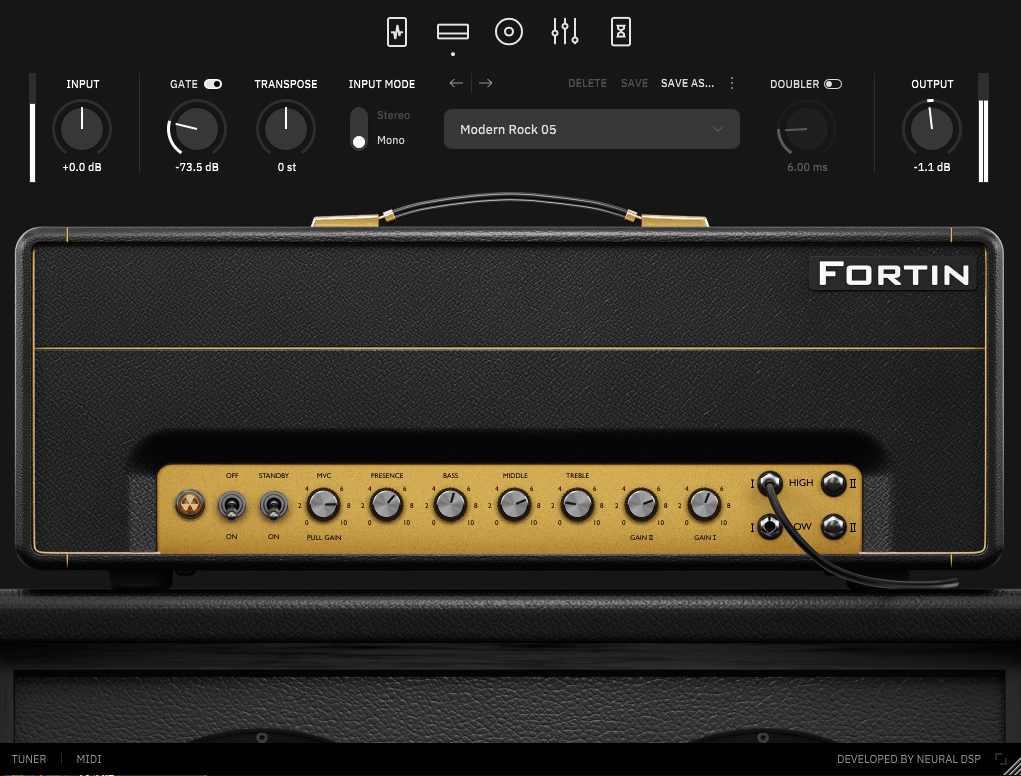
Fortin Amplification has built its reputation on some of the most aggressively voiced high-gain amplifiers in the business. The company’s boutique tube heads are a staple of extreme metal, and the Fortin Nameless Suite X is a collaboration with Neural DSP that brings that uncompromising approach into plugin form.
It’s worth noting that Mike Fortin, a designer who has been openly sceptical of amp modelling, has said that this emulation of his Nameless 50-watt all-tube head “completely nails it.”
Unlike the Archetype plugins with their multi-amp layouts, the Nameless Suite X is built around a single-channel amplifier that is entirely focused on modern metal. The hand-wired, all-tube circuit delivers raw power through dual gain stages with frequency-selective controls. The Girth knob shapes the low-end weight while the Grind knob adjusts the high-frequency bite, giving you independent control over the character of the saturation. The result is massive distortion that somehow still maintains exceptional note definition and string separation, even with drop-tuned, extended-range guitars.
What makes this a “suite” rather than just an amp sim is the inclusion of three Fortin stompboxes. The Zuul is widely regarded as one of the best noise gates available in any format, hardware or software, prized for its transparency and ability to clamp down on extreme noise without mangling your tone.
The Grind pedal adds clarity and articulation at high gain settings, making every note present even under heavy distortion. And the Hexdrive overdrive offers a unique blend of boost and drive for further tone-shaping. Round it out with a 9-band graphic EQ, a comprehensive cab sim with six virtual microphones, delay and reverb processors, and the Transpose and Doubler features, and you’ve got a complete metal production tool in a single plugin.
This isn’t a versatile all-rounder. It does one thing, and it does it exceptionally well: brutal, tight, high-gain guitar tone.
8. Archetype: Tom Morello
- Compatibility: Windows, macOS (Intel & Apple Silicon)
- Format: VST, VST3, AU, AAX, Standalone
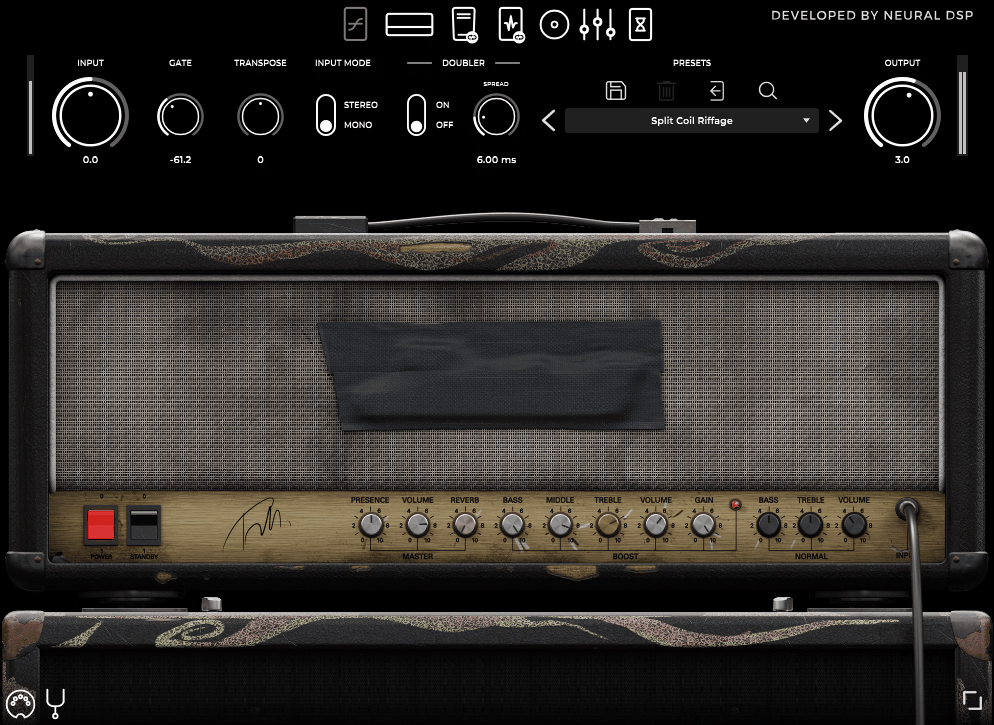
Tom Morello’s approach to guitar is difficult to replicate with a conventional amp and pedalboard, let alone in software. His playing with Rage Against the Machine and Audioslave was defined by creative misuse of effects, unconventional techniques, and a raw, confrontational energy that made the guitar sound like something between a turntable and a weapon. Archetype: Tom Morello sets out to capture that ethos, and it’s one of the more characterful plugins in the Neural DSP range.
The amp section features models voiced to reflect Morello’s preference for cranked, dynamic tones that respond aggressively to changes in playing technique. There’s a clean channel, a driven channel and a high-gain option, all with a raw, slightly unrefined character that feels authentically Morello.
These amps aren’t voiced for polish. They’re voiced for attitude. But the real personality of this plugin lives in the effects.
The stompbox selection includes a whammy-style pitch shifter, a wah, delay, tremolo and other creative tools that are essential to the kind of experimental, noise-driven guitar work Morello pioneered.
This is not a plugin for those chasing pristine studio tones, and it knows it. It’s built for players who want to push their signal into unpredictable, interesting places, using the guitar as a sound-design tool as much as a melodic instrument. The effects are designed to interact with the amps in ways that encourage experimentation rather than precision.
If you’re into alternative rock, experimental playing, or creative effects-driven guitar work, this plugin offers a flavour you genuinely won’t find anywhere else in the Neural DSP catalog, or from most other amp sim developers.
9. Archetype: Gojira X
- Compatibility: Windows, macOS (Intel & Apple Silicon)
- Format: VST, VST3, AU, AAX, Standalone
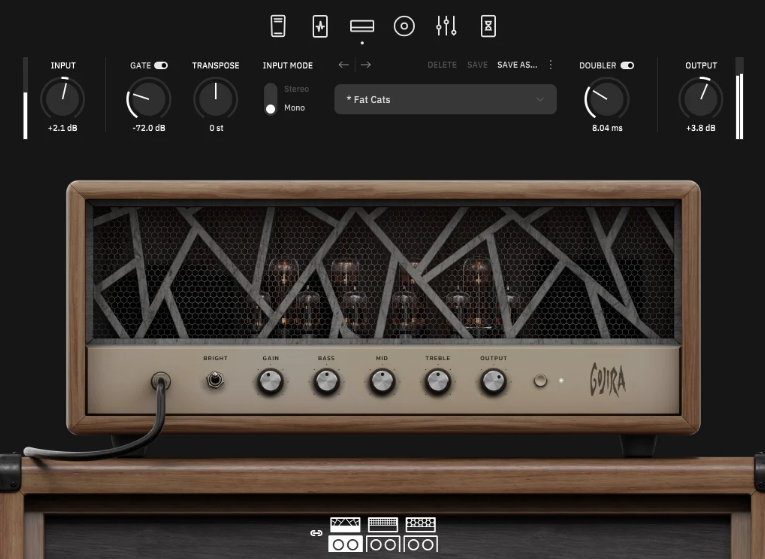
Gojira are one of those bands whose guitar tone is instantly recognisable. It’s heavy and aggressive, but there’s an organic, almost earthy quality to it that sets it apart from the more clinical end of modern metal. Built around the tonal palette of guitarist Joe Duplantier, Archetype: Gojira X captures that balance between weight and natural, breathing dynamics that you can hear across records like From Mars to Sirius, The Way of All Flesh and Magma.
The plugin features three amp models covering clean, crunch and high-gain territory. The clean channel is full-bodied and rich, well-suited for Gojira’s atmospheric passages and quieter moments. The crunch channel offers a muscular mid-gain tone with harmonic complexity that rewards chord work. And the high-gain channel captures that thick, aggressive rhythm tone with plenty of low-mid weight and a raw character. What stands out about the gain structure here is how well it responds to pick dynamics. Rather than compressing everything into a flat wall of distortion, it reacts to changes in your playing intensity, which is central to the way Gojira’s music breathes.
The effects section includes an octaver, pitch shifter and harmoniser alongside more conventional stompboxes, reflecting Gojira’s use of pick harmonics, natural harmonics and unconventional techniques. The cab section and factory presets are well-tailored to heavy music with a natural, unprocessed edge. If your tastes lean towards heavy music that has genuine dynamics and room to breathe, rather than hyper-compressed wall-of-sound saturation, Archetype: Gojira X is an excellent fit.
10. Darkglass Ultra
- Compatibility: Windows, macOS (Intel & Apple Silicon)
- Format: VST, VST3, AU, AAX, Standalone
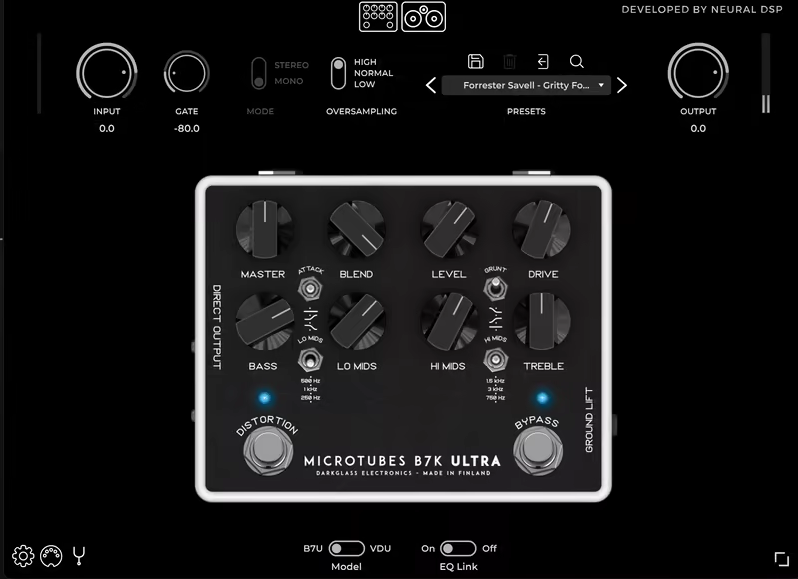
While Neural DSP’s guitar plugins tend to get the most attention, the company has also produced two of the best bass amp plugins available from any developer. Darkglass Ultra is the first of them, developed in partnership with Darkglass Electronics and modelled on two of the Finnish bass gear manufacturer’s most celebrated hardware units: the B7K Ultra and the Vintage Ultra.
Both of these preamps have become staples for modern bass players, and the plugin captures their distinctive character well. The B7K model delivers a tight, aggressive modern distortion with a bright, cutting edge, while the Vintage model offers a warmer, more rounded saturation that suits a broader range of styles. Both models include the signature Blend control for mixing clean and overdriven signals, which is the key to maintaining low-end clarity while adding grit to the upper frequencies. The Attack and Grunt switches shape how much treble and bass content gets pushed into the clipping stage, giving you precise control over the distortion’s frequency balance. A parametric EQ handles the final tone-shaping.
The cab section includes Neural DSP’s dual cab engine with IR support, and the 2.0 update brought an improved interface alongside an enhanced cabinet simulation model. For bass players who need aggressive, gritty, mix-ready tones, particularly in rock and metal contexts, this plugin is hard to beat. It’s a faithful recreation of hardware that many bass players already consider essential, delivered in a convenient and affordable software format.
11. Parallax X
- Compatibility: Windows, macOS (Intel & Apple Silicon)
- Format: VST, VST3, AU, AAX, Standalone
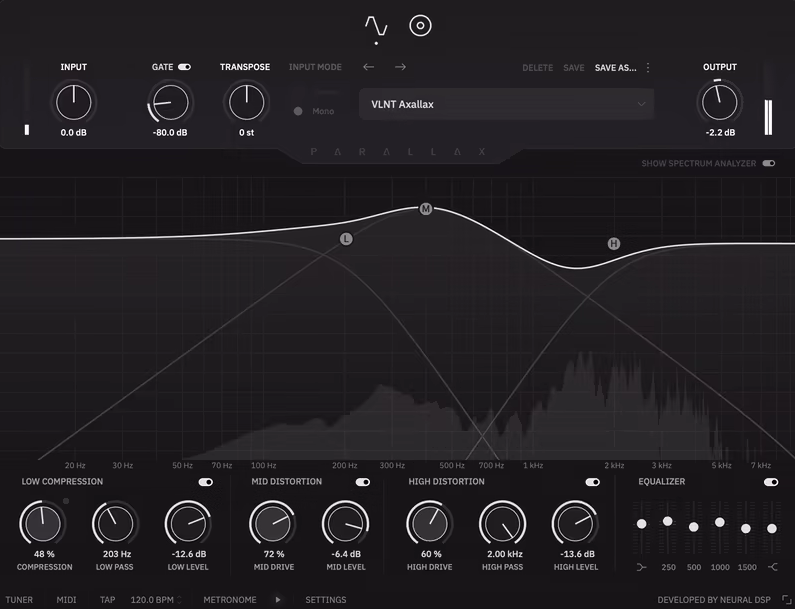
Where Darkglass Ultra is a specialist tool for aggressive bass overdrive, Parallax X takes a broader, more versatile approach. It’s Neural DSP’s general-purpose bass plugin, designed to cover everything from clean, studio-grade DI tones to driven and distorted sounds, with plenty of room to explore in between.
The plugin features two amp models with distinct characters. The first delivers a clean, solid-state style response with a modern, transparent feel, while the second offers a warmer, tube-like saturation that opens it up to a wider range of genres beyond metal. As with Darkglass Ultra, the Blend control lets you mix clean and driven signals to taste, maintaining low-end weight while adding character to the mid and high frequencies. A stereo/mono input mode switch adds flexibility for different signal routing scenarios, and the built-in noise gate is well-implemented for keeping recording sessions clean.
The effects section includes a compressor, EQ, drive pedals and the dual cab engine with IR support and six virtual microphones. Factory presets span a wide range of bass styles, from fingerstyle jazz and funk to aggressive pick playing and modern metal. The X update also added Transpose and Doubler features, along with MIDI support for mapping controls to external hardware. If Darkglass Ultra is the heavy artillery, Parallax X is the Swiss army knife. Between the two, most bass players will find everything they need without ever leaving the Neural DSP ecosystem.
Hello, this blog is about more than just chorus, bass and synths. In fact, I started it to cover best VST plugins and Kontakt libraries, so you have easier time finding the right tools and instruments for your music production needs, mixing, as well as mastering. New tools and instruments are constantly evolving and need to get in front of audience, because even some of the best brands like Antelope Audio aren’t talked about enough – that’s what I want to change. I want to promote plugins that are less known but are perfectly relevant for certain topics.