
Figuring out what key a sample or loop is in by ear can be surprisingly time-consuming, especially when you’re dealing with complex harmonic material or working through dozens of files trying to find elements that fit together. Key detector plugins and software solve this problem instantly, analyzing your audio and telling you exactly what key it’s in so you can build harmonically coherent tracks without the guesswork.
The four tools we’ve selected here take different approaches to the same fundamental problem. Some focus on quick, accurate detection for workflow speed, while others provide comprehensive harmonic analysis that reveals not just the key but chord progressions, scale types, and compatible key suggestions that inform your creative decisions.
1. Antares Auto-Key 2
- Compatibility: Windows, macOS
- Format: VST, VST3, AU, AAX
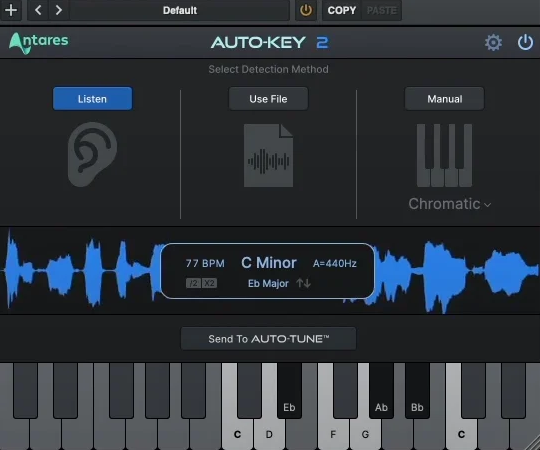
When you’ve spent decades perfecting pitch detection algorithms for Auto-Tune, identifying musical keys becomes a natural extension of that same fundamental technology. Antares Auto-Key 2 benefits from all that expertise, delivering accurate key detection that’s been refined through years of professional use on actual commercial recordings.
What sets this apart from simpler key detectors is its ability to recognize not just major and minor, but modal scales like Dorian, Phrygian, and Mixolydian. This matters more than you might think – material using Dorian mode will clash harmonically with regular natural minor even though they share the same tonic note, and understanding these distinctions helps you avoid subtle harmonic issues that undermine otherwise solid productions.
The real-time analysis updates continuously as audio plays rather than requiring offline processing, which proves valuable when you’re auditioning samples or working during tracking sessions. You see results immediately, making quick decisions possible without waiting for analysis to complete. The confidence indicators show how certain the algorithm feels about its detection, helping you understand when results are solid versus when they need verification through listening.
Where this really shines for vocal producers is the seamless integration with Auto-Tune. When both plugins run in your session, detected key information automatically configures pitch correction settings without manual parameter matching. This eliminates workflow interruptions, letting you move from key detection through pitch correction smoothly without breaking creative momentum or hunting through menus trying to match settings.
2. zplane TONIC
- Compatibility: Windows, macOS
- Format: VST, VST3, AU, AAX
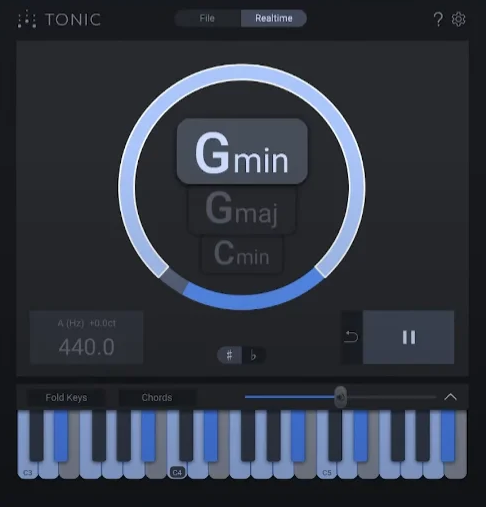
Rather than just telling you “this is in C major” and calling it done, this plugin provides comprehensive harmonic analysis that reveals the musical structure of your audio at deeper levels. You get chord progressions, scale information, and harmonic suggestions rather than basic key identification alone, which proves more useful when you’re trying to understand complex material or build complementary parts around existing elements.
The real-time visualization displays harmonic content as it evolves throughout your audio, showing how key centers shift and modulate rather than forcing static key assignments. Music often changes key temporarily, uses ambiguous harmony, or modulates between tonal centers – zplane TONIC recognizes this reality and presents information accordingly, making it more musically intelligent than tools assuming everything stays in one key from start to finish.
Chord recognition identifies specific chord types and voicings, not just overall key, which helps when you’re transcribing material or trying to understand what makes certain progressions work emotionally. The scale suggestions recommend compatible keys for adding complementary parts based on detected harmony, which opens creative possibilities when you’re building arrangements and need to know which scales will fit harmonically with your foundation.
The MIDI export outputs detected chord progressions directly as MIDI data into your DAW, bridging analysis and creation elegantly. This means you can use detected information immediately as the basis for new parts rather than viewing it as reference data requiring manual translation, which significantly speeds up workflow when working with complex harmonic material that would otherwise require extensive analysis.
3. Waves Key Detector
- Compatibility: Windows, macOS
- Format: VST, VST3, AU, AAX
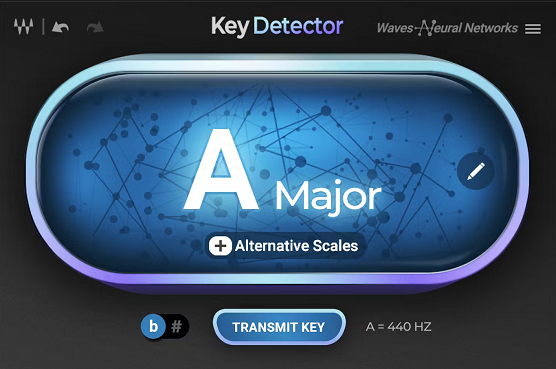
Sometimes you just need straightforward key identification without diving into chord progressions or modal analysis that slows you down when you’re working quickly. This tool focuses on doing one thing well – accurately detecting keys across diverse material types without unnecessary complexity that complicates what should be a simple task.
The algorithm handles everything from simple melodies through dense polyphonic arrangements without getting confused by complex harmonic content, which means you’re not constantly second-guessing results or manually verifying everything. Both real-time and offline analysis modes accommodate different workflow scenarios – instant feedback during playback for quick checks, or complete file analysis for thorough examination.
Confidence metrics accompany detected keys, showing how certain the analysis feels about presented results. Waves Key Detector presents this information through visual indicators that help you understand whether to trust detected keys completely or treat them as starting points requiring additional verification, which prevents blindly accepting questionable results that would lead you astray musically.
The interface reflects Waves’ philosophy of keeping things focused on essential functionality without visual complexity. You see detected keys clearly with confidence indicators and basic information displayed prominently, with additional details available when needed but not cluttering the view. CPU efficiency stays excellent even during continuous real-time analysis, using minimal resources so you can leave it running constantly for instant key reference without performance concerns.
4. MIXED IN KEY “Studio Edition”
- Compatibility: Windows, macOS
- Format: Standalone Software
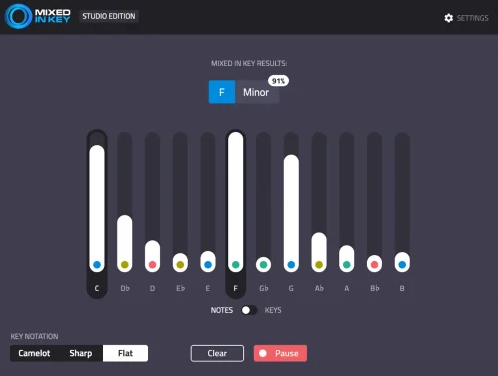
DJs pioneered reliable key detection because harmonic mixing demands accurate information to avoid trainwrecks during live performances where mistakes are immediately obvious. Years of real-world testing by professionals refined these algorithms into tools that work reliably when it matters most, creating dependability that purely studio-focused development often misses.
The major advantage here is batch processing that analyzes entire folders simultaneously rather than handling files individually. This proves invaluable when organizing large sample libraries containing thousands of elements that need cataloging – process everything overnight instead of analyzing files one at a time during production sessions when you’re trying to maintain creative flow.
MIXED IN KEY Studio Edition writes key information directly into file metadata, making it permanently accessible to other applications without requiring the software to run continuously. Your key tags stay with files regardless of where they move or how you reorganize, preventing loss of analytical work if you restructure your library or transfer between different systems.
Beyond key detection, it identifies harmonic compatibility using the Camelot Wheel that shows which keys mix well together, helping you layer samples from different sources with confidence they’ll work harmonically. The energy level analysis evaluates track intensity and momentum alongside key information, helping organize material for better sequencing decisions that maintain appropriate flow rather than creating awkward energy shifts. Operating as standalone software rather than DAW plugin allows background processing while you work on other tasks, maintaining productivity while cataloging your resources.
Hello, this blog is about more than just chorus, bass and synths. In fact, I started it to cover best VST plugins and Kontakt libraries, so you have easier time finding the right tools and instruments for your music production needs, mixing, as well as mastering. New tools and instruments are constantly evolving and need to get in front of audience, because even some of the best brands like Antelope Audio aren’t talked about enough – that’s what I want to change. I want to promote plugins that are less known but are perfectly relevant for certain topics.