
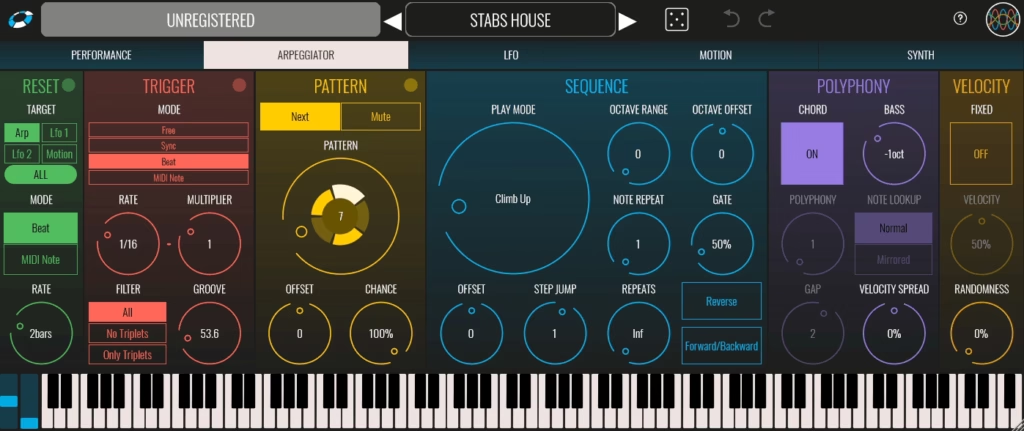
Programming melodic sequences note-by-note gets tedious fast, especially when you need those pulsing, rhythmic patterns that drive electronic music forward. Arpeggiators handle this automatically – you play a chord, they break it into moving sequences. That simple transformation saves hours of MIDI editing while creating patterns that would be difficult to play manually, particularly at faster tempos where timing precision matters.
Beyond basic time-saving, arpeggiators open creative territory that straight chord playing can’t access. They generate rhythmic complexity from simple inputs, add movement to sustained pads that would otherwise sit static in your mix, and create evolving textures that develop over time without requiring constant performance adjustments.
Whether you’re building driving basslines for techno, creating intricate melodic sequences for trance, or adding subtle motion to ambient textures, arpeggiators transform how chords function in your productions.
The tools here range from vintage hardware recreations that capture classic synthesizer workflows complete with their original arpeggiators, through to modern pattern generators designed specifically for contemporary production demands. Some come as complete synthesizer packages where arpeggiation integrates deeply with sound generation, while others work as standalone MIDI processors that enhance whatever instruments you’re already using in your setup.
1. Korg ARP ODYSSEY
- Compatibility: Windows, macOS
- Format: VST, VST3, AU, AAX
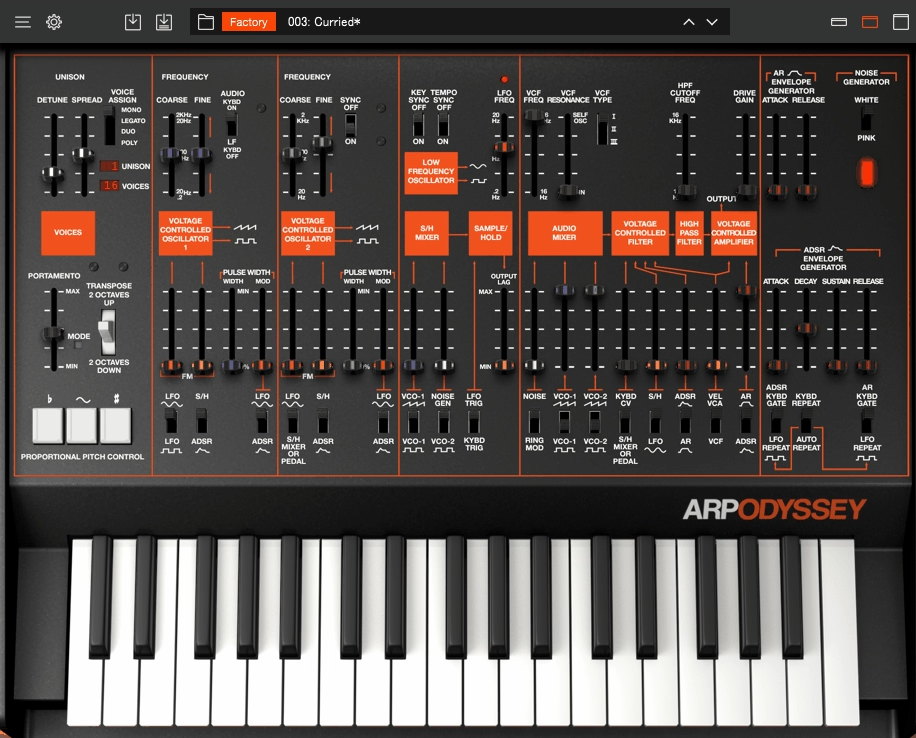
During the 1970s, the ARP Odyssey became a studio staple rivaling even the Minimoog, largely because its flexible architecture suited diverse musical styles from prog rock through funk and early electronic experimentation. The built-in arpeggiator played a crucial role in this versatility, enabling musicians to create those signature sequenced lines that defined the era’s sound without requiring separate sequencers.
This software version captures three different hardware revisions – the original white face model, the orange face update, and the final black face iteration – each offering subtle sonic variations collectors prize. The arpeggiator provides traditional direction modes controlling whether notes ascend, descend, or alternate, plus octave spanning that creates patterns moving across wider pitch ranges from compact chord voicings. Korg’s ARP ODYSSEY maintains authentic behavior while adding modern preset management that vintage hardware lacked.
The random voltage section introduces controlled unpredictability that prevents patterns from becoming monotonous during extended performances or long production passages. This randomization stays musical rather than chaotic, maintaining pattern coherence while adding organic variation that keeps listeners engaged without undermining rhythmic clarity.
Integration between synthesis and sequencing creates results that pure MIDI arpeggiation cannot replicate. When you adjust filter cutoff or envelope attack, these changes interact with arpeggiated notes creating timbral variations that shift with melodic movement, making patterns feel dynamically alive rather than mechanically looped.
2. Arturia ARP2600 V3
- Compatibility: Windows, macOS
- Format: VST, VST3, AU, AAX
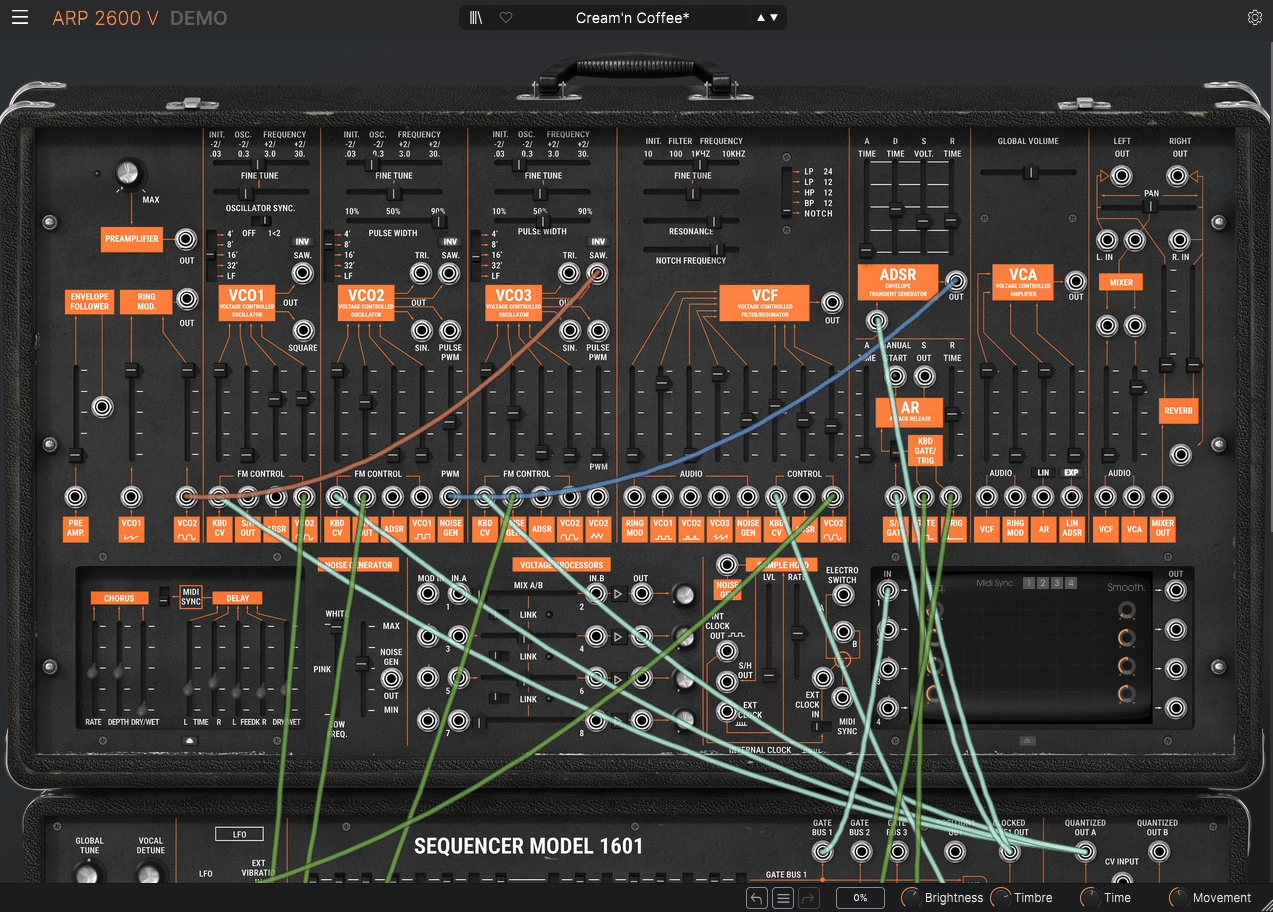
The ARP 2600 achieved legendary status by offering semi-modular flexibility without requiring the expertise that full modular systems demand. Musicians could create patches using the normalized signal flow for quick results, or dive into custom routing for experimental sounds that pushed boundaries of what synthesis could achieve.
Arturia’s recreation combines authentic emulation with modern enhancements addressing limitations that vintage hardware imposed. The sequencer works alongside the arpeggiator creating layered pattern generation where multiple timing sources interact, producing rhythmic complexity that single-source sequencing cannot achieve. The modular patching lets you route arpeggiator signals into synthesis parameters, creating feedback relationships where pattern generation influences sound design dynamically.
Arturia’s ARP2600 V3 includes vintage behavior mode recreating the component-level instabilities of aging analog circuits. This adds subtle drift and timing irregularities that make patterns breathe organically rather than running with digital precision that can sound sterile during extended listening. The effect stays subtle enough to enhance rather than dominate, adding character without creating obvious detuning that would sound like equipment malfunction.
The steep learning curve rewards investment with genuinely unique results that stand apart from preset-reliant production. When you understand the routing matrix, you can create arpeggiated textures that sound distinctly yours rather than identifiable as common plugin presets everyone recognizes instantly.
3. Pitch Innovations Eternal Arps
- Compatibility: Windows, macOS
- Format: VST, VST3, AU, AAX
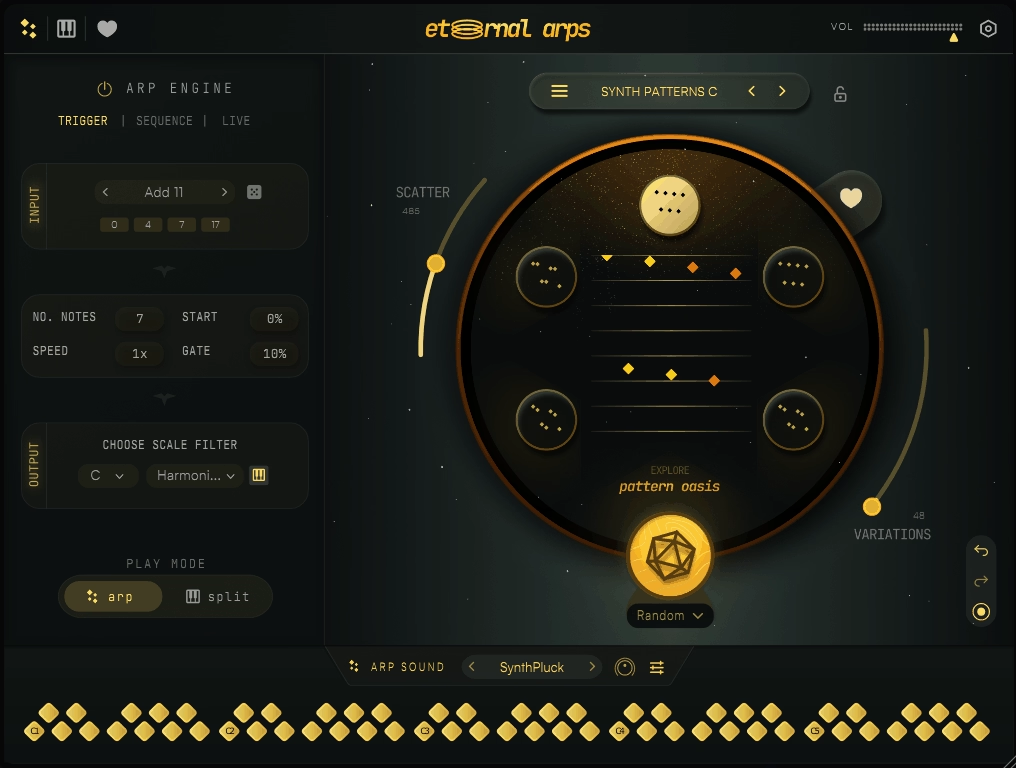
Departing from hardware emulation philosophy, this plugin embraces algorithmic composition where software generates musical patterns based on harmonic analysis rather than just mechanically cycling through input notes. The approach suits producers wanting intelligent assistance creating sequences that work musically without requiring extensive theory knowledge or programming time.
The harmonic engine analyzes chord inputs and generates patterns respecting voice leading principles and scale relationships, avoiding combinations that would create dissonance or harmonic clashes. This intelligence proves particularly valuable when working under time pressure and needing professional-sounding sequences without extensive tweaking sessions. Pitch Innovations Eternal Arps targets contemporary production styles rather than vintage recreation, making it especially relevant for modern electronic genres.
Rhythm customization extends beyond simple note divisions into syncopation, polyrhythms, and complex groupings that create rhythmic interest matching current production trends. The humanization engine introduces micro-timing shifts and velocity variations preventing the mechanical perfection that makes obviously programmed sequences sound lifeless in context.
The preset library organizes content by musical context rather than just technical parameters, making it easy to find starting points matching specific production goals. Each preset adapts to your input harmony rather than imposing fixed patterns, maintaining usefulness across diverse musical situations.
4. BLEASS Arpeggiator
- Compatibility: Windows, macOS, iOS
- Format: VST, VST3, AU, AAX, AUv3
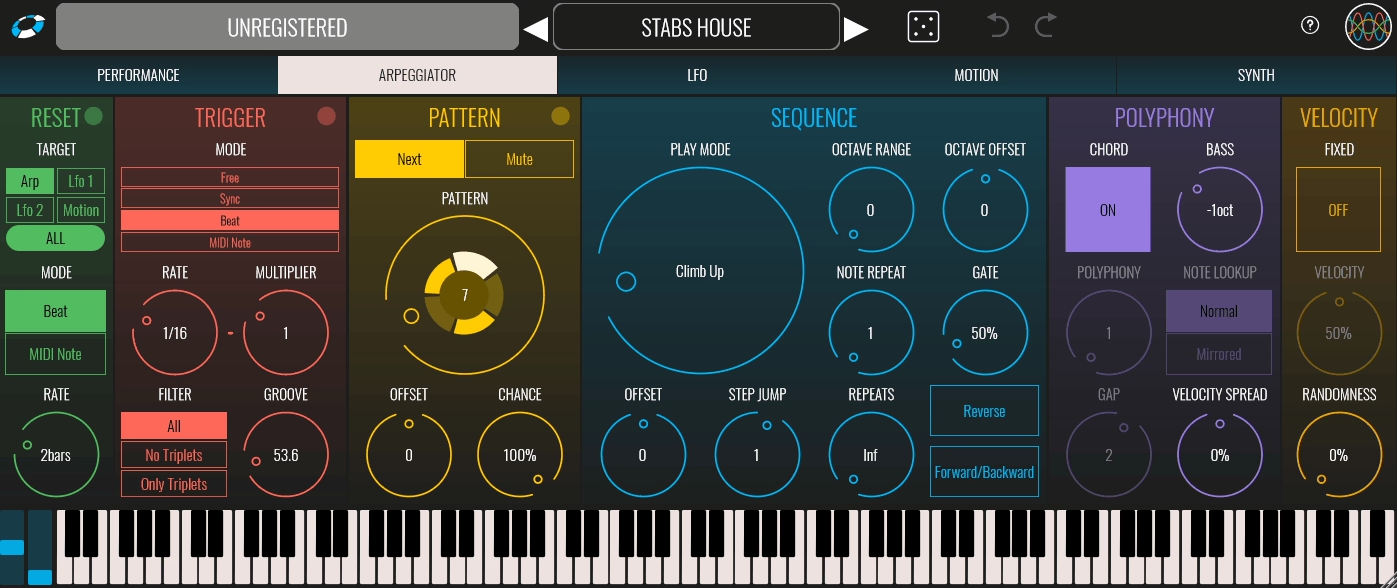
Working as dedicated MIDI processor, this plugin handles pattern generation separately from sound creation, giving you flexibility to apply arpeggiation across any virtual instrument or hardware synth in your setup. The iOS compatibility means identical functionality across platforms, valuable when starting ideas mobile then finishing them in full studio environments.
The visual pattern designer displays transformations graphically showing exactly how input notes become output sequences, making complex programming intuitive through direct manipulation rather than abstract parameter adjustment. You can draw custom patterns defining specific note placement, velocity curves, and rhythmic groupings with precision matching your creative vision.
BLEASS Arpeggiator includes extensive modulation routing letting you animate pattern parameters over time, creating sequences that evolve and develop rather than looping identically. The randomization system works intelligently introducing controlled variation that maintains musical coherence while preventing listener fatigue from static repetition during extended passages.
Performance features like latch mode and chord triggers make this practical for live use where you need complex sequences triggered from minimal controller input, reducing the performance complexity that laptop-based live electronic music sometimes demands.
5. u-he Hive 2
- Compatibility: Windows, macOS, Linux
- Format: VST, VST3, AU, AAX
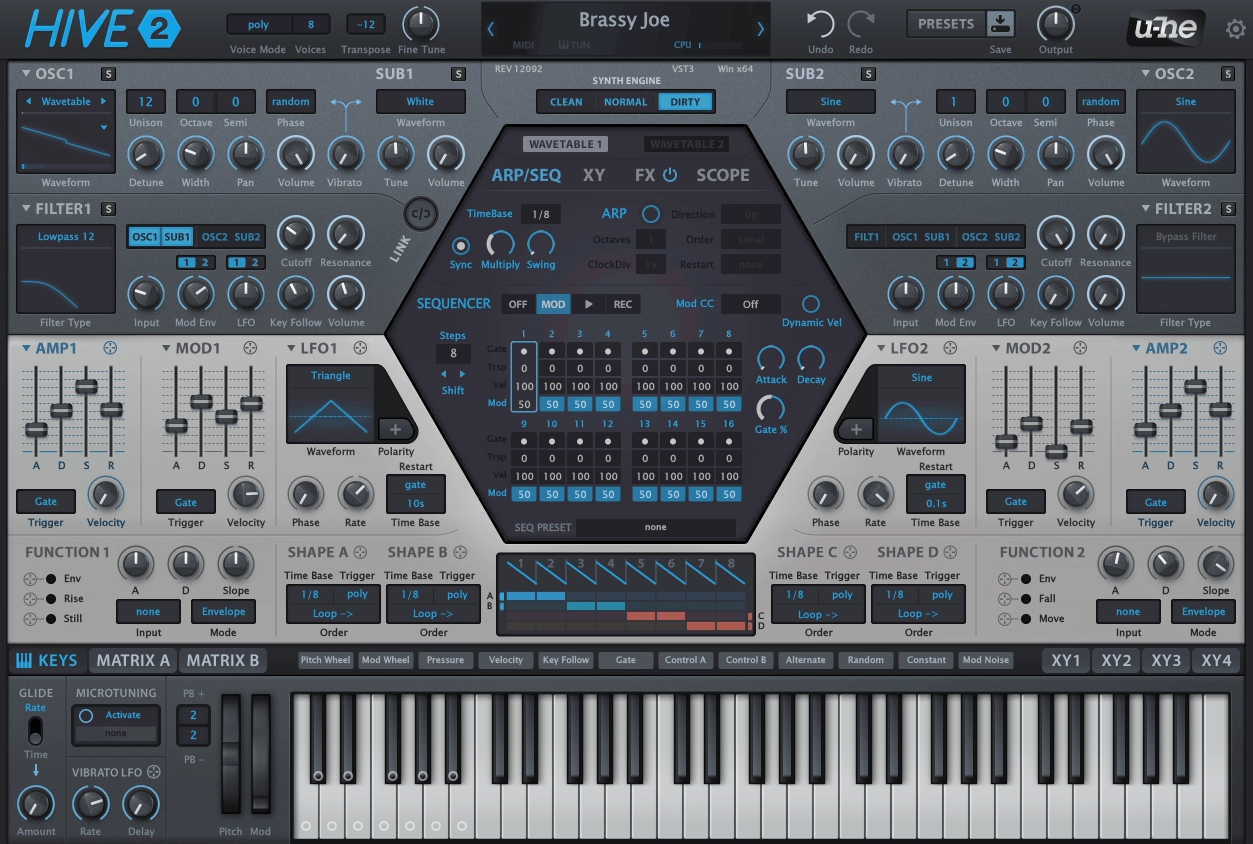
u-he’s reputation for efficient, high-quality synthesis on modest CPU budgets makes their plugins attractive for producers needing professional results without requiring cutting-edge hardware. Hive 2 delivers straightforward synthesis where the arpeggiator integrates smoothly without requiring complex routing or obscure parameter understanding.
The arpeggiator provides essential pattern modes covering common needs without overwhelming options that complicate simple tasks. You can program custom sequences determining exact note order when preset patterns don’t match your musical vision. The octave range control extends patterns vertically while rhythm divisions cover standard values plus triplets and dotted notes creating syncopation.
u-he Hive 2 balances depth and accessibility making it suitable both for beginners learning synthesis and experienced producers wanting quick results without fighting complex interfaces. The swing parameter introduces timing offsets creating groove that helps patterns sit naturally alongside drums and percussion rather than fighting for rhythmic space.
The value proposition stands out – professional synthesis and arpeggiation at prices significantly below flagship synths, making quality tools accessible for producers building collections on realistic budgets without compromising sonic standards.
6. Arturia Acid V
- Compatibility: Windows, macOS
- Format: VST, VST3, AU, AAX
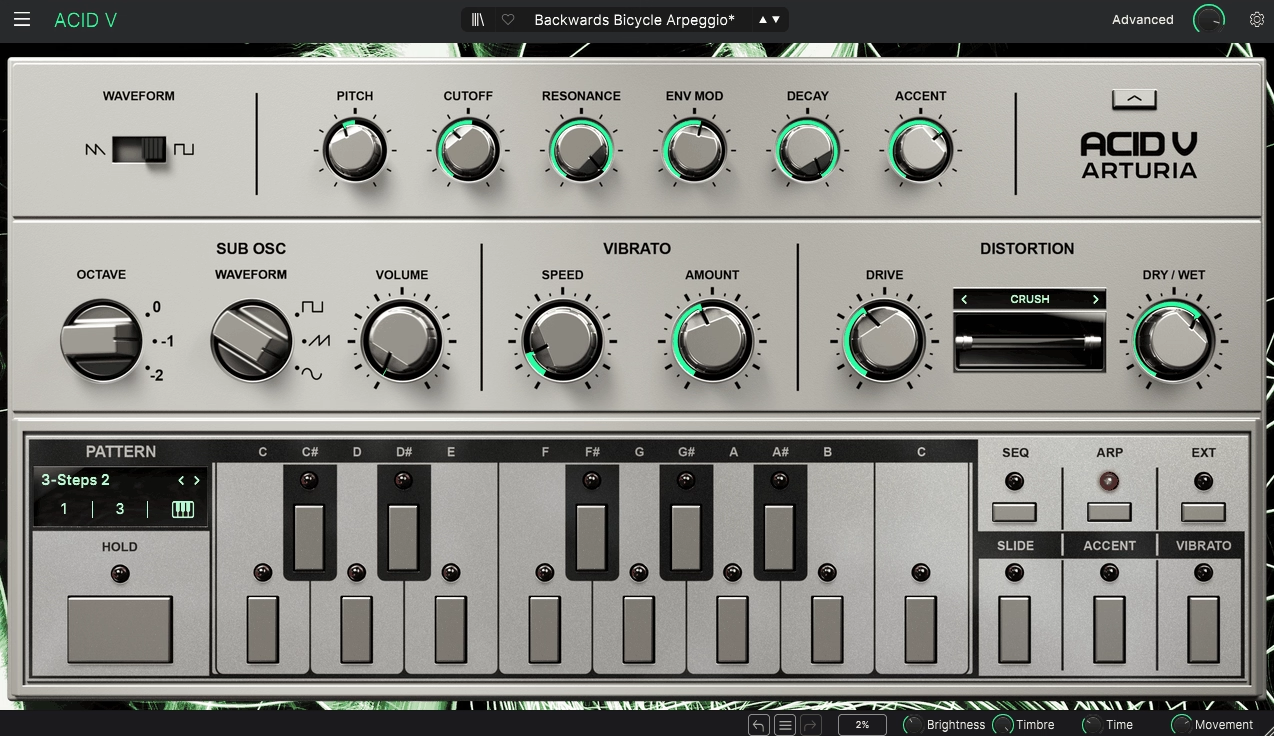
The Roland TB-303 failed commercially as the bass accompaniment machine it was marketed as, but accidentally became culturally significant when producers discovered its unique sequencer created those squelchy, resonant patterns defining acid house and techno. The interface quirks that made it “difficult” for its intended purpose became creative limitations inspiring entire musical movements.
Arturia’s Acid V recreates the 16-step sequencer that works fundamentally differently from standard arpeggiators – you program each step individually setting pitch, gate, accent, and slide characteristics. This step-by-step programming creates the characteristic rhythmic complexity and melodic unpredictability that made the 303 legendary.
The slide function creates those smooth pitch glides between notes that define acid basslines, while accent patterns add dynamic emphasis preventing sequences from sounding dynamically flat despite repetitive note content. Arturia extended functionality with pattern chaining linking multiple sequences for extended compositions beyond hardware’s 16-step limitation.
Modern additions like expanded pattern storage, improved MIDI integration, and effects processing enhance creative possibilities while maintaining authentic character that makes this recognizable as 303-derived rather than generic bass synthesis. The randomization generates new patterns automatically while respecting the instrument’s characteristic behaviors, helping discover sequences you wouldn’t program manually.
Freebies:
1. Dirty Harry
- Compatibility: Windows
- Format: VST
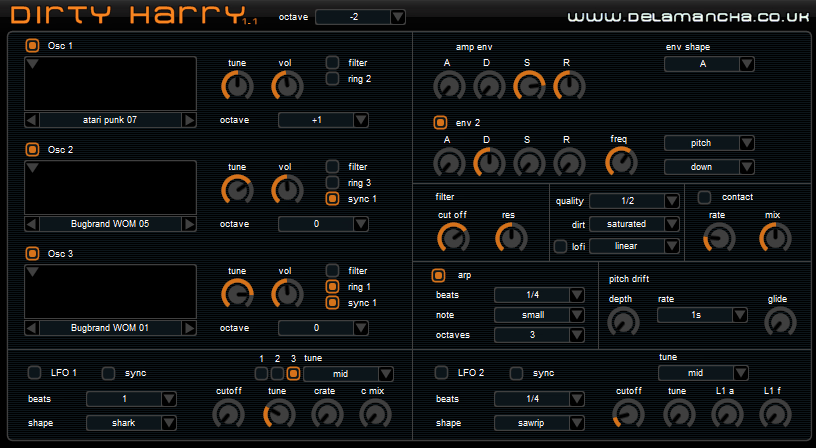
This freeware arpeggiator delivers core functionality without cost, making professional arpeggiation accessible regardless of budget constraints. While lacking the interface polish of commercial alternatives, it handles essential pattern generation reliably for producers needing results without financial investment.
Dirty Harry works as MIDI processor compatible with any instrument. Pattern modes cover standard directions handling most common needs, while octave spreading creates wider melodic ranges from simple inputs. The interface prioritizes function over aesthetics, keeping workflow efficient without design flourishes that don’t enhance actual productivity.
Being free removes experimentation barriers – you can try it across various production contexts discovering where arpeggiation enhances your tracks without financial risk if it doesn’t suit your specific workflow preferences or musical style.
2. OMG Instruments BlueARP
- Compatibility: Windows, macOS
- Format: VST, AU
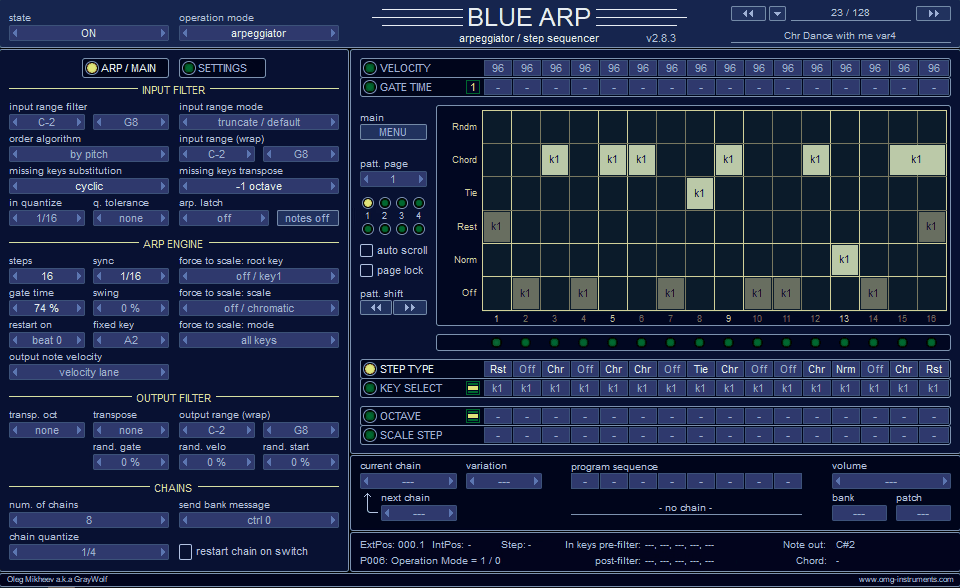
Another free alternative handling arpeggiation without unnecessary complexity complicating simple tasks. The design emphasizes practical functionality rather than feature accumulation that looks impressive but doesn’t proportionally enhance actual results.
BlueARP provides pattern customization beyond simple preset modes, letting you define note ordering and timing characteristics matching specific creative needs. The latch function maintains patterns after releasing keys, practical for layering or performance where sequences need continuing while playing additional parts.
The interface communicates clearly making it approachable during quick sessions where complex routing would slow creative momentum. MIDI compatibility works reliably across different production environments avoiding technical friction that wastes time during actual music creation.
3. CodeFN42 RandARP
- Compatibility: Windows, macOS
- Format: VST, AU
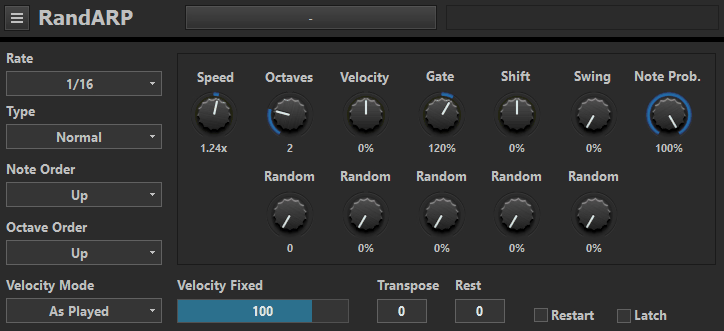
Emphasizing generative approaches, this free arpeggiator creates sequences algorithmically introducing unpredictability within musical boundaries. The philosophy appeals to producers wanting computer-assisted composition where algorithms suggest ideas beyond what manual programming might discover.
The algorithmic engine generates sequences following musical rules preventing chaotic results while introducing melodic variations keeping patterns fresh. RandARP lets you control randomization intensity determining variation amounts while preserving recognizable pattern structures maintaining musical coherence.
Probability parameters determine event likelihood creating evolution where patterns shift organically rather than repeating mechanically. The MIDI processor design works with any sound source providing flexibility across diverse production contexts. Being free makes algorithmic exploration accessible without financial barriers, letting you experiment with generative techniques informing composition approaches even when you ultimately edit results manually.
Hello, this blog is about more than just chorus, bass and synths. In fact, I started it to cover best VST plugins and Kontakt libraries, so you have easier time finding the right tools and instruments for your music production needs, mixing, as well as mastering. New tools and instruments are constantly evolving and need to get in front of audience, because even some of the best brands like Antelope Audio aren’t talked about enough – that’s what I want to change. I want to promote plugins that are less known but are perfectly relevant for certain topics.