
For plenty of music producers and mix engineers around the world, the best opto compressor plugins deliver that creamy, musical dynamic control without requiring a massive investment. On the flip side, numerous professionals gladly spend more on premium choices that bring something special to the table, whether that’s meticulous hardware recreation or distinctive sonic flavoring.
Optical-style compression works on fundamentally unique principles when compared to alternative dynamic processor designs. Instead of relying on voltage-controlled amps or field-effect transistor circuits, these tools employ a light element and photoresistor to control gain adjustments.
This design creates an inherently smooth, program-sensitive character that’s become synonymous with legendary vocal and bass production. Honestly, I think that’s exactly why optical-style dynamics have remained relevant across multiple decades of recording evolution.
You’ll hear these tools called by various names, but basically, they all work on similar foundations. Once you’ve got them installed on your computer, each plugin loads right into your DAW channels, letting you apply that signature gentle attack and soft release characteristic. The hardware gear that inspired these digital versions has shaped thousands of hit songs, with the Teletronix LA-2A standing as probably the most celebrated model.
This guide explores the top opto compressor plugins you can get right now, including the Softube OPTO Compressor, NEOLD U2A, Tone Empire E-LUX Opto, Shadow Hills OptoMax, Waves CLA-2A, Tone Empire OptoRed, Slate Digital Custom OPTO, Waves Renaissance Compressor, Apogee Opto-3A, Analog Obsession LALA, ADHD Leveling Tool, and Analog Obsession COMPER.
1. Softube OPTO Compressor
- Compatibility: Mac, Windows
- Format: VST, VST3, AU, AAX
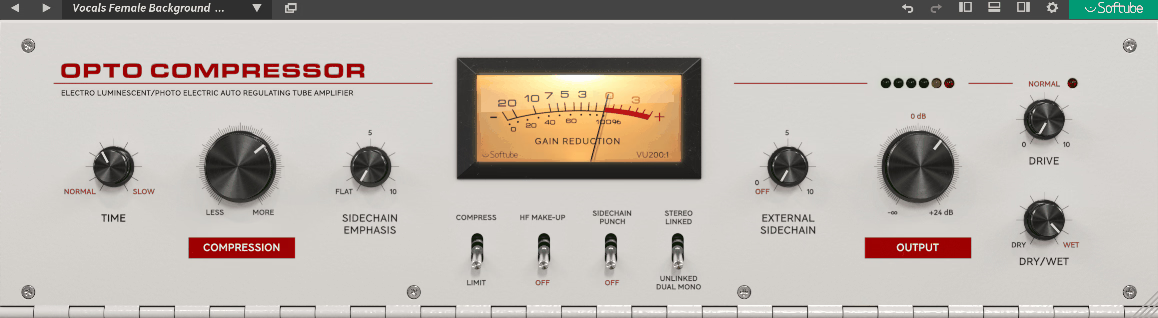
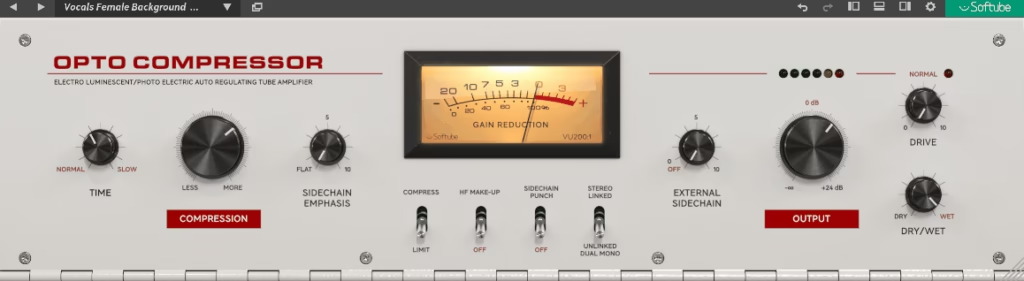
Regarding faithful LA-2A emulation, the Softube OPTO Compressor really stands out from the crowd. Its precise modeling approach nails that signature slow attack and program-responsive release that turned the original unit into must-have studio equipment worldwide.
What really grabs my attention with this plugin is how it treats high-frequency content during compression. The treble stays open and breathy even when you’re applying considerable gain reduction, which proves critical for tracking vocals. I’ve found that lead vocals processed with the Softube OPTO Compressor keep their natural brightness without that brittle digital harshness that shows up in weaker alternatives.
The meter display reacts just like the actual hardware would, showing that characteristic needle movement which gives you reliable visual confirmation. This helps you dial in your compression amounts more intuitively, especially when you’re chasing that classic opto vibe. The interface stays minimal with just the core controls, which means less time fiddling with knobs and more time being creative.
For the most part, this plugin really shines on lead vocals and bass tracks, where smooth leveling takes priority over aggressive transient control. I feel like I should mention that the Softube OPTO Compressor can add a touch of warmth that actually improves the source material, making it more than just a transparent dynamics tool. Given what it offers, I’d say it’s a solid investment if getting that authentic LA-2A character matters to your productions.
2. NEOLD U2A
- Compatibility: Mac, Windows
- Format: VST, VST3, AU, AAX
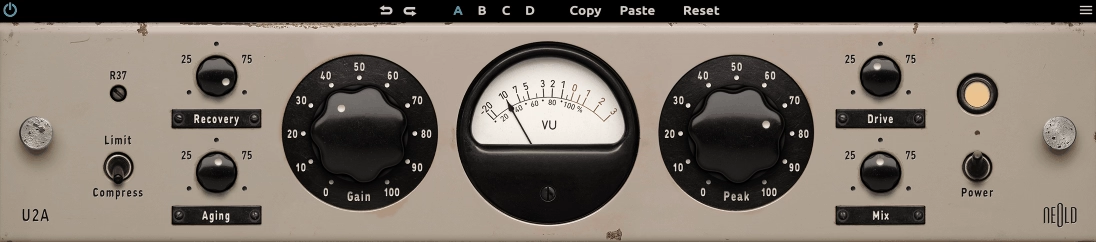
Instead of being just another LA-2A clone, the NEOLD U2A takes a broader view of what optical compression can be. From where I’m standing, this actually becomes one of the plugin’s biggest strengths, because it captures the soul of opto processing while carving out its own sonic territory.
I discovered that the U2A handles low-frequency material really impressively. Bass guitars and kick drums respond wonderfully to this plugin’s smooth compression curve, staying musical even when you’re hitting it with serious gain reduction. What impresses me is how it deals with transients, keeping enough of that initial punch to maintain energy while still getting the job done on dynamics.
The plugin offers plenty of range for both subtle bus glue and more obvious leveling work. In my view, this versatility makes it suitable for way more applications than some narrowly-focused emulations. Plus, it represents strong value in the optical compressor world.
Something I’ve picked up on is how the U2A keeps everything clear across the frequency range. Unlike some colored compressors that can muddy up the mids, this plugin keeps everything well-defined and upfront. I’d definitely recommend it for bass-heavy music where you need tight low-end control without losing that punch factor. Beyond that, it works wonderfully on vocal buses when you want that glue effect without obvious compression fingerprints.
3. Tone Empire E-LUX Opto
- Compatibility: Mac, Windows
- Format: VST, VST3, AU, AAX
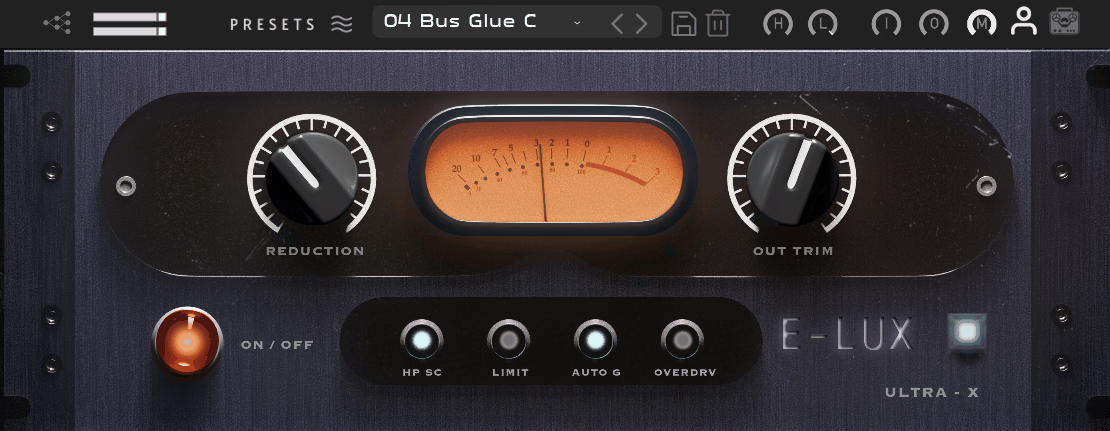
Sure, there are probably cleaner opto compressors out there, but few match the sonic richness of the Tone Empire E-LUX Opto. This plugin puts character first over clinical accuracy, and to be honest, that’s exactly what makes it valuable for certain jobs.
The E-LUX Opto brings in beautiful harmonic enhancement while it’s compressing, which can make your sources sound bigger and more present. I’m honestly a huge fan of how it treats vocals and guitars, adding a polished quality that goes way beyond basic dynamics work. From what I’ve experienced, the harmonic content it creates is particularly flattering in those middle frequencies.
What I really dig about this compressor is that the character never feels artificial or overdone. Initially, you might think it’s just adding nice coloration, but I came to realize that it’s actually working in a musically smart way. The makeup gain circuit contributes its own pleasant tone, which you can use on purpose as part of your overall sonic approach.
Maybe I should point out that this plugin handles both gentle and heavy-handed settings with equal musicality. It stays musical throughout its entire operating range, never getting harsh or brittle even when you really slam it. Given what it costs, the E-LUX Opto delivers character and quality that rivals plugins costing way more. Actually, I’d call it one of the best bargains in the whole optical compressor space.
4. Shadow Hills OptoMax
- Compatibility: Mac, Windows
- Format: VST, VST3, AU, AAX
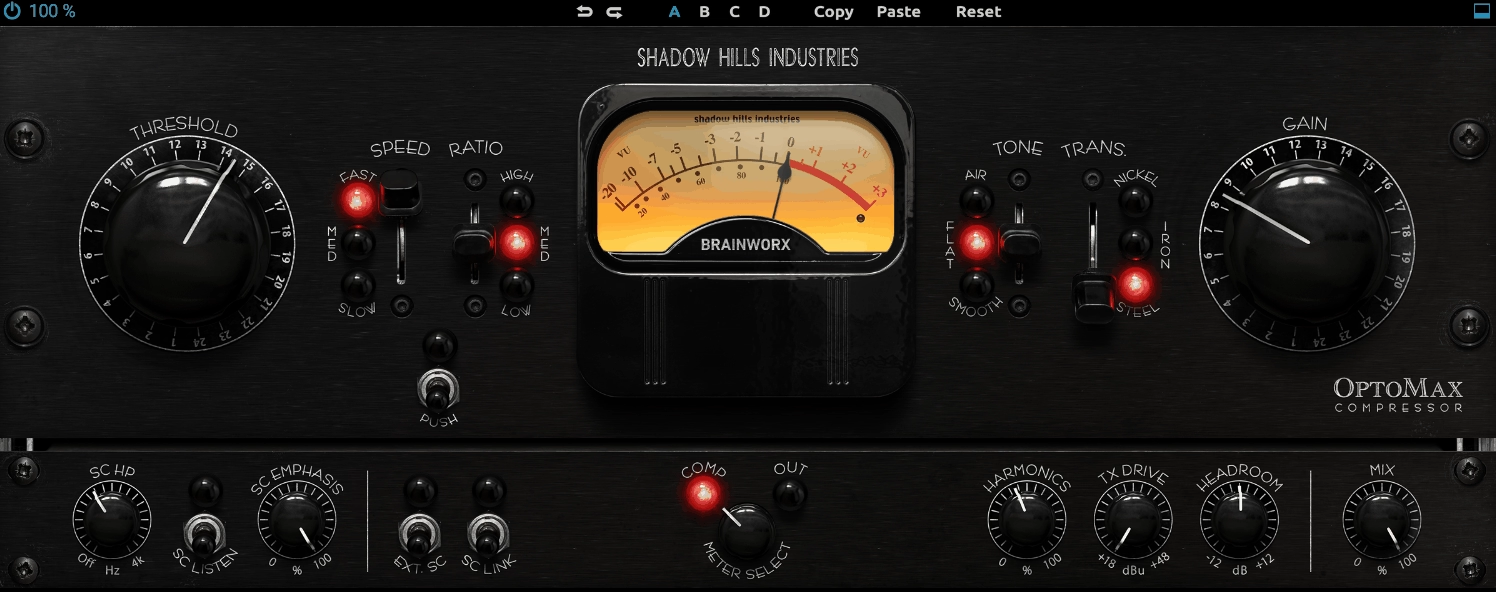
Unlike strict emulations that focus on copying one specific hardware unit, the Shadow Hills OptoMax offers a more complete approach to optical compression. From my perspective, this modern flexibility is what really sets it apart from more traditional opto plugins.
The star feature here is definitely the transformer section. You can swap between different transformer types, which dramatically changes the harmonic character of your compression. As it turns out, each transformer option brings its own unique flavor, essentially giving you several compressors in one package. I have to say, this level of tonal flexibility is pretty impressive.
What really stands out to me is the quality of the VU metering. It provides accurate, helpful visual feedback that makes achieving consistent results between sessions much easier. Generally speaking, good metering often gets overlooked in plugin design, but here it genuinely adds to the workflow in a meaningful way.
The OptoMax can work transparently when that’s what you need, or you can dial in serious character using those transformer options. Based on my experience, it works particularly well on mix buses and vocal chains where you want that smooth opto behavior combined with tonal shaping. I’d suggest it for professional work where you need both precision and versatility. Meanwhile, the plugin stays intuitive enough that you’re not constantly fighting with complicated parameters.
5. Waves CLA-2A
- Compatibility: Mac, Windows
- Format: VST, VST3, AU, AAX
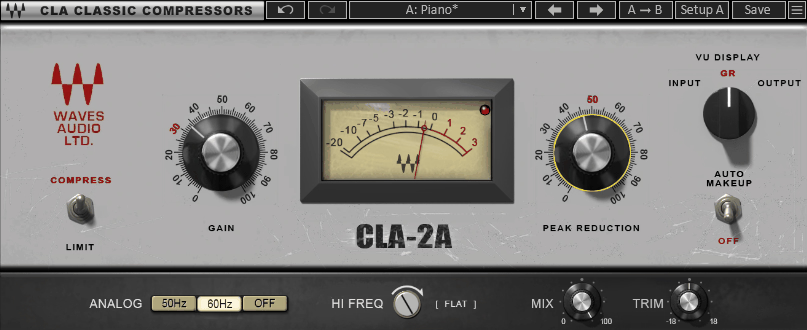
Released quite a while back, the Waves CLA-2A still dominates the plugin world. Here in 2025, it remains essential for countless producers and engineers worldwide, and there are good reasons for that.
Other companies might have popularized certain compressor types, but I believe the CLA-2A became the go-to LA-2A emulation for so many professionals because of its reliability and consistency. The plugin delivers classic optical compression that just works, every single time you load it. There’s something reassuring about that kind of dependability.
The interface closely resembles the original hardware, which I really appreciate as someone who values workflow speed. If you know the LA-2A, you’ll feel comfortable immediately. The plugin includes both compress and limit modes, with the limiting option providing more aggressive control when you need maximum gain reduction.
What catches my attention is how it manages to sound high-end despite being really affordable, especially during Waves’ regular sales. You can use it generously without building up digital harshness or weird artifacts. Not gonna lie, I’ve finished entire albums using just this compressor on vocals, and the results have always been professional-grade.
Something I’ve observed is that the CLA-2A handles emotional vocal performances particularly well. It smooths out the dynamics while keeping all the subtle details and character in the performance. At minimum, this plugin should be in every producer’s collection as a reliable workhorse tool. Over time, it’s one of those plugins that keeps proving its value session after session.
6. Tone Empire OptoRed
- Compatibility: Mac, Windows
- Format: VST, VST3, AU, AAX
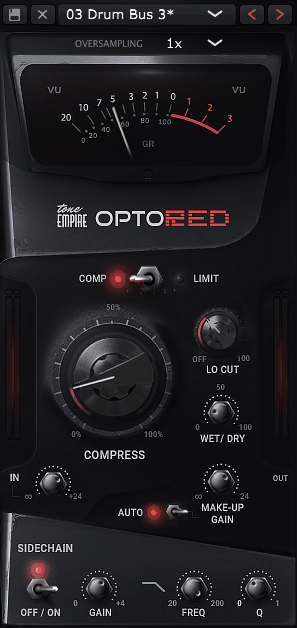
Setting itself apart from cleaner opto emulations, the Tone Empire OptoRed draws inspiration from vintage British optical compressors. Because of this, it delivers serious character that makes it stand out in the packed compressor market.
This plugin excels at adding weight and presence to whatever you run through it. I discovered that the midrange fullness it provides is especially effective for getting vocals to sit more forward in busy mixes. Unlike more neutral compressors that shoot for transparency, the OptoRed makes its presence felt in ways that often work out musically.
To be honest, I love how this compressor deals with aggressive settings. It stays musical even when you’re really pushing it hard, which isn’t true for every plugin. The built-in saturation stage generates harmonics that work together with the compression characteristics beautifully, creating a cohesive processed sound rather than feeling like separate processing stages.
From where I sit, this is the type of plugin you grab when you want compression to be part of the actual sound, not just working invisibly in the background. It’s especially effective on sources that benefit from obvious tonal enhancement along with dynamics control. Maybe that’s drums, perhaps bass, or guitar parts that need extra presence and bite.
Considering what it costs, I’d say the OptoRed is basically a steal for the character you’re getting. Beyond its compression duties, it genuinely enhances the tone of whatever you process with it. That said, if you’re looking for clinical transparency, this probably isn’t your first pick. But when character and vibe are what you’re after, this plugin absolutely delivers.
7. Slate Digital Custom OPTO
- Compatibility: Mac, Windows
- Format: VST, VST3, AU, AAX
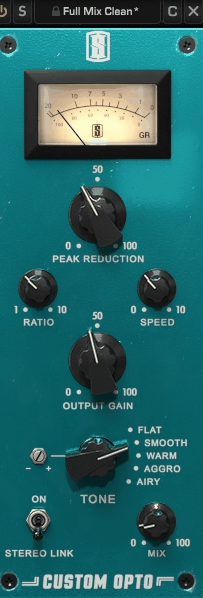
Rather than just copying vintage hardware, the Slate Digital Custom OPTO represents a modern take on optical compression. I think this forward-looking approach is what makes it appealing to producers who want classic character with contemporary features.
The standout feature here is definitely the adjustable attack and release controls. Traditional opto compressors usually feature fixed or program-dependent timing, but having independent control over these parameters opens up way more creative possibilities. From what I’ve seen, this added flexibility doesn’t compromise the smooth, musical quality that defines optical compression.
What I really appreciate about this plugin is how it handles heavy compression. The compression algorithm stays smooth and artifact-free even when you’re applying serious processing. You know, some compressors start falling apart when you push them, but the Custom OPTO keeps its composure at all settings.
The clear metering gives you helpful visual feedback, and having a mix knob enables parallel compression workflows right inside the plugin. I’ve observed that this is particularly useful for keeping transient punch while still achieving consistent leveling. Also, the plugin adapts well to different uses, working effectively on both individual tracks and full stereo buses.
All things considered, I’d recommend the Custom OPTO for engineers looking for modern workflow improvements alongside classic opto behavior. If you’re already subscribed to Slate Digital’s service, it’s definitely worth checking out. As a standalone purchase, it’s still competitive, especially given the flexibility it offers compared to more rigid hardware emulations.
8. Waves Renaissance Compressor (RComp)
- Compatibility: Mac, Windows
- Format: VST, VST3, AU, AAX
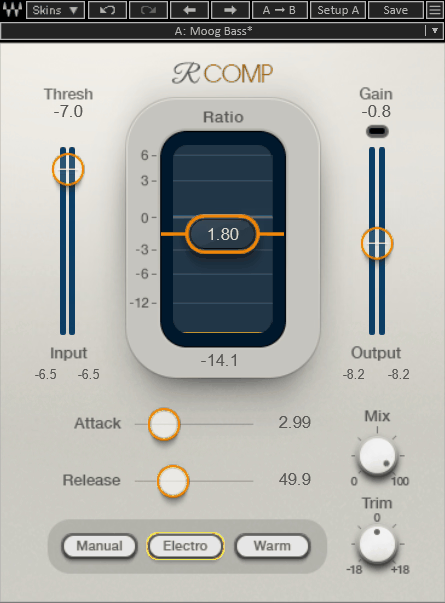
There’s a huge number of compressor plugins available, but few offer the versatility of the Waves Renaissance Compressor. While it’s not strictly an opto compressor, the opto mode deserves recognition as a capable and often overlooked option.
Essentially, you’re getting multiple high-quality compression algorithms in one plugin, which I feel is often more valuable than having a dedicated single-purpose tool. The optical algorithm provides smooth, musical compression that competes well with dedicated opto emulations. I mean, it might not have all the vintage mojo of a pure LA-2A clone, but it gets surprisingly close.
One feature that really catches my eye is the ARC (Automatic Release Control). This intelligently adjusts release time based on the incoming material, which often produces more musical results than fixed release settings. In my experience, this works particularly well on program material with varying dynamics, where static release times can sound either too fast or too slow depending on the section.
The interface emphasizes efficiency, with all the core parameters easily accessible. I’d say this makes it perfect for fast-paced production situations where you need solid results quickly. The opto mode specifically handles vocal and bass work with that smooth, controlled character that’s made optical compression a recording standard.
At its typical sale price, the Renaissance Compressor is kind of a no-brainer. Actually, I’d recommend it even if you already own dedicated opto plugins, just because the additional compression types provide valuable alternatives. Plus, it’s been used on countless hit records over the years, which speaks to its professional-grade quality.
9. Apogee Opto-3A
- Compatibility: Mac, Windows
- Format: VST, VST3, AU, AAX
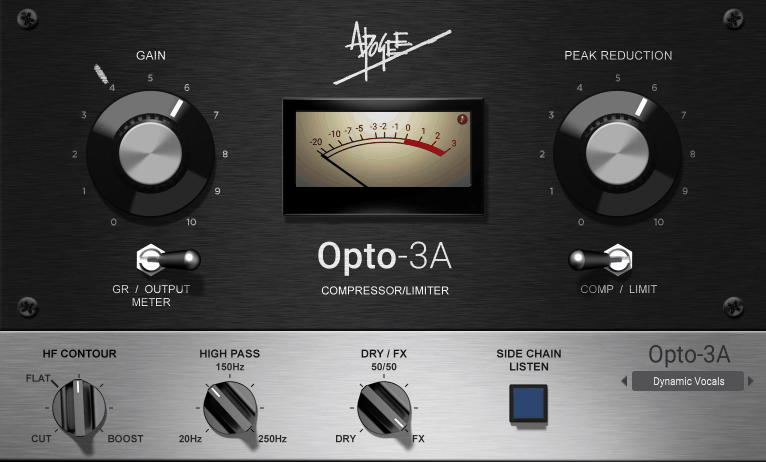
Setting itself apart from more common LA-2A style plugins, the Apogee Opto-3A takes its design cues from the LA-3A. I believe this less common hardware variant offers some real advantages for certain types of material.
The defining feature is the faster attack time compared to typical opto compressors. This quicker response makes it more effective at controlling transient-heavy sources like bass guitars and keyboards. Meanwhile, the release characteristics maintain that smooth, musical quality associated with optical compression. It’s sort of the best of both worlds in that sense.
What I really like about this plugin is the pristine sound quality, which reflects Apogee’s reputation for high-end audio gear. There’s a clarity and cleanliness to how it handles material that works particularly well in modern production contexts. I’ve found that it never adds unwanted artifacts or coloration, even during heavy processing.
The fixed threshold design simplifies the whole operation considerably. Generally, I appreciate when plugins embrace simplicity rather than overwhelming you with parameters. This streamlined approach means faster workflow and less time second-guessing your settings.
From my standpoint, the Opto-3A is particularly valuable for bass and keyboard sources where transient control is crucial. Having said that, it also works beautifully on vocals when you want transparency rather than obvious vintage character. I’d recommend it especially for modern pop and electronic productions where clarity and precision are valued over vintage warmth. It represents solid value for what you’re getting.
10. Analog Obsession LALA (Free)
- Compatibility: Mac, Windows
- Format: VST, VST3, AU, AAX
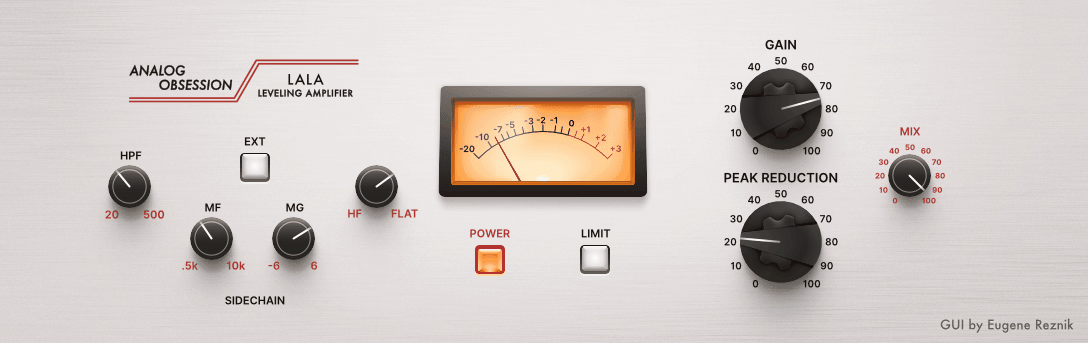
For some producers, the best opto compressor plugins are the ones that don’t cost anything, since they deliver professional results without any financial investment. However, even those with big plugin budgets should check out the Analog Obsession LALA, because it genuinely competes with commercial options.
This LA-2A style emulation captures the signature smooth compression behavior that made the hardware legendary. I’m honestly blown away by how authentic the gain reduction response feels. It shows that program-dependent release behavior that makes optical compression so musical and natural-sounding.
What really impresses me is the interface design. It keeps the simplicity of the original hardware without unnecessary additions, which means you can work fast without getting lost in complex parameters. To be honest, I appreciate this streamlined approach more than I expected.
I’ve found that vocals respond really well to this plugin. You can apply moderate to heavy compression, and performances come out controlled and leveled without sounding obviously processed. From what I’ve experienced, the algorithm handles the compression in a musically intelligent way that preserves character and emotion.
11. ADHD Leveling Tool (Free)
- Compatibility: Mac, Windows
- Format: VST, VST3, AU, AAX
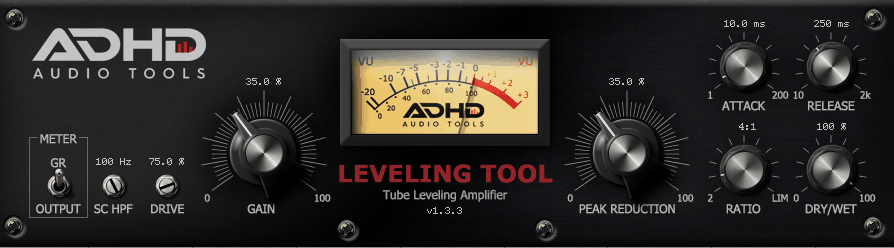
Taking a somewhat different approach from traditional opto emulations, the ADHD Leveling Tool focuses on transparency and ease of use above everything else. I think this makes it particularly valuable for specific applications where invisible processing is the goal.
The plugin is designed to level dynamics without adding obvious artifacts or coloration. In my experience, this works especially well on vocal recordings with wide dynamic range but where you want to maintain a natural, unprocessed quality. Sort of like having an invisible hand gently smoothing out the performance.
One feature I genuinely appreciate is the automatic gain compensation. You don’t need to constantly tweak makeup gain as you dial in more compression; it handles that smartly for you. This might seem like a small thing, but it actually streamlines the workflow considerably, especially when you’re comparing different compression amounts.
The compression algorithm stays remarkably clean even with moderate to heavy settings. I’ve observed that it never introduces the digital harshness that can plague some free plugins. On top of that, the visual feedback system provides clear real-time information about what’s happening to your signal, which helps you make better mixing decisions.
12. Analog Obsession COMPER (Free)
- Compatibility: Mac, Windows
- Format: VST, VST3, AU, AAX
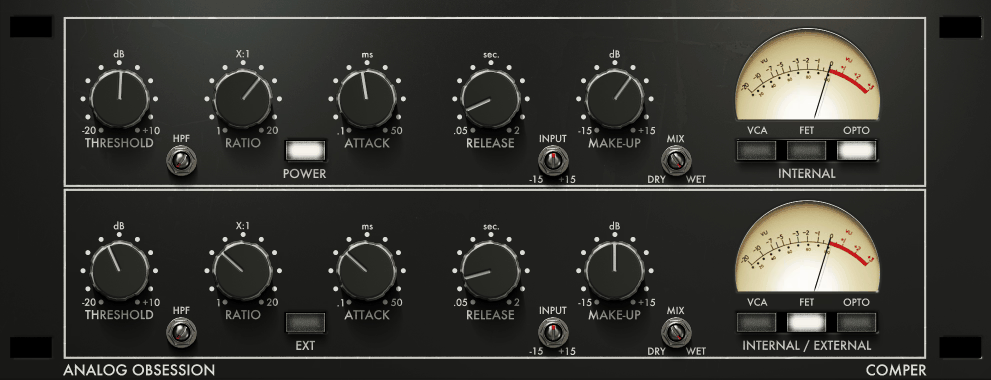
Wrapping things up with another stellar offering from Analog Obsession, the COMPER provides a more colored alternative to the developer’s LALA plugin. I believe this makes it suitable for different applications where tonal enhancement is just as important as dynamic control.
This compressor adds desirable harmonic content along with compression, resulting in a warm, enhanced quality that can help digital recordings acquire more analog character. For example, drums and bass guitars respond particularly well to this sonic signature. I’ve found that it adds a certain thickness and presence that’s hard to achieve with purely transparent processing.
What I love about the COMPER is how the saturation and compression work together seamlessly. Rather than feeling like separate processes stacked together, they’re integrated in a way that creates a unified sonic character. You know, some plugins feel like a collection of independent processors, but this feels like a complete instrument.
The control set stays intuitive and responsive, allowing everything from subtle glue compression to more aggressive leveling. I have to say, it’s impressive how musical the plugin stays even during heavy compression. It avoids the harsh, brittle qualities that can emerge when pushing lesser processors to their limits.
Hello, this blog is about more than just chorus, bass and synths. In fact, I started it to cover best VST plugins and Kontakt libraries, so you have easier time finding the right tools and instruments for your music production needs, mixing, as well as mastering. New tools and instruments are constantly evolving and need to get in front of audience, because even some of the best brands like Antelope Audio aren’t talked about enough – that’s what I want to change. I want to promote plugins that are less known but are perfectly relevant for certain topics.