
For some mix engineers, the best diode bridge compressor plugins are the ones that faithfully recreate vintage hardware, as they won’t require learning new operational paradigms beyond what they already know from classic studio gear.
However, many others choose to explore modern interpretations of this topology – plugins that either expand on the original designs or, in some cases, offer completely fresh takes on what diode bridge compression can achieve.
In many ways, these compressors work just like the hardware units you’ll be familiar with, but they run in software instead of taking up precious rack space. Some diode bridge plugins are strict emulations of specific console modules – recreations of legendary bus compressors are particularly popular – but others blend characteristics from multiple units or add contemporary features.
You’ll hear diode bridge compressors being referred to by a variety of different names – VCA-style bus compressors, console dynamics, or sometimes just referred to by the hardware they emulate – but at the core of it, they all operate using similar circuit topology.
Once installed on your PC or Mac, each diode bridge compressor can be loaded onto individual tracks or buses in your DAW, enabling you to shape dynamics with that characteristic fast, punchy response that’s defined countless hit records.
You can also automate parameters for creative effects, and each compressor will come with its own set of controls for dialing in everything from subtle glue to aggressive pumping.
Typically, you’ll find threshold, ratio, attack, and release controls, plus makeup gain to compensate for level reduction – parameters that can be adjusted for transparent leveling or pushed for obvious, characterful compression.
1. Tone Empire LT2COMP
- Compatibility: Mac, Windows
- Format: VST, VST3, AU, AAX
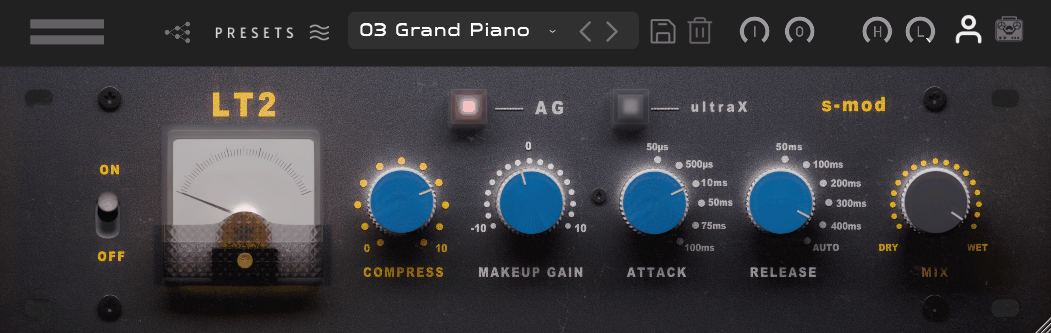
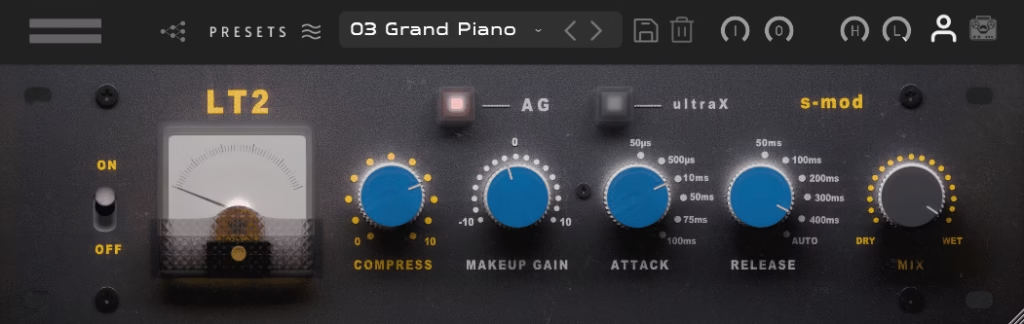
In terms of sheer aggressive character, the Tone Empire LT2COMP is hard to beat. Its circuit modeling focuses on a particularly rare hardware unit known for taking the diode bridge concept into extreme territory, making it perfect for productions that demand maximum impact and attitude.
Tone Empire built its reputation on characterful dynamics processors, and much of what the company learned from studying multiple vintage units has been deployed in the development of the LT2COMP. This means that the diode bridge elements are authentic and punchy, evident in the fast transient response and distinctive harmonic profile.
The LT2COMP’s biggest selling point, though, is its balance of aggression and control. There’s a lot to explore here, including how it responds to different input levels and how the ratio control affects the distortion character.
If you’d rather not spend time tweaking parameters, the compressor also responds well to straightforward settings – just set your threshold and ratio, and it delivers that classic diode bridge punch immediately. I think this makes it accessible even for engineers new to this compression style.
From my perspective, what really stands out is how it handles drum material. The attack speed is genuinely impressive, clamping down on transients with authority while adding harmonics that make everything feel more exciting. I’ve noticed that parallel drum processing becomes particularly effective with this plugin – you can really crush a duplicate track and blend it back in for modern, aggressive drum sounds.
One thing I’ve noticed is that the LT2COMP doesn’t try to be subtle. It’s designed for situations where you want obvious compression that contributes to the sonic character. For instance, on punk or hard rock productions, I’ll deliberately push this compressor into distortion because that grit becomes part of the production aesthetic. At the end of the day, this is a tool for adding energy and attitude, not transparent dynamics control.
2. Arturia Comp Diode
- Compatibility: Mac, Windows
- Format: VST, VST3, AU, AAX
There are probably more SSL-style bus compressor emulations peppering the plugin landscape than any other type of diode bridge processor, from various developers’ takes on the famous G-Series to boutique recreations of rare console modules.
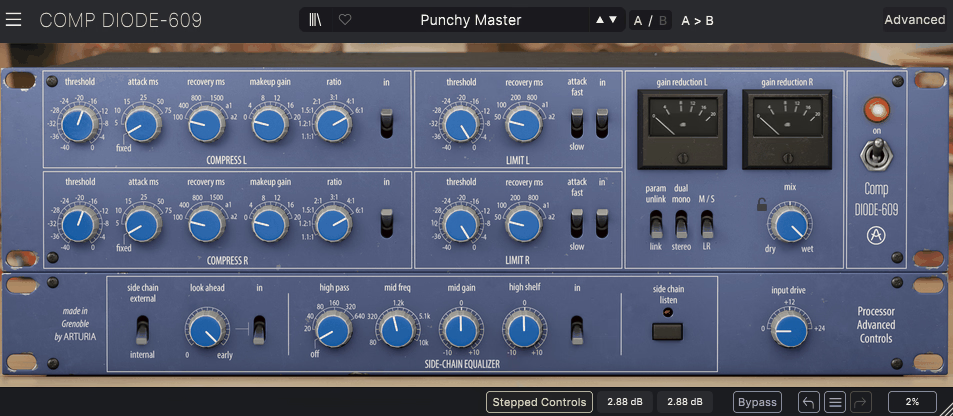
However, standing slightly apart from pure emulations is Arturia’s Comp Diode. Unlike strict hardware clones that replicate one specific unit, the Comp Diode is a modern interpretation that draws influence from multiple legendary diode bridge compressors. With its comprehensive feature set and enhanced visual feedback, users can achieve classic sounds or explore contemporary compression techniques that wouldn’t be possible with vintage hardware.
Released as part of Arturia’s FX Collection, the Comp Diode offers both authenticity and innovation. Honestly, I appreciate how Arturia balanced vintage character with modern usability – the interface provides way more visual information than most hardware emulations while maintaining that classic workflow.
What I like Comp Diode it is the metering system. You get clear, detailed visual feedback showing exactly how the compressor is responding to your audio. From what I can tell, this genuinely helps you understand what’s happening, especially when you’re learning how diode bridge compression affects different sources. At the same time, the plugin maintains low CPU usage, which means you can use it across multiple channels without performance issues.
I found that the sidechain filtering options add practical flexibility that vintage hardware couldn’t offer. Basically, you can shape how the compressor responds to different frequency ranges, preventing bass-heavy material from triggering excessive pumping. This kind of thoughtful feature implementation shows that Arturia considered real-world mixing challenges rather than just copying hardware specifications.
Overall, I believe the Comp Diode represents where diode bridge emulation meets modern production needs. It delivers that classic punch and glue while offering workflow enhancements that make it more versatile than straightforward hardware recreations.
3. Lindell Audio 354E
- Compatibility: Mac, Windows
- Format: VST, VST3, AU, AAX
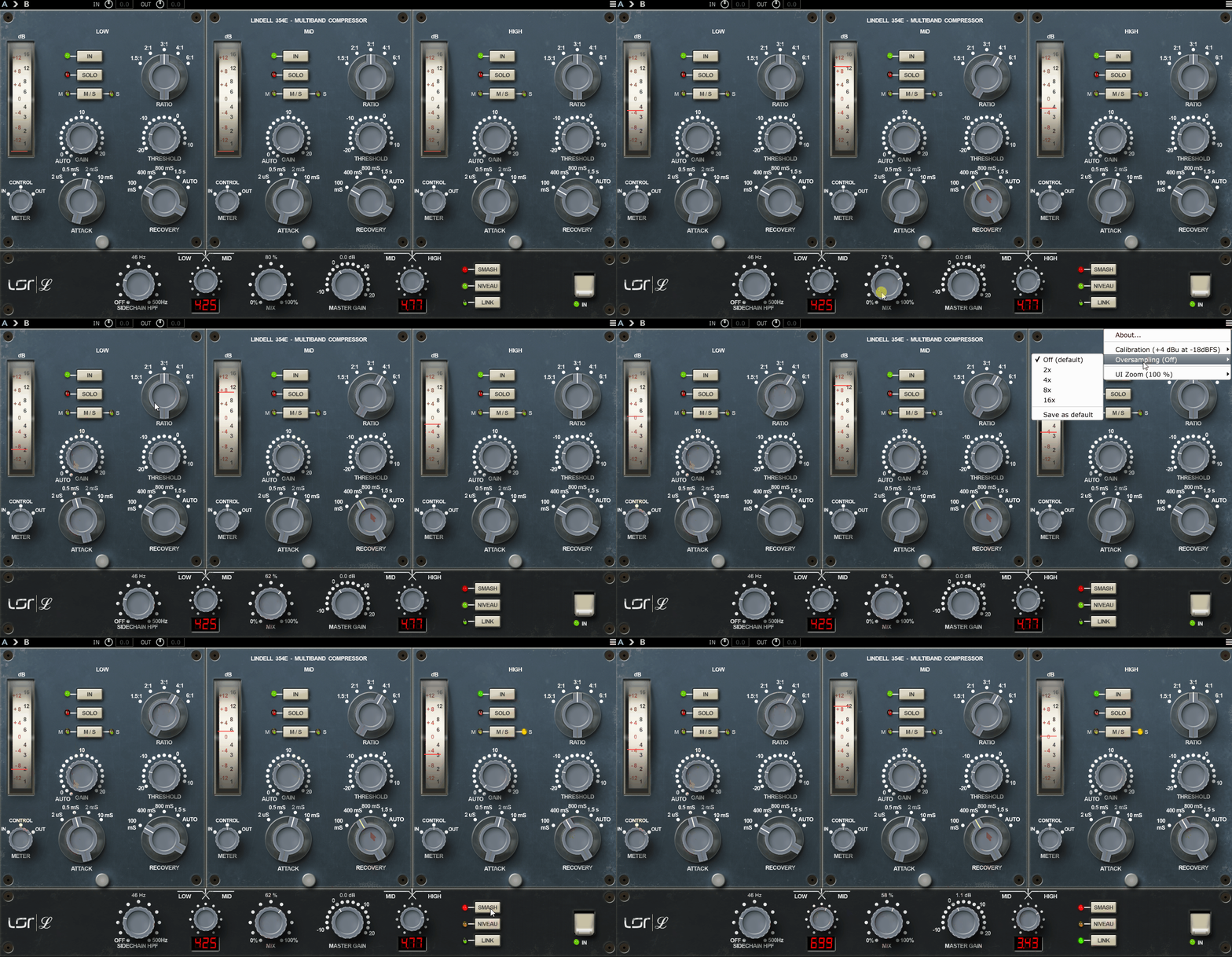
There’s a huge number of bus compressor plugins out there, and it would be a bit misleading to say that any one is definitively the best. For one thing, much of the discussion around which diode bridge compressor sounds “right” comes down to personal preference and the specific hardware unit being referenced. However, now that we’ve acknowledged that subjectivity, I’d say the Lindell Audio 354E deserves special recognition for its particularly musical interpretation of this topology.
Lindell Audio has been on a solid run with their console emulations, releasing several impressive dynamics processors that capture vintage character without excessive CPU demands. The 354E is another winner, taking its cues from a specific console compressor known for balancing aggression with refinement.
The original hardware is rightly celebrated for its ability to add punch without harshness. Lindell’s take is an extraordinarily faithful recreation, but it also improves on the original by incorporating modern conveniences like adjustable sidechain filtering and enhanced metering. A clean user interface and thoughtful parameter layout make it easy to dial in great sounds quickly.
What really impresses me is how the 354E handles stereo material. I’ve used it extensively on mix buses and drum overheads, where it brings everything together beautifully while adding energy and excitement. At first glance, you might think it’s just another bus compressor, but on second thought, it offers something unique in how it maintains stereo width while providing that glued-together quality.
The transformer modeling contributes significantly to the overall character. I realized through testing that this isn’t just about the diode bridge circuit – the transformer stage adds warmth and weight that complements the compression perfectly. When it comes to creating cohesion across complex mixes, this combination proves really effective.
I’d recommend the 354E particularly for engineers seeking bus compression that enhances rather than dominates. It’s one of those plugins that makes mixes feel more professional without calling attention to itself, which is exactly what you want from a bus compressor in many situations.
4. Waves V-Comp
- Compatibility: Mac, Windows
- Format: VST, VST3, AU, AAX
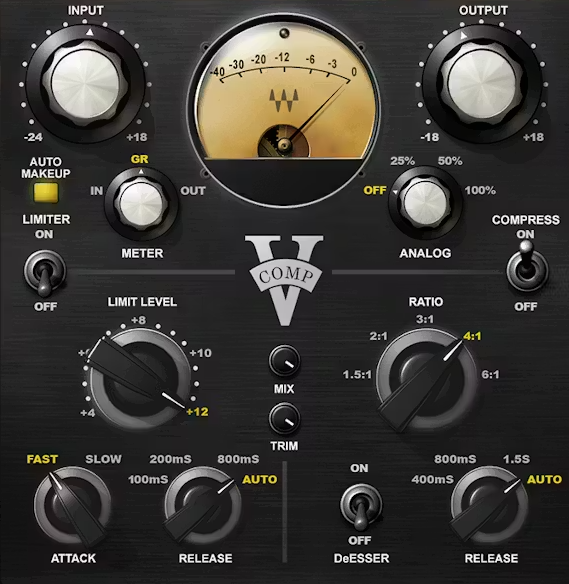
The Waves V-Comp has been around for years now, which makes it somewhat ‘vintage’ in plugin terms. In 2025 it still looms large over the diode bridge landscape, though.
Other developers might have released more recent emulations with flashier interfaces, but the V-Comp remains the go-to for countless professionals. I mean, there’s something to be said for a plugin that’s been proven on thousands of hit records over many years.
There’s so much history here that it’s hard to know where to start, but the headlines include authentic diode bridge character, fast attack response for controlling transients, musical release behavior, straightforward controls that encourage quick workflow, and that distinctive punch that’s defined commercial productions for decades. And the sound? Think tight, energetic mixes, cohesive drum buses, forward vocals that cut through dense arrangements, and overall glue that makes individual elements work together as a unified whole.
In 2025, there are arguments to be made that other bus compressors offer more features or more detailed modeling. Plugin Alliance’s various console emulations, for example, provide deeper control over individual parameters. It would be impossible to write a ‘best plugins’ list without mentioning the V-Comp, though. An exemplar of proven plugin design, it remains nothing short of essential for anyone serious about modern mixing.
From my experience, what makes the V-Comp special is its consistency. Every time you load it, you know exactly what you’re getting – that forward, punchy character that’s shaped countless hit records. I’m not gonna lie, I’ve used this on probably hundreds of mix buses over the years, and it just keeps delivering reliable results.
One thing I’ve observed is how well it handles parallel compression workflows. The mix control makes it easy to blend heavily compressed signal with your dry audio, which is perfect for modern production techniques where you want impact without losing dynamics entirely. Plus, the CPU efficiency means you can use multiple instances without system strain.
5. IK Multimedia Precision Comp
- Compatibility: Mac, Windows
- Format: VST, VST3, AU, AAX
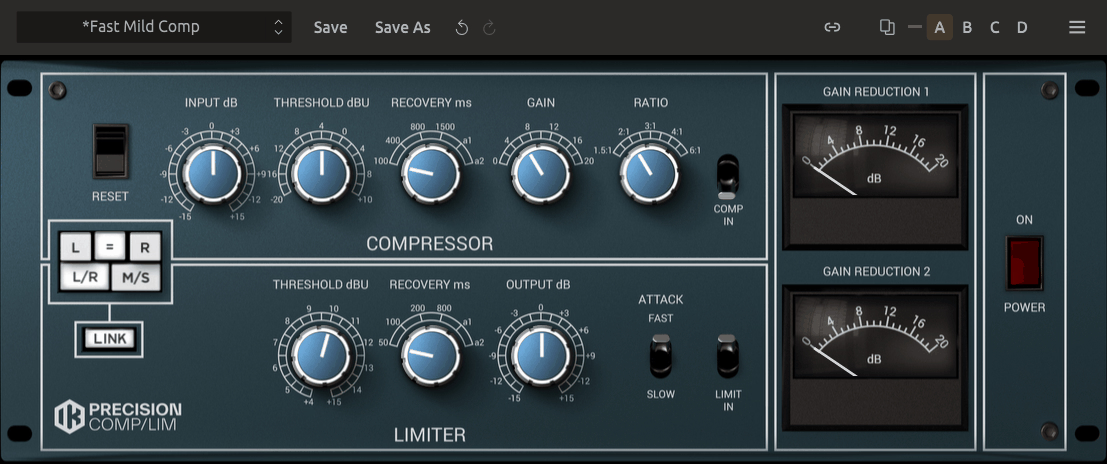
Generally when we think of diode bridge compressors, we think of straightforward emulations that replicate specific hardware units. While there are certainly similarities between the IK Multimedia Precision Comp and traditional diode bridge designs, what makes this plugin special is that it offers a genuinely modern take on the concept.
What makes the Precision Comp stand out is the fact that it presents users with enhanced control beyond what vintage hardware provided. You get detailed parameters for shaping attack curves, release characteristics, and sidechain behavior. There’s huge flexibility in how these elements can be adjusted, too, enabling you to adapt classic diode bridge character to sources that traditionally wouldn’t work well with this aggressive compression style.
The flipside to the Precision Comp’s depth is that it might be overwhelming for engineers seeking simple, straightforward compression. There’s authentic diode bridge punch to explore, but realistically, those willing to dive into the expanded parameter set are the ones likely to get the most out of it.
That being said, I think the additional control proves genuinely valuable in modern production contexts. For example, the detailed sidechain filtering lets you prevent specific frequency ranges from triggering compression, which solves common problems like kick drums causing excessive pumping on full mixes. In other words, you get that classic aggressive character with surgical control over exactly how it behaves.
What I appreciate most is the visual feedback system. The metering and graphical displays show you exactly what’s happening to your audio in real-time, which I find genuinely educational. You know, understanding compression behavior through visual representation helps you make better decisions faster than just relying on your ears alone.
From what I can tell, the Precision Comp represents where diode bridge compression is heading – maintaining that classic circuit topology while embracing modern workflow enhancements. It’s not trying to be a vintage recreation; instead, it takes the best aspects of diode bridge designs and expands on them with contemporary production tools.
I’d say it’s worth serious consideration if you want diode bridge character with maximum flexibility. The ability to fine-tune every aspect of the compression response means you can make this topology work on virtually any source material, not just the typical drums and buses where diode bridge compression traditionally excels.
Hello, this blog is about more than just chorus, bass and synths. In fact, I started it to cover best VST plugins and Kontakt libraries, so you have easier time finding the right tools and instruments for your music production needs, mixing, as well as mastering. New tools and instruments are constantly evolving and need to get in front of audience, because even some of the best brands like Antelope Audio aren’t talked about enough – that’s what I want to change. I want to promote plugins that are less known but are perfectly relevant for certain topics.