
There’s a reason guitarists obsess over overdrive – it sits in that magical zone where your tone gets attitude without losing its identity. Overdrive has defined guitar sounds across generations, from Stevie Ray Vaughan’s Texas blues through to modern rock riffs that shake stadiums.
What makes software versions so appealing is how they capture those beloved analog circuits while adding features like precise EQ sculpting and parallel processing that physical pedals simply can’t offer.
The defining characteristic of great overdrive is how it interacts with your playing. Touch sensitivity matters enormously – when you play lightly, the tone stays relatively clean with added warmth, but when you dig in harder, the saturation blooms naturally. This responsive quality creates an organic connection between your hands and the sound coming out, which is why players get so passionate about finding the right overdrive for their style.
What you’ll find here covers everything from meticulously accurate pedal recreations through to bold new designs that reimagine what overdrive can do. Looking for warm tube-amp breakup or aggressive saturated punch? Both ends of the spectrum are represented.
1. HoneyComb Bass Overdrive
- Compatibility: Windows, macOS
- Format: VST, VST3, AU, AAX
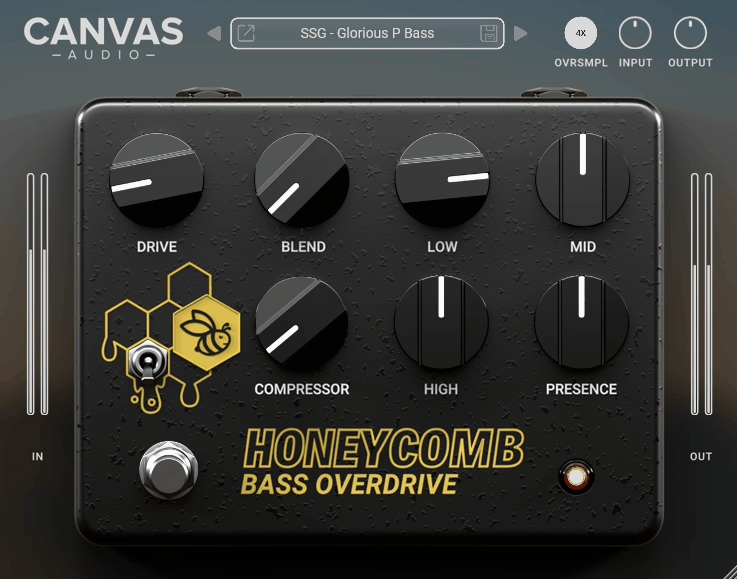
Bass needs special consideration when it comes to overdrive because you can’t just slap guitar-focused distortion on low frequencies and expect good results. Canvas Audio built HoneyComb Bass Overdrive from the ground up for bass guitar, synth bass, and sub frequencies, which means it adds character without turning your low end into an undefined mess.
What makes this work so well is the multiband approach where you can saturate your mids and highs for presence and aggression while keeping your fundamental bass notes clean and powerful. This kind of frequency-conscious processing is what separates tools designed for bass from generic effects that treat all frequencies the same way. The tone shaping here is genuinely musical rather than just basic filtering, giving you real control over your sound’s character.
The dynamic response is particularly well-implemented – play with a light touch and you get pristine low end with subtle harmonic warmth, attack the strings aggressively and the saturation comes alive in a way that feels interactive. It’s this kind of response that makes it feel like you’re playing through analog hardware rather than just applying static digital processing.
Producers working with electronic bass appreciate how it adds harmonic richness and presence without sacrificing the sub-bass weight that drives club tracks. Rock and metal bassists find it delivers that aggressive midrange bite that lets bass cut through walls of distorted guitars without turning up to ridiculous volumes. The blend control is brilliant too – you can mix your clean signal with the driven sound to keep your fundamental clarity while adding all that harmonic excitement on top.
The visual feedback shows you exactly what’s happening across your frequency spectrum, which removes the guesswork from dialing in your sound. Despite all the multiband processing happening, it runs efficiently enough to use in real-time without latency concerns.
2. Nembrini Audio Clon Minotaur (Free)
- Compatibility: Windows, macOS, iOS
- Format: VST, VST3, AU, AAX, AUv3
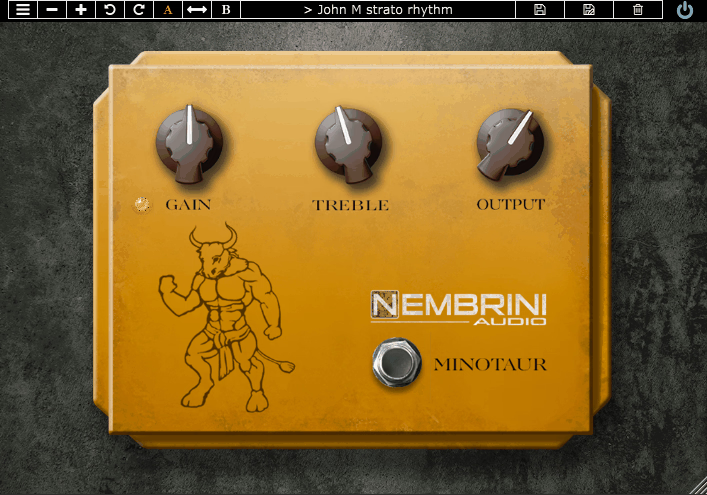
The Klon Centaur achieved legendary status because it enhanced your guitar’s natural voice rather than covering it up with heavy processing. Nembrini’s Clon Minotaur captures exactly what made that circuit special – the way it adds harmonic complexity and singing sustain without fundamentally changing your tone’s character.
What’s remarkable about this emulation is how accurately it reproduces that touch-sensitive behavior where the amount of drive responds to how hard you pick. Play with a light touch and you get this beautiful shimmer and harmonic enhancement that just makes everything sound more three-dimensional. Dig in harder and you get creamy sustain with controlled saturation that never crosses into harsh territory. The tone control is particularly well-voiced, shaping the harmonic content in ways that stay musical no matter where you set it.
The gain sweep takes you from subtle boosting that adds presence and sparkle all the way through to medium overdrive with gorgeous sustain perfect for lead work. It deliberately stays away from heavy distortion because that’s not what this circuit is about – it’s focused on enhancement and refinement rather than transformation. This restraint is exactly what makes it so versatile.
Where this really proves its worth is how beautifully it plays with other effects. Stack it before an amp sim to increase sensitivity and dynamics, or place it after distortion to tighten and focus heavy tones. The fact that there’s a full-featured iOS version means you can take identical processing quality into mobile recording situations, which opens up creative possibilities beyond the studio.
Blues players love how it delivers that vocal sustain on lead lines while keeping notes clear and defined. Clean tone enthusiasts use it to add dimension and presence without pushing into obvious distortion. It even sounds gorgeous on acoustic guitar, warming up fingerpicked parts with character that feels natural rather than processed.
3. Kuassa Efektor OD3603
- Compatibility: Windows, macOS
- Format: VST, VST3, AU, AAX
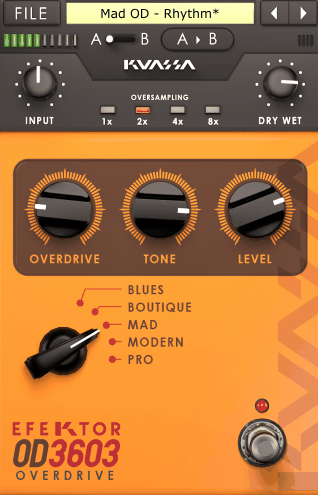
Kuassa has earned serious respect for delivering professional-sounding plugins at accessible prices, and Efektor OD3603 absolutely lives up to that reputation. Instead of cloning one specific pedal, they’ve created their interpretation of what modern overdrive should sound like, pulling together characteristics from various classic designs into something immediately practical.
The control layout keeps things beautifully simple – drive, tone, and output level give you everything you need without drowning you in options. What’s smart is how these three controls interact across the full range of settings, with the tone shaping staying musical whether you’re using minimal drive or cranking it hard. This kind of thoughtful design makes the plugin feel intuitive rather than requiring constant reference to a manual.
You get three distinct modes – Natural, Boutique, and Vintage – that deliver different flavors ranging from transparent enhancement through to classic rock saturation. Having these options built in means you’re not locked into one specific sound, which matters when you’re working across different genres or trying to fit guitar into various production contexts. Each mode has its own character while still feeling cohesive.
The dynamic response is spot-on – roll back your guitar volume and the drive cleans up beautifully, turn it up and saturation increases naturally. This interaction between your playing and the effect is what separates useful overdrive from flat, lifeless processing that just sits there doing the same thing regardless of input. It feels alive and responsive.
Works brilliantly on rhythm guitar where you need grit and presence without chord notes turning into mush. Lead tones get that singing sustain without becoming undefined, and even bass guitar sounds good through it when you want some drive without sacrificing low-end clarity. The CPU efficiency means you can use it across multiple tracks without your computer struggling.
4. Audiority Dr. Drive (Free)
- Compatibility: Windows, macOS
- Format: VST, VST3, AU, AAX
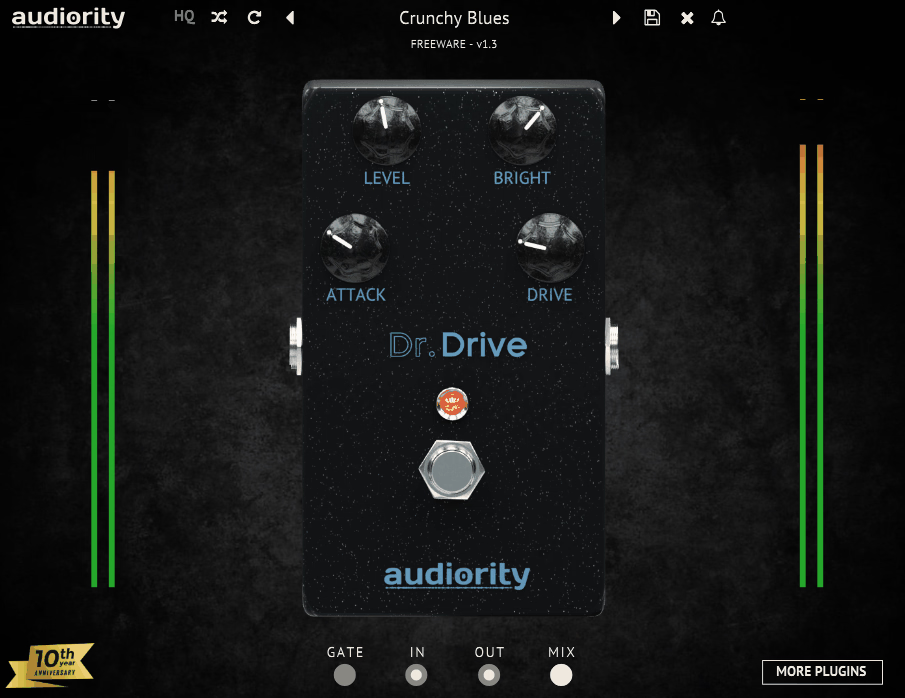
British amplifier-style overdrive is what Audiority’s Dr. Drive is all about, capturing that Marshall-inspired aggression that powered rock music for decades. This isn’t trying to be subtle or transparent – it’s designed for that aggressive midrange push and harmonic saturation that makes power chords sound absolutely huge in a mix.
The tone stack operates like a real amp, with bass, middle, and treble controls that interact musically rather than just acting as basic EQ. The middle control is particularly powerful here – push it up for that in-your-face rock aggression, pull it down for scooped modern metal tones. This kind of interactive EQ behavior is what gives it that authentic amplifier feel, and it works beautifully across different gain settings and musical styles.
What really elevates this beyond basic overdrive is the presence control that adds top-end complexity and air. It’s not just making things brighter – it’s adding that harmonic richness in the upper frequencies that helps guitar cut through dense mixes without sounding harsh or fatiguing. This is the kind of detail that separates good overdrive from something that sounds truly three-dimensional and alive.
The gain range covers everything from chunky rhythm crunch all the way through to saturated lead sustain with singing harmonics. Even when you push it hard, it maintains articulation and note definition rather than turning into fuzzy mush, which is crucial for technical playing or when you’re working with complex chord voicings that need clarity.
Rock and metal guitarists find this delivers that classic British amp character without needing actual Marshall heads and cabinets taking up space. Recording direct works exceptionally well – pair it with a quality impulse response and you’ve got genuinely legitimate heavy tones. The parallel processing option lets you blend clean low frequencies with driven upper mids and highs for rhythm tones that are both massive and defined.
5. TSE Audio BOD (Free)
- Compatibility: Windows, macOS
- Format: VST, VST3, AU, AAX
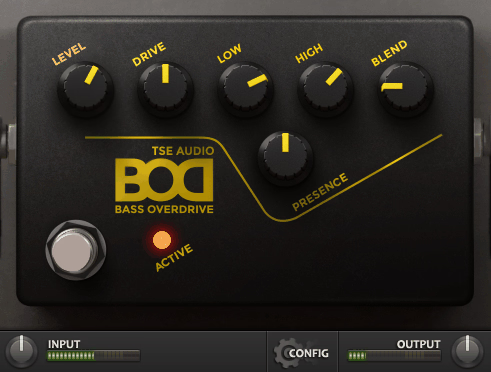
TSE Audio made their name with exceptional free plugins, and BOD continues that tradition beautifully. This emulates the famous green overdrive pedal that became essential gear for countless players worldwide, and it captures that mid-focused character perfectly without costing you anything.
The circuit modeling here is genuinely impressive when you consider the zero price tag. You get that pronounced midrange emphasis that lets your guitar cut through dense band mixes without getting buried, placing you perfectly in the sonic landscape. The tone control behaves exactly like the hardware – roll it back for darker, smoother tones perfect for blues leads, crank it forward for biting treble that works beautifully on aggressive rock rhythm parts.
What’s particularly impressive is how it responds to different guitars and pickups. Single coils get added thickness and sustain without losing their characteristic sparkle and clarity, while humbuckers gain focus and definition without becoming overly harsh or piercing. This kind of adaptability makes it genuinely versatile across different instruments and playing approaches, which is remarkable for a free plugin.
The level control provides substantial output boost when you need it, making this effective as both an overdrive for saturation and a clean boost for hitting your amp sim harder. Stack it with other drives and it plays nicely with them, adding its characteristic midrange focus without creating harsh conflicts or unwanted resonances.
Tube screamer fans will immediately feel at home with the familiar control layout and tonal characteristics that defined so many classic recordings. Budget-conscious producers get genuinely professional-quality overdrive without spending a dime. The sound quality easily competes with expensive commercial alternatives, proving that free doesn’t automatically mean inferior when developers genuinely care about quality.
Works brilliantly for tightening high-gain amp tones by placing it before heavier distortion with low gain and high output. Blues and rock applications benefit from that singing sustain and rich midrange that makes solos stand out. CPU usage is practically nothing, so you can use it across as many tracks as you want without worry.
6. VZtec overdrive (Free)
- Compatibility: Windows, macOS
- Format: VST, VST3, AU, AAX
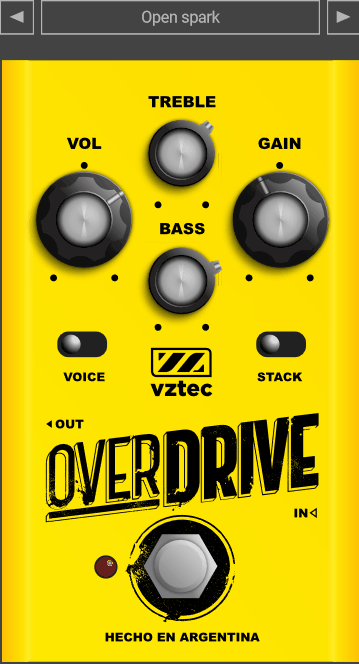
VZtec took a different approach with their overdrive, focusing on modern production flexibility rather than vintage pedal emulation. This plugin gives you control over saturation characteristics in ways traditional designs simply can’t match, which opens up creative territory that goes beyond just plugging in and playing.
The multi-stage gain architecture is what sets this apart – you can shape how the saturation develops rather than just adjusting a single drive knob. This means you can create everything from smooth, compressed saturation through to aggressive, hard-clipping distortion. Having this level of control matters enormously when you’re sculpting specific tones for production work where generic one-size-fits-all processing won’t cut it.
What’s particularly clever is the frequency-conscious saturation that lets you target specific ranges for drive while leaving others cleaner. This surgical approach helps maintain clarity in dense mixes where traditional full-spectrum overdrive might create muddiness or mask other elements. The tone controls go way beyond basic treble adjustments, offering genuine tonal sculpting that stays musical even at extreme settings.
The dynamic envelope control deserves special mention because it affects how the drive responds to transients in your signal. You can dial in everything from instant aggressive attack through to softer, more compressed responses that smooth out peaks. This is the kind of feature you won’t find in pedal emulations, but it proves genuinely valuable in production contexts where you need precise control.
7. Audiority The Driver
- Compatibility: Windows, macOS
- Format: VST, VST3, AU, AAX
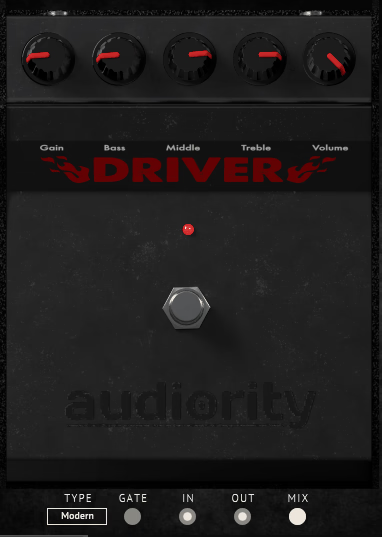
Classic transparent overdrive gets Audiority’s treatment in The Driver, which captures that crystal-clear drive character players love when they want enhancement without transformation. This is overdrive that works with your existing tone rather than against it, adding harmonic complexity and sustain while respecting your guitar’s fundamental voice.
The three-band EQ section provides tonal control that goes beyond what simple tone knobs can offer. You can independently shape low-end body, adjust midrange aggression, and control high-end sparkle to fit the overdrive perfectly into different mix contexts. This flexibility prevents the sound from becoming one-dimensional, which is crucial when you’re using overdrive across various musical situations and production styles.
What makes this feel authentic is the amp-like response to playing dynamics. Back off your volume and it cleans up gorgeously, maintaining clarity with just a touch of warmth. Push harder and the grit emerges naturally, creating that interactive feel where your playing technique directly affects the amount of saturation. It’s this responsiveness that makes overdrive feel like a living part of your sound rather than just another processor in the chain.
The gain staging options make this versatile enough for multiple applications – subtle always-on enhancement that just makes everything sound a bit better, medium drive for rhythm crunch with character, or pushed hard for singing lead tones with sustain. This range means it works throughout entire productions rather than just handling one specific task.
Session guitarists appreciate how it enhances without imposing its own character, letting the guitar and player’s technique come through clearly in the recording. Recording engineers find it useful for adding presence and dimension to DI guitar without the processing becoming obvious or artificial. The stereo enhancement features create width on doubled guitar tracks without introducing weird phasing problems that can ruin a mix.
Works beautifully in virtual pedal chains whether you place it first as a clean boost or after distortion for added clarity and definition. The visual metering shows gain reduction and output levels clearly, helping you maintain proper gain staging throughout your entire signal path.
8. MMS S-Drive
- Compatibility: Windows, macOS
- Format: VST, VST3, AU, AAX
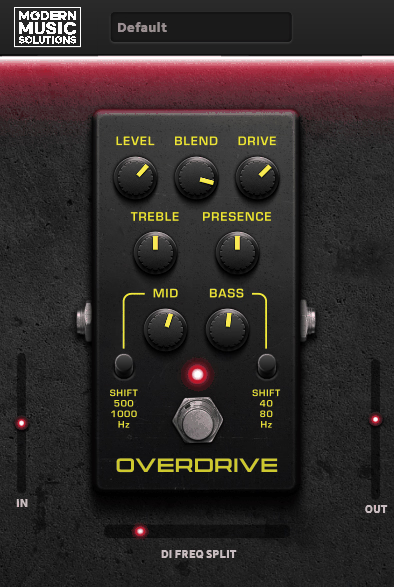
Modern Music Solutions developed S-Drive as a contemporary overdrive concept that pulls from classic circuit inspiration while adding modern production capabilities. The modeling emphasizes musical saturation that works across diverse sources – obviously guitars, but also bass, keyboards, drums, and even vocals benefit from the harmonic enhancement it provides.
The saturation character leans decidedly toward warm and musical rather than harsh and digital. You get analog-style harmonic generation that adds perceived loudness and presence without actually increasing peak levels significantly, which makes it incredibly useful for mix bus and mastering applications where you want cohesion and excitement without crushing dynamics or losing headroom.
Drive characteristics adjust smoothly across the entire range – low settings add subtle warmth and thickness that’s barely noticeable but makes everything sound more polished, medium drive provides classic overdrive character with presence and grit, higher settings deliver rich saturation without becoming abrasive or fatiguing. The tone control shapes harmonic content intelligently, staying useful throughout its entire sweep rather than becoming unusable at extreme positions.
What’s particularly smart is the built-in high-pass and low-pass filtering that helps you target specific frequency ranges for saturation. This prevents low-end from getting muddy when you add drive, and it controls excessive high-frequency harshness that can occur with heavier saturation settings. The filters integrate seamlessly into the design rather than feeling like tacked-on afterthoughts.
9. Green Reaper GR9 (Free)
- Compatibility: Windows, macOS
- Format: VST, VST3, AU, AAX
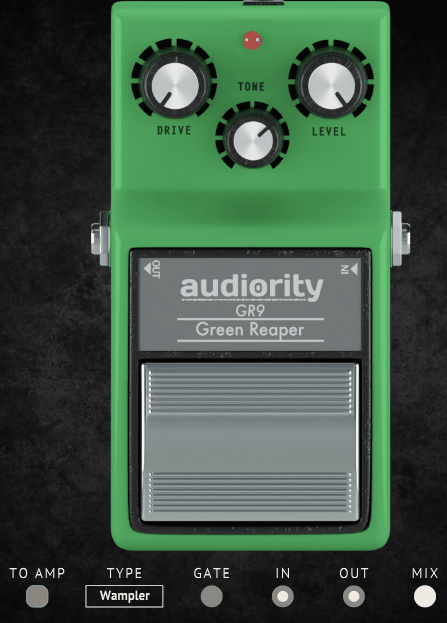
Audiority’s Green Reaper GR9 takes inspiration from that famous green pedal that shaped modern guitar tone across multiple genres. This delivers focused midrange character that slices through dense mixes like a knife, making your guitar audible and present without having to turn up to ridiculous volumes that unbalance everything.
The circuit modeling captures that characteristic mid hump that makes this type of overdrive so effective for pushing amp sims or layering with other drive pedals. The tone control works exactly how players expect – rolled back it gives you smooth, darker tones perfect for bluesy lead work, cranked forward it delivers biting aggression ideal for rock rhythm parts that need to cut through.
What’s particularly well-implemented is how it maintains low-end definition even when you crank the gain. This makes it exceptional for metal rhythm work where you need clarity and precision on palm-muted chugging passages. The tight bass response prevents that flubby low-end that can ruin heavy tones and turn powerful riffs into undefined mush.
Hello, this blog is about more than just chorus, bass and synths. In fact, I started it to cover best VST plugins and Kontakt libraries, so you have easier time finding the right tools and instruments for your music production needs, mixing, as well as mastering. New tools and instruments are constantly evolving and need to get in front of audience, because even some of the best brands like Antelope Audio aren’t talked about enough – that’s what I want to change. I want to promote plugins that are less known but are perfectly relevant for certain topics.