
Ask ten producers what attracted them to modular synthesis and you’ll likely hear ten wildly different answers. For some, it’s the thrill of routing signals in unexpected ways and stumbling onto textures that no preset could deliver. For others, it’s the educational value of understanding every single step between an oscillator and a speaker.
Modular plugins put this experience inside your DAW. The fully modular variety drops individual components onto a virtual workspace and lets you wire them together with cables, replicating the patch-and-play workflow of a real Eurorack system.
Semi-modular options take a gentler approach, shipping with connections already made but giving you the option to reroute things whenever inspiration strikes. Both styles reward curiosity, and both can generate results that conventional synths with fixed architectures never will.
In this roundup, we’ve selected the 13 strongest paid modular and semi-modular synth plugins on the market today, followed by three free alternatives worth downloading immediately. Every plugin here was chosen based on sound quality, creative potential, and the unique angle it brings to patchable synthesis.
1. Kilohearts Phase Plant
- Compatibility: Windows, macOS
- Format: VST, VST3, AU, AAX
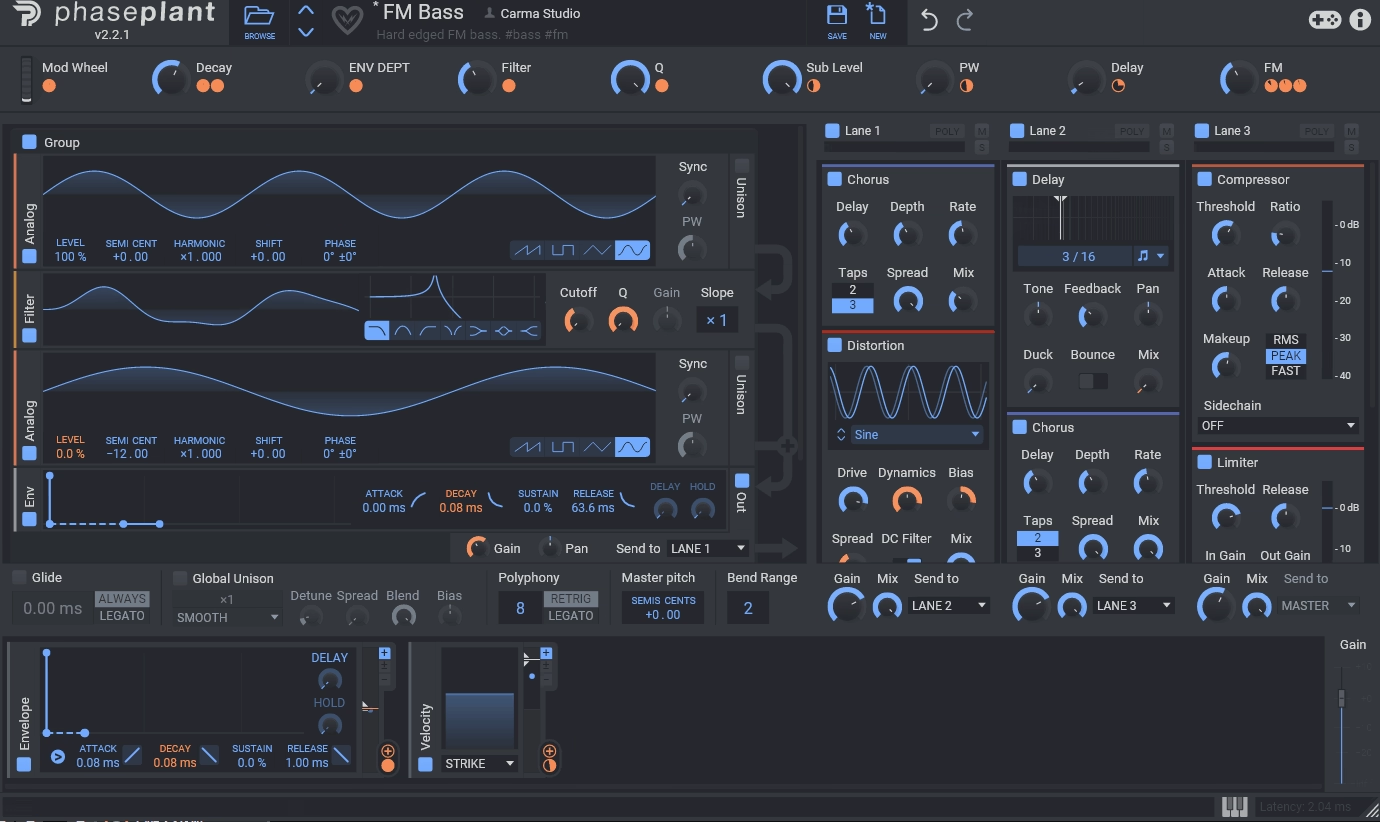
Modular synths in software tend to borrow their visual language from hardware. Phase Plant rejected that idea entirely and invented its own. The result is a plugin-native modular instrument that feels like it was designed for a screen rather than bolted onto one, with a workflow built around drag-and-drop efficiency instead of cable spaghetti.
The workspace loads completely empty. Five generator categories are available to populate it: analogue oscillators, wavetable engines, sample players, a granular processor, and noise sources.
Each one slots into the signal chain wherever you place it, and they can run in parallel lanes or feed into each other depending on the routing you choose. The wavetable section includes a built-in editor for importing, drawing, or morphing your own tables, which adds another dimension to what’s already an extraordinarily flexible sound engine.
What keeps pulling users back is the Snapin system. Kilohearts has created a growing library of individual effect modules that function both as standalone DAW plugins and as modular components inside Phase Plant’s three processing lanes. Buying a new Snapin expands Phase Plant automatically. The per-voice poly toggle on effects lanes means each note in a chord can receive different processing, a trick that produces rich, animated textures from even the simplest starting material.
FM and AM cross-modulation between generators works at audio rate. MPE controllers feed per-note expression data directly into the modulation matrix. More than 300 factory patches cover genres from ambient to heavy bass design, and lifetime free updates ensure the synth keeps evolving long after purchase.
2. VCV Rack 2
- Compatibility: Windows, macOS, Linux
- Format: Standalone (free), VST3 (Pro version)
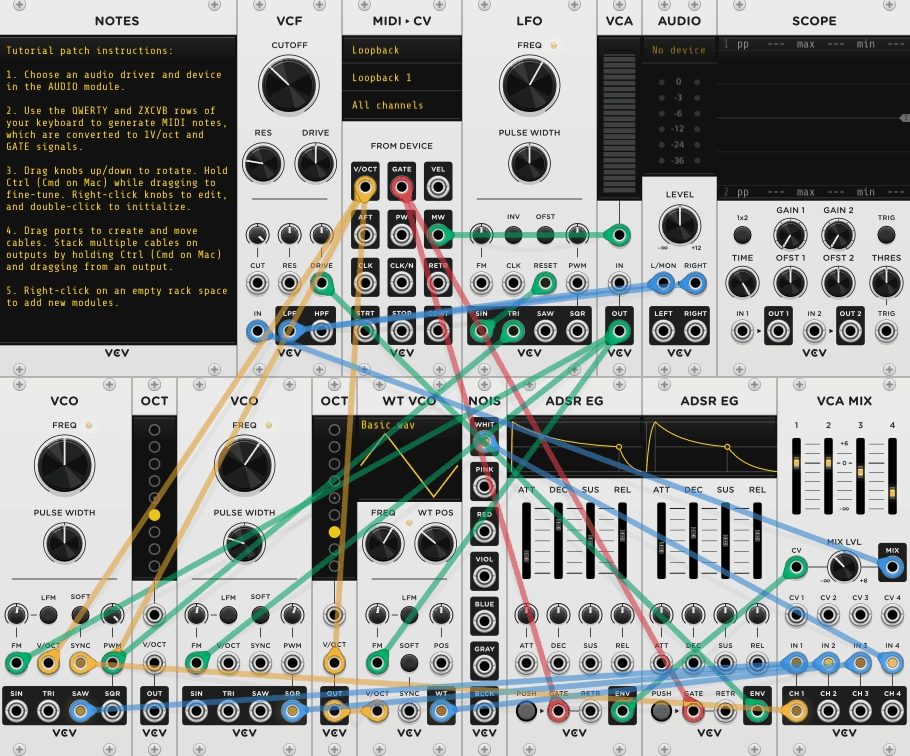
The idea behind VCV Rack 2 is simple but ambitious: take the entire Eurorack modular ecosystem and put it on a computer screen. The execution is astonishingly good. This free, open-source platform delivers virtual modular synthesis with a fidelity and depth that makes most paid alternatives feel shallow by comparison.
Every sound begins at zero here. Want a basic subtractive patch? You’ll need to grab an oscillator module, cable it into a filter, run that through a voltage-controlled amplifier, and set up an envelope to shape the dynamics. The hands-on wiring process is the whole point, and it teaches more about how synthesizers actually work than any tutorial video could.
Over 30 Fundamental modules handle the essentials. Browse further and you’ll discover 170+ officially endorsed modules recreated from manufacturers like Mutable Instruments, Befaco, and Instruo, plus a community library running into the thousands of additional free options. The ecosystem is enormous.
Stepping up to the $99 Pro version unlocks full DAW integration via a VST plugin. That brings multichannel audio output, offline rendering, MIDI clip recording, and the ability to automate 1,024 parameters from your sequencer. Version 2’s ambient dark room display, improved module browsing, saveable module templates, and polyphonic cabling make navigating large patches significantly smoother than before.
3. u-he Bazille
- Compatibility: Windows, macOS, Linux
- Format: VST, VST3, AU, AAX
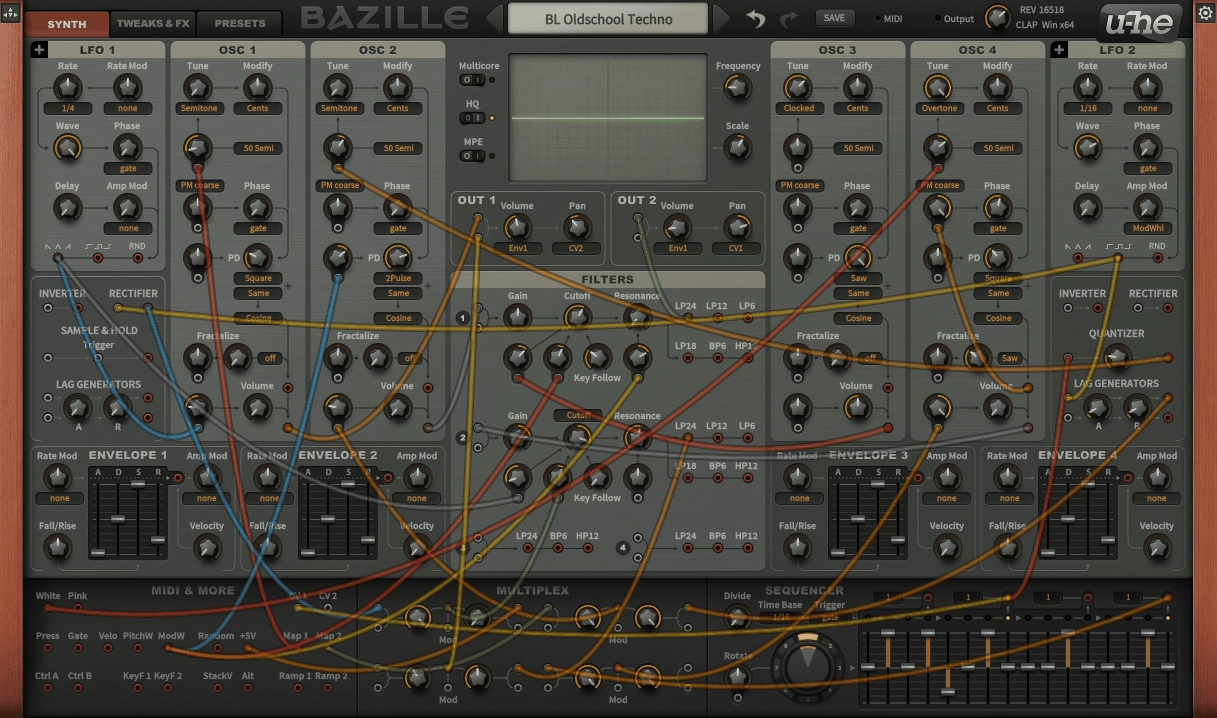
Most modular plugins chase analogue warmth. Bazille chases something else entirely, a sharp, complex digital character rooted in frequency modulation and phase distortion. Born from u-he’s Berlin Modular research initiative, it occupies a unique space where 1980s synthesis methods meet a fully patchable modular signal flow.
The instrument centres on four oscillators, each simultaneously running FM, phase distortion, and a process called Fractal Resonance that produces sync-like harmonics from simple input waveforms. Dialling down the frequency of any oscillator to 0 Hz transforms it into a custom-shaped modulation source, erasing the traditional line between audio signals and control voltages. This fluidity between roles is essential to how Bazille generates its most interesting patches.
Warming up the digital core are four analogue-style multimode filters, each offering six parallel taps across lowpass, bandpass, and highpass. The Multiplex units function as far more than simple signal splitters, doubling as ring modulators, crossfaders, and amplitude shapers depending on how the connections are made.
An 8×16-step morphable sequencer with a Rotate parameter lets you crossfade between up to eight stored patterns, creating perpetually shifting melodic sequences. 1,700+ presets and four integrated effects (delay, distortion, phaser, spring reverb) round out an instrument that rewards patience with sonic discoveries you simply won’t make anywhere else.
4. Arturia Modular V3
- Compatibility: Windows, macOS
- Format: VST, VST3, AU, AAX
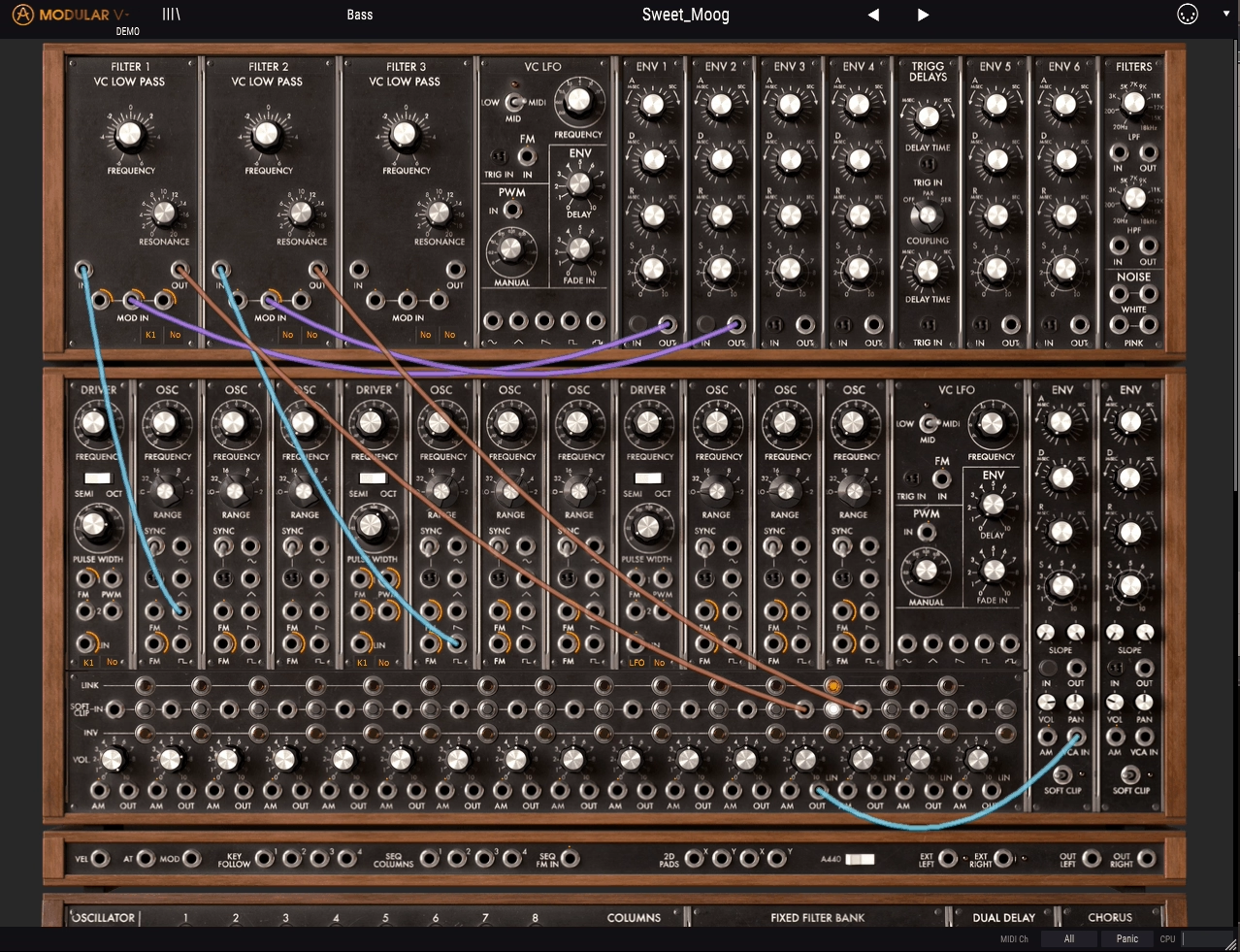
Before modular synthesis existed in plugin form, it lived in room-sized Moog systems that cost more than most cars. Only a handful of these instruments survive today, and owning one is out of the question for virtually everyone. Arturia’s Modular V3 brings that same colossal sound into your DAW, painstakingly modelled from the original hardware’s oscillators, the iconic 24dB ladder filter, envelope generators, and VCA stages.
The on-screen rack mirrors the physical layout of a real Moog system. Virtual patch cables click into place between modules, and the hands-on nature of the process gives every session a tactile satisfaction that point-and-click interfaces rarely deliver. Those modelled oscillators produce the thick, harmonically loaded waveforms synonymous with the Moog name, and the ladder filter recreation glides through resonance with an unmistakably creamy, musical sweep.
Arturia pushed well past faithful recreation, though. Polyphonic voice allocation converts a historically monophonic beast into a chord-capable instrument. Updated sequencer tools, broadened modulation routing, and modern effects processing give producers every reason to use this on current sessions rather than treating it as a nostalgic curiosity.
Perhaps most valuably, building patches on the Modular V3 teaches the core principles of subtractive and modular synthesis from the ground up. Every connection has to be deliberate, every signal path has to be understood, and the stunning sonic weight of the output makes that learning process feel like a creative adventure.
5. Roland SYSTEM-100
- Compatibility: Windows, macOS
- Format: VST, AU, AAX
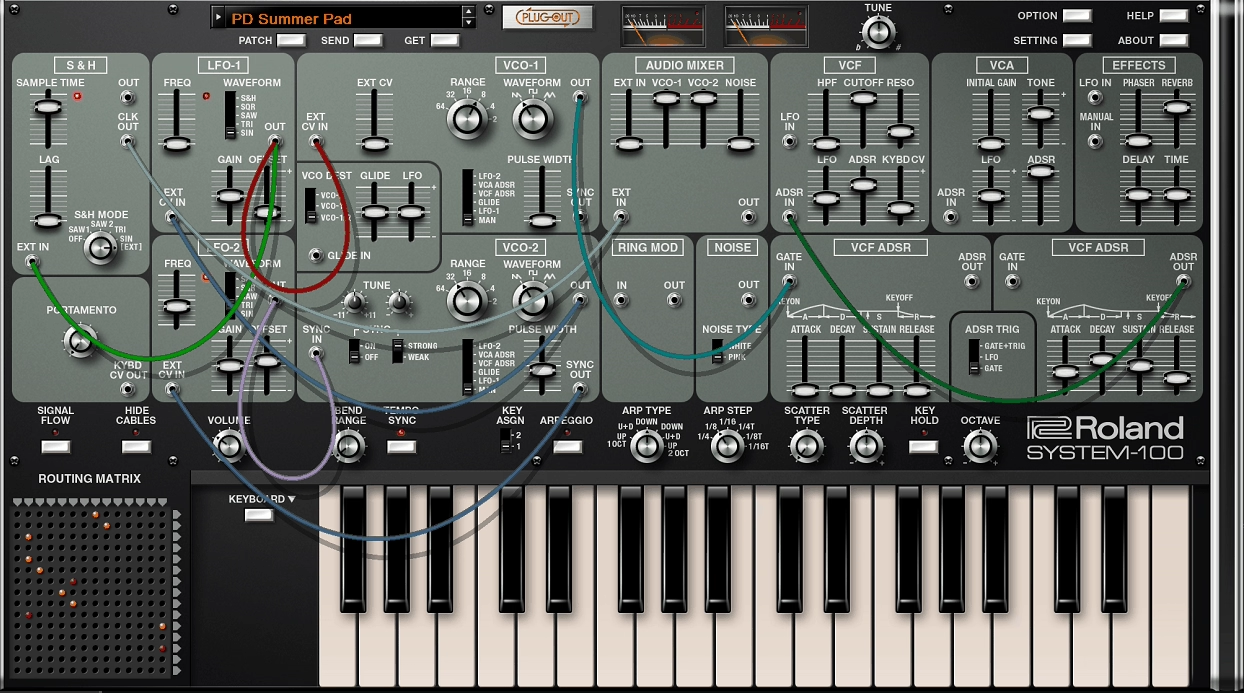
Synth-pop, post-punk, and early electronic experimentation all owe a debt to the original SYSTEM-100 hardware. Roland rebuilt it using ACB (Analog Circuit Behavior) technology, and the SYSTEM-100 plugin sounds every bit as characterful and alive as the 1970s original.
The beauty of a semi-modular design is that you can play immediately. Two oscillators feed a warm Roland filter through a normalised signal path that delivers fat basses, bright leads, and smooth pads the moment you press a key. No patching required. The interface is refreshingly simple, making it an ideal choice for anyone who values instant playability over menu-diving complexity.
Where it gets more adventurous is the virtual patch bay tucked behind the main controls. Cable up oscillator sync, ring modulation, sample and hold, or voltage processing to unlock routing options that the default signal path keeps hidden. Feed external audio through the filter and effects for creative sound mangling.
Roland’s circuit modelling captures the organic pitch drift, filter warmth, and subtle saturation that analogue purists spend years chasing. Onboard effects and a solid patch library demonstrate the breadth of this deceptively straightforward instrument, from gritty acid sequences to floating ambient washes.
6. Cherry Audio PS-3300
- Compatibility: Windows, macOS
- Format: VST, VST3, AU, AAX, Standalone
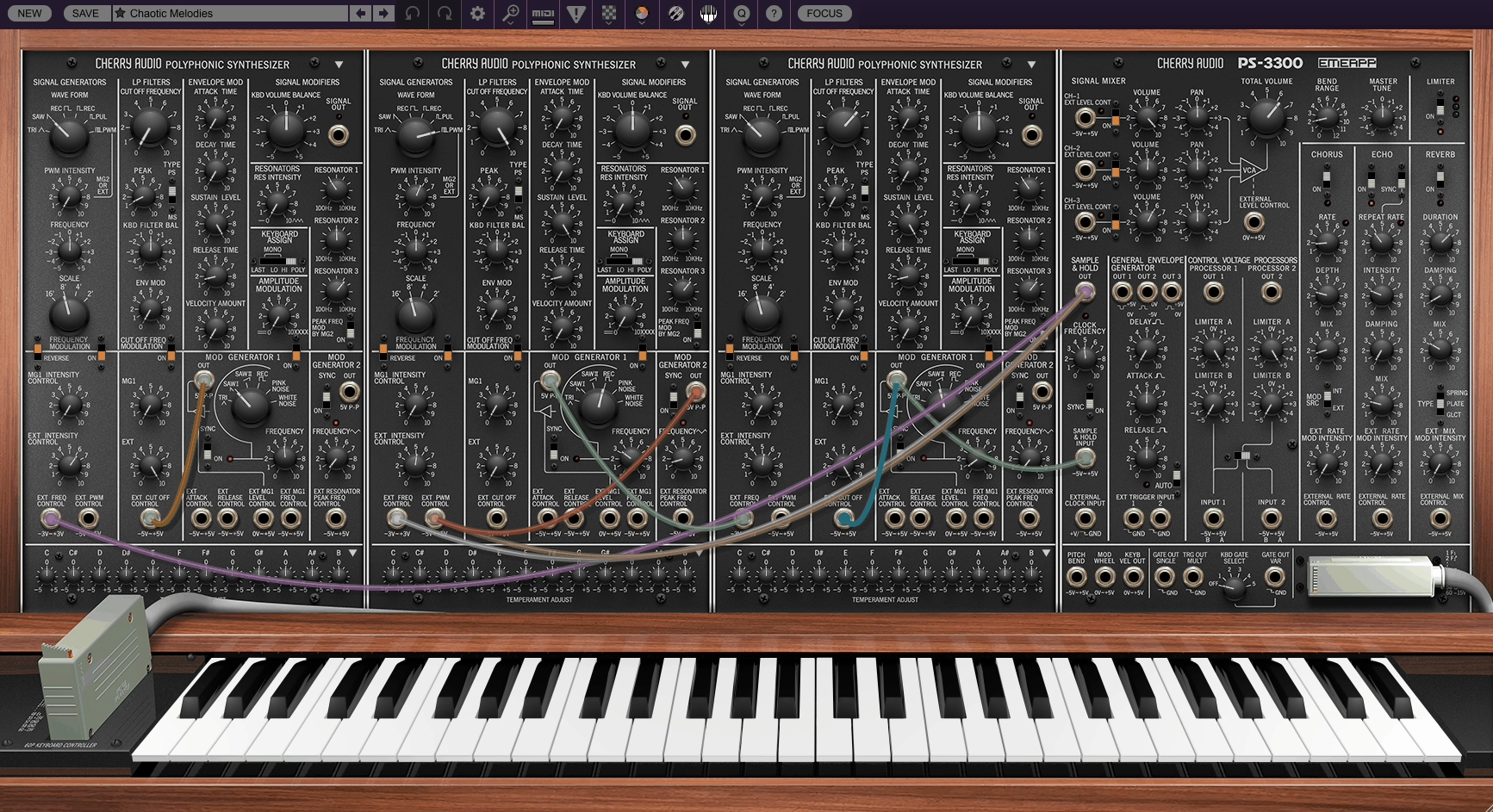
Between 1977 and 1981, Korg produced roughly 50 units of the PS-3300. One of these rare machines fetched close to $100,000 at auction in recent years. Artists from Vangelis to Aphex Twin have used it. The Cherry Audio PS-3300 puts this legendary instrument into the hands of anyone with a computer and a few dollars to spare.
The design is extraordinary even by today’s standards. Three fully independent signal generator panels occupy the interface, each one a complete polyphonic synthesizer in its own right. Every panel houses six-waveform oscillators with pulse width modulation, dynamic lowpass filters, the instrument’s famous triple-peak resonators, dedicated envelopes, and dual LFOs capable of sync. All 48 keys can be voiced independently across the three panels, creating layered polyphonic textures of remarkable richness.
A real PS-3300 housed at the EMEAPP (Electronic Music Education and Preservation Project) served as Cherry Audio’s reference during development. The plugin faithfully reproduces both PS-style and MS-style filter voicings, offering a choice between the sweeter Japanese-flavoured response and a harder, more biting alternative. A master mixer section handles sample and hold, a general envelope generator, and CV processing.
Chorus, syncable echo, and three reverb types (spring, plate, and the immersive Galactic mode) add polish. The Focus zoom feature magnifies individual panels for fine editing, and over 360 presets span massive cinematic sweeps, delicate melodic patches, and pulsing rhythmic sequences. A virtual patch bay with unlimited cables per jack goes even further than the original hardware allowed.
7. Native Instruments Reaktor 6
- Compatibility: Windows, macOS
- Format: VST, AU, AAX, Standalone
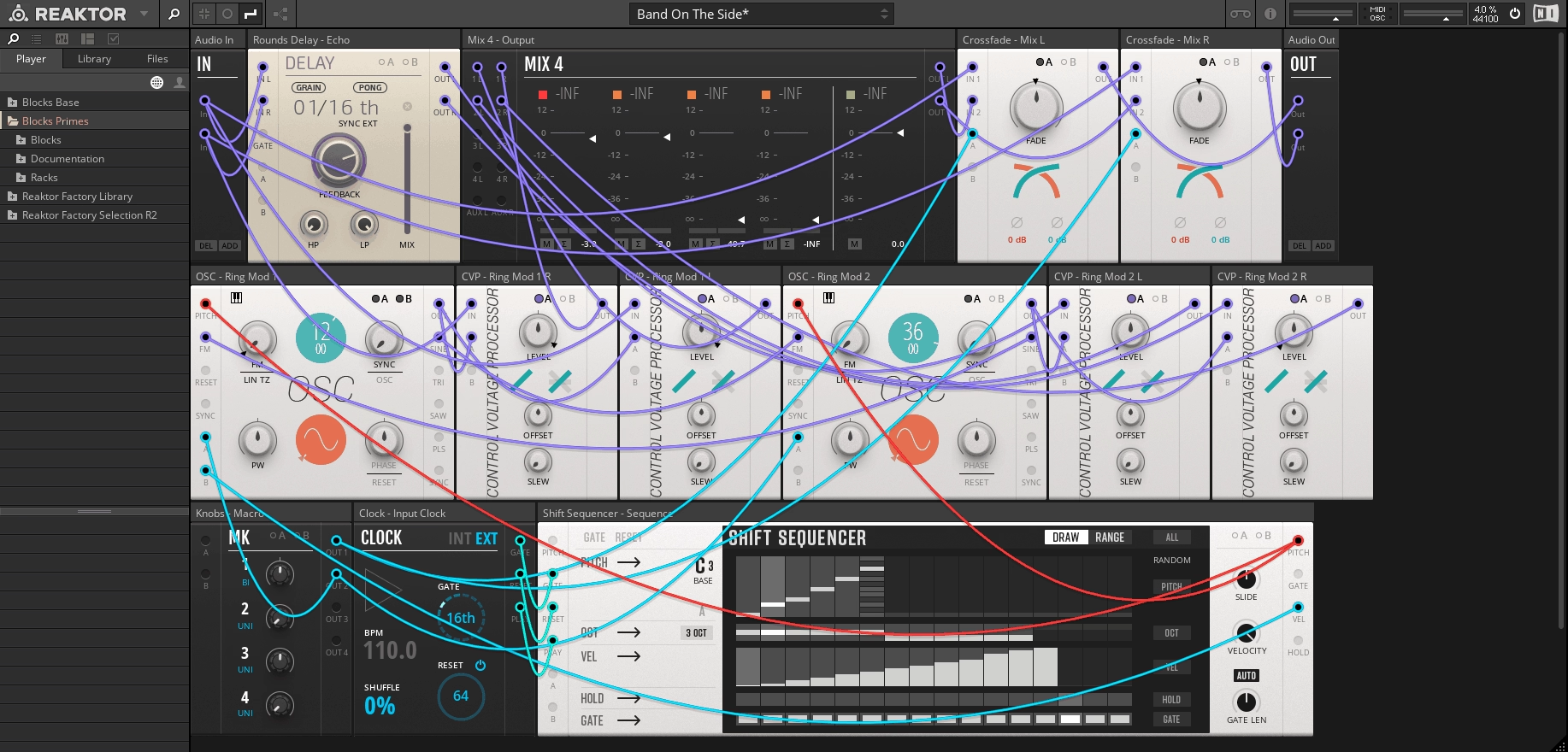
Reaktor 6 is a modular synth and complete platform for creating synthesizers, effects, samplers, and generative music systems from scratch, and it has been at the centre of experimental electronic music for more than two decades.
The Blocks framework provides the most accessible entry point, converting Reaktor into a virtual Eurorack-style modular synth. Modules developed alongside real hardware manufacturers follow authentic CV and gate signal conventions, so the experience translates directly to hardware knowledge. Oscillators, filters, effects, sequencers, and utility modules all connect through drag-and-drop cables.
Peel back the Blocks layer and you find Primary and Core programming environments, where instruments can be assembled from raw logic components, math operations, and signal processing building blocks. Reaktor’s own flagship products (Monark, Prism, Razor) were built using these exact tools. The ceiling for what you can create is essentially nonexistent.
Anyone who would rather play than programme still gets enormous value. Dozens of world-class ready-made instruments ship with the software, and the Reaktor User Library hosts thousands of additional free downloads contributed by a global community. Granular engines, physical modelling experiments, bizarre generative contraptions, and elegant wavetable synths are all waiting to be explored.
8. Sugar Bytes Nest
- Compatibility: Windows, macOS
- Format: VST, VST3, AU, AAX, Standalone
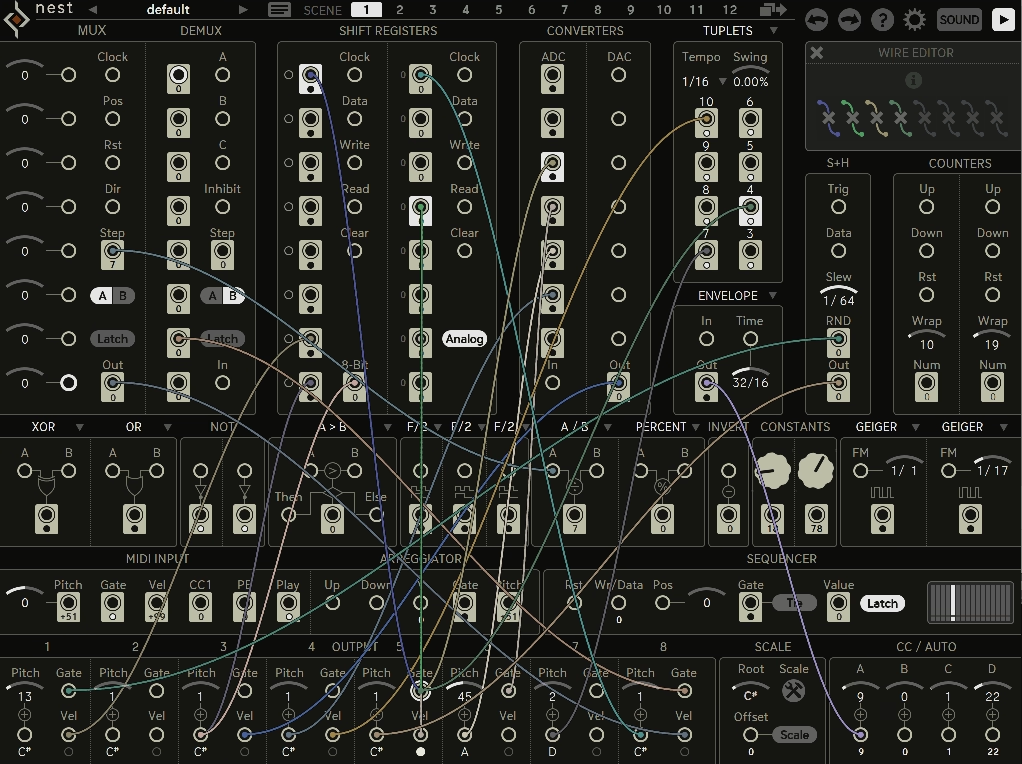
Sequencers in most plugins work by placing notes on a grid. Nest from Sugar Bytes discards that grid entirely and replaces it with a network of patchable logic circuits that generate musical patterns through mathematics and conditional rules. The results are sequences that evolve, branch, and mutate in ways no conventional step editor can replicate.
The Wire Page hosts over 20 circuit-inspired modules: shift registers, multiplexers, logic gates, counters, if/else conditionals, and arithmetic operators. Wiring them together produces trigger signals, pitch data, velocity information, and modulation values based on the logical relationships you’ve defined. The process feels closer to building a simple computer programme than writing a melody, and that’s exactly the appeal.
Generated patterns drive eight MIDI voices on the Sound Page, assignable across four channels. Each channel can load an internal synth engine, host a third-party VST, or route MIDI to external hardware. One Nest patch could simultaneously control a percussion sequence, a chord layer, and a bass line, all emerging from the same logic network.
Twelve storable scenes bring structural variety, letting you build what amounts to a full arrangement skeleton within one plugin instance. The complexity is undeniable and the learning commitment is real. But for producers drawn to algorithmic and generative composition, Nest delivers creative possibilities that genuinely cannot be found elsewhere.
9. Cherry Audio PS-20
- Compatibility: Windows, macOS
- Format: VST, VST3, AU, AAX, Standalone
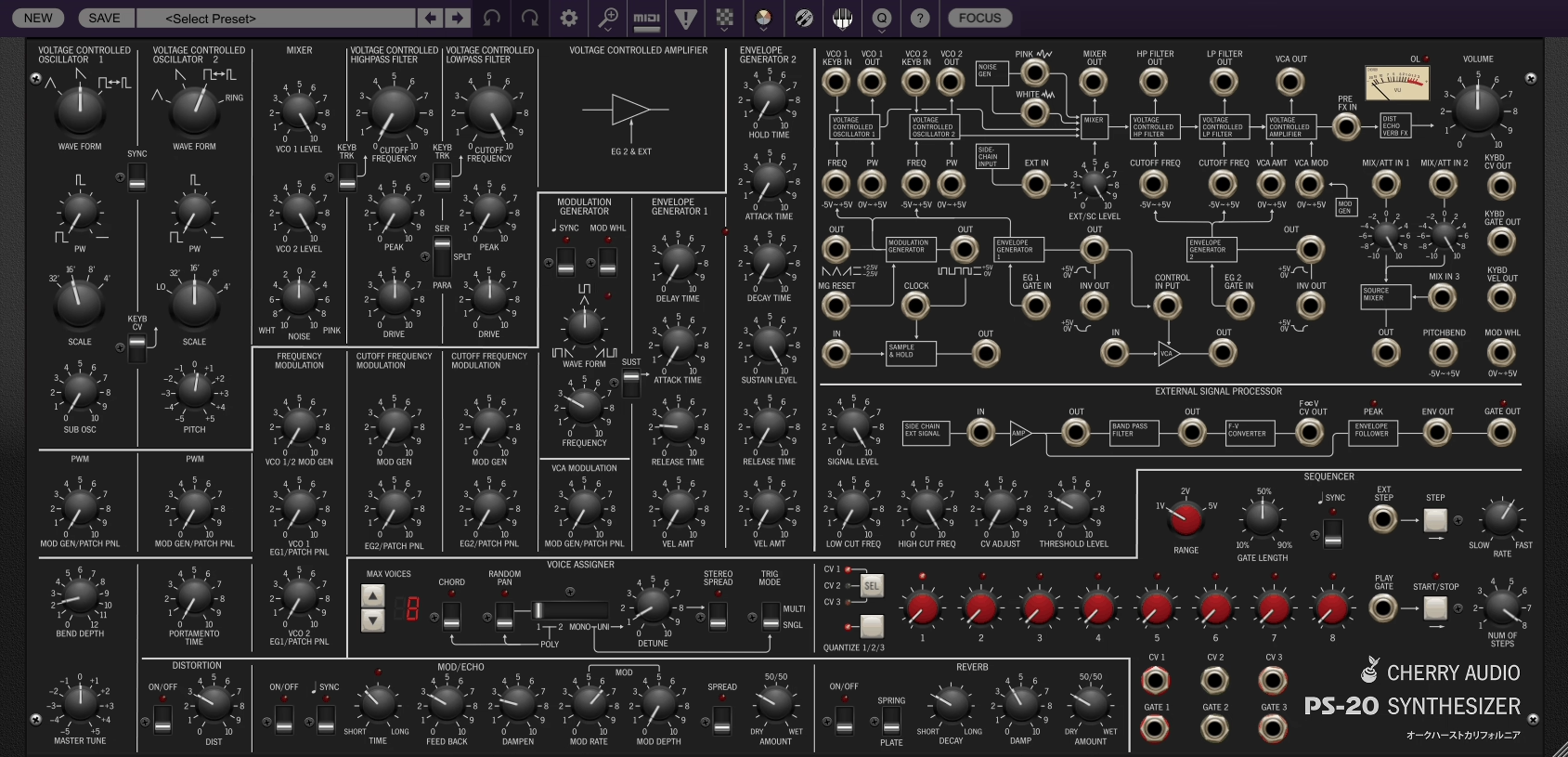
Industrial producers, techno artists, and noise musicians have been reaching for the Korg MS-20 since the late 1970s. Its raw, aggressive sonic personality has earned it a devoted following that shows no sign of shrinking. Cherry Audio’s PS-20 nails that personality with remarkable precision, delivering every ounce of the original’s ferocity in a plugin that costs less than a set of decent headphones.
The highpass and lowpass filters sitting in series are the heart of the instrument. Push the resonance and both filters tip into screaming self-oscillation, generating pitched tones from the filter circuitry itself. The way these two filters interact with each other creates a volatile, sometimes unpredictable tonal character that simple single-filter synths can never reproduce.
Flip the instrument around and the semi-modular patch bay reveals its second personality. An envelope follower turns incoming audio dynamics into usable control voltages. A pitch-to-voltage converter lets the synth track melodic content from external instruments. Ring modulation, sample and hold, and additional CV processors give you the tools to use the PS-20 as a sound mangling processor, not just a standalone voice.
Built-in effects and a well-stocked preset library complete an instrument that consistently over-delivers for its asking price. Cherry Audio’s careful modelling ensures the PS-20 captures not only what the MS-20 sounds like, but how it feels to play, with all the quirky, responsive behaviour that made the original such an enduring favourite.
10. Newfangled Audio Generate
- Compatibility: Windows, macOS
- Format: VST, VST3, AU, AAX
Somewhere between physics and music lies Generate. Conceived by former Eventide engineer Dan Gillespie after four years of research into chaotic oscillators, this polysynth builds its sound from mathematical systems based on double pendulum behaviour. The tones it produces sit in a sonic category that belongs entirely to itself.
Eight generator algorithms make up the core: Double Pendulum, Vortex, Pulsar, Discharge, Turbine, Helix, Crescent, and Magma. Every one of them transitions from a clean sine wave into progressively wilder, more harmonically complex territory as the Chaos Shape knob advances. Beneath the apparent randomness lie fractal structures and self-similar patterns that give even the most extreme settings a surprising sense of musicality.
The audio path follows west coast synthesis principles inspired by Don Buchla. Generators pass through one of five wavefolder circuits (including a faithful Buchla 259 model, plus Saturate, Animated, and Fractal options) and then into a low pass gate derived from the Buchla 292 with adjustable poles and resonance. Modulation sources include envelopes, LFOs, sample and hold, a step sequencer, and full MIDI/MPE input, combining for a potential 957 simultaneous routings.
EQ, chorus, delay, reverb, and a limiter provide final-stage shaping. Over 900 artist-designed presets from contributors like Chris Carter, Laurie Spiegel, and Jacob Shea show off the extraordinary scope. A free monosynth called Pendulate offers a taste of the chaos engine at no cost.
11. Sugar Bytes Factory
- Compatibility: Windows, macOS
- Format: VST, VST3, AU, AAX, Standalone
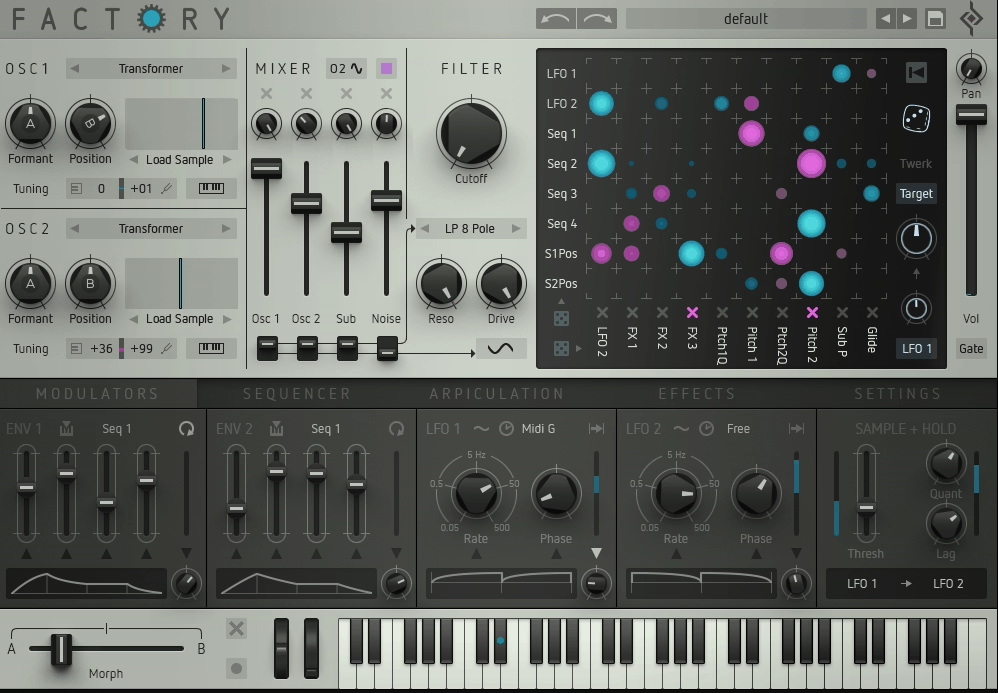
The blank-canvas approach to modular synthesis isn’t for everyone, and Factory respects that. Sugar Bytes built this semi-modular synth to sound great the instant it loads, with a fully connected signal path that produces usable results before you touch a single routing option.
Two oscillators drive the sound through a capable filter section and into a set of performance-oriented tools that give Factory its distinctive personality. A built-in 16-step sequencer, assorted LFO waveshapes, and multiple patchable modulation points work together to produce evolving, animated textures without requiring complex setup. This makes the plugin particularly suited to improvised sessions and live performance where speed matters more than microscopic precision.
Randomisation sits at the heart of the creative philosophy here. Rolling random values across parameters pushes patches into unexpected territory, and the instrument is designed so that these happy accidents tend to produce musically useful results rather than pure noise. The preset collection showcases this range effectively, spanning grinding bass patterns, luminous pad sweeps, percussive stabs, and intricate polyrhythmic sequences.
For producers seeking the flavour of modular experimentation without the time investment of fully open-ended environments, Factory hits a sweet spot that’s hard to find elsewhere in the plugin world.
12. u-he ACE
- Compatibility: Windows, macOS, Linux
- Format: VST, VST3, AU, AAX
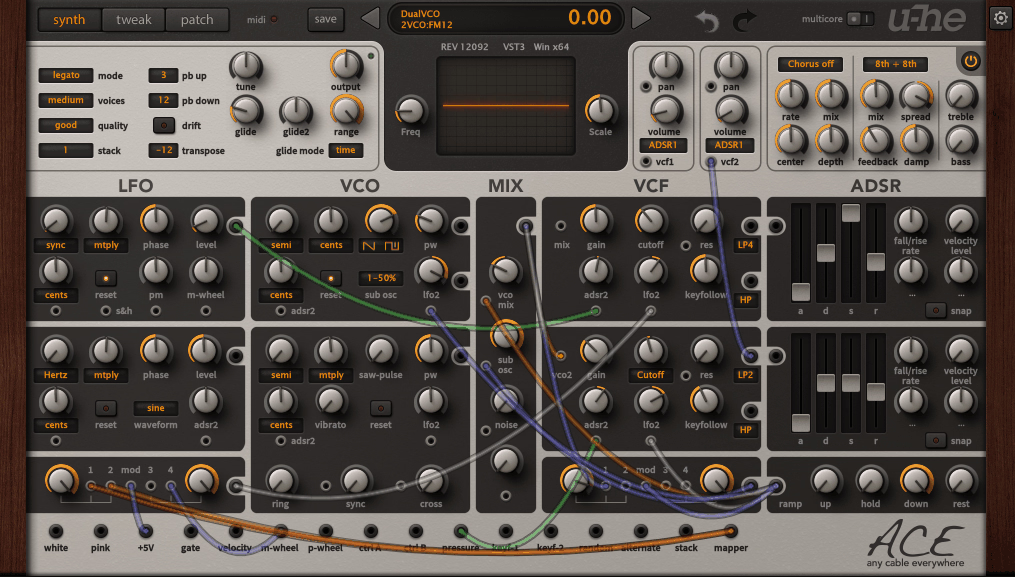
The acronym spells out Any Cable Everywhere, and that three-word promise captures the entire philosophy of this synth. ACE was the inaugural release from u-he’s Berlin Modular project, predating the more complex Bazille by several years. Where Bazille embraced digital synthesis and maximal complexity, ACE took the opposite path, offering a streamlined virtual analogue instrument where a small number of high-quality modules do all the heavy lifting.
Out of the box, it behaves like a conventional subtractive synth. Two oscillators, two multimode filters, two envelopes, two LFOs, a noise generator, sample and hold, and a lag processor are all pre-patched into a logical signal chain. The moment you load it, playable sounds are waiting.
The depth reveals itself through the open patch matrix. Any output feeds any input. Multiple cables from a single source are supported. Suddenly those modest-sounding module counts turn into hundreds of possible signal routings, including audio-rate modulation, filter feedback loops, and oscillator cross-modulation schemes that produce tones well beyond standard subtractive territory.
u-he’s circuit-level analogue modelling gives everything an organic, slightly imperfect quality that sounds convincingly like voltage-controlled hardware. The filters are especially impressive, sweeping through resonance with a warmth and responsiveness that many far more expensive plugins struggle to achieve. Budget-friendly pricing, low CPU consumption, and an extensive preset library make ACE the ideal starting point for anyone who wants to understand what modular patching can do.
13. Madrona Labs Kaivo
- Compatibility: Windows, macOS
- Format: VST, AU
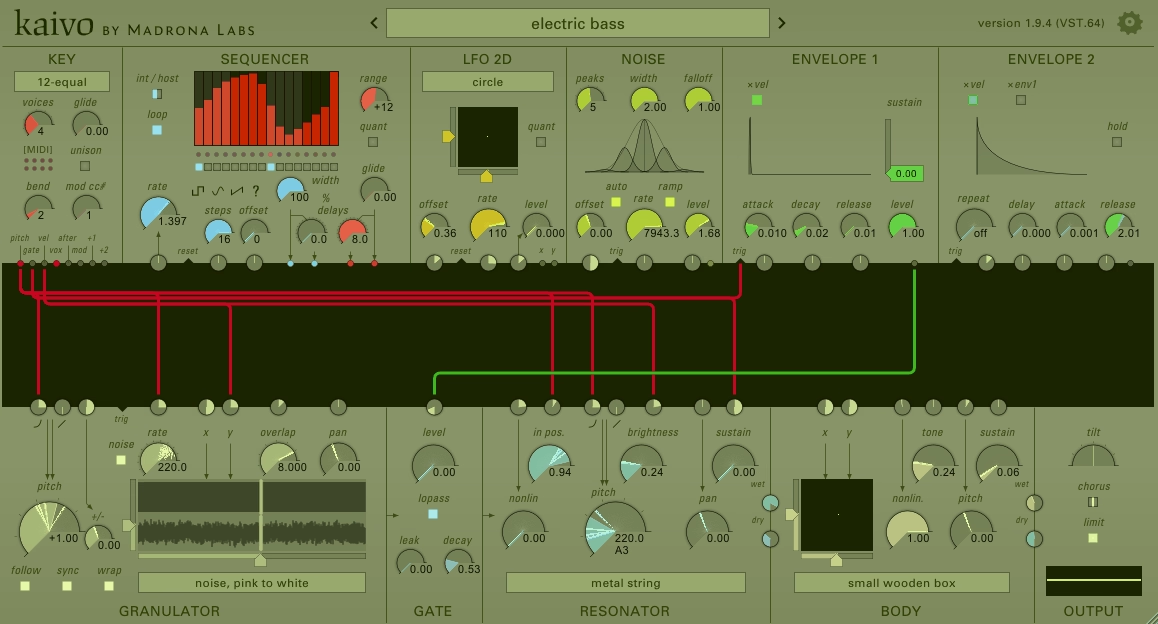
No other synthesizer on this list sounds remotely like Kaivo. It achieves this by abandoning traditional oscillators altogether, instead using granular synthesis as an excitation source and running those signals through FDTD (finite difference time domain) physical models that simulate real-world vibrating objects.
The signal chain mirrors how acoustic instruments actually produce sound. A granulator tears samples into tiny fragments and scatters them across time, acting like a pick striking a string or a mallet hitting a drum. Those grains excite a one-dimensional resonator that models strings, tubes, and chimes. The output then enters a two-dimensional body model simulating surfaces such as metal plates, wooden boxes, and drum shells. Adjust the physical parameters and you warp familiar acoustic behaviours into impossible, alien territory.
Madrona Labs designed the interface around a click-to-patch modulation system inherited from their acclaimed Aalto synthesizer. A 16-step sequencer adds melodic and rhythmic structure, while a 2D LFO with spatial shapes like Circle, Infinity, Gaussian, and Knights generates complex multidimensional movement that conventional single-axis modulation sources cannot approach. Per-stage panning across granulator, resonator, and body creates a wide, immersive stereo field.
Processing demands are high, an unavoidable reality when solving physics equations in real time for every active voice. The payoff is an instrument capable of producing hauntingly realistic plucked strings, ghostly bowed tones, spectral metallic textures, alien percussion, and deeply organic ambient soundscapes that simply do not exist anywhere else in the software synthesis world.
Freebies:
1. Helm by Matt Tytel
- Compatibility: Windows, macOS, Linux
- Format: VST, VST3, AU, AAX, LV2, Standalone
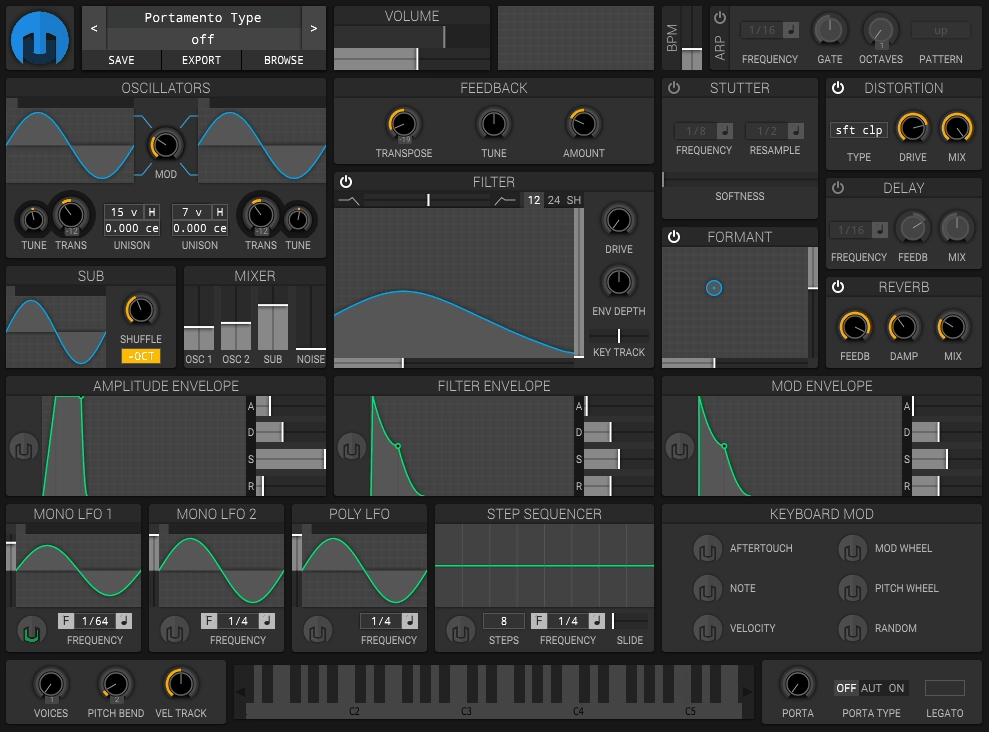
Long before Vital took the freeware world by storm, its developer Matt Tytel created Helm as a fully open-source polyphonic semi-modular synth with production-quality sound and a sleek, material-design inspired interface featuring real-time modulation visualisation. It remains one of the most impressive free instruments you can install today.
Beneath the polished surface sit dual oscillators with cross modulation and up to 15 unison voices each, powering a surprisingly massive sound engine for a zero-cost plugin. 32-voice polyphony, seven filter types with keytracking, three LFOs, a step sequencer, and an arpeggiator provide serious sound-shaping capability. Pay particular attention to the formant filter and stutter effect, which combine to produce rhythmic glitch textures and vocal-like timbres that suit modern electronic production perfectly.
The entire codebase is publicly available for study, modification, and redistribution, making Helm valuable as both an instrument and an educational resource. Full compatibility with Windows, macOS, and Linux across virtually every plugin format ensures nobody gets left out.
2. Sonigen Modular
- Compatibility: Windows
- Format: VST
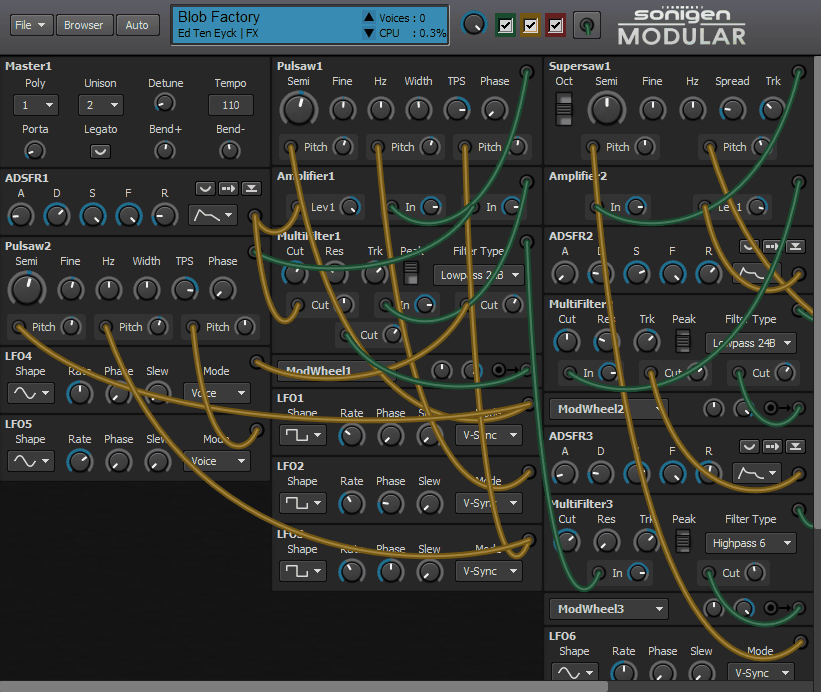
True modular synthesis with zero financial barrier to entry is what Sonigen Modular delivers. The plugin gives you a workspace filled with oscillators, filters, envelopes, LFOs, and utility modules that you arrange and cable together from scratch to build custom synthesizer architectures.
There’s no safety net of pre-connected defaults. You construct every signal path manually, which means the learning curve asks for real engagement. The reward, however, is total creative authority over your instrument design, from minimal mono patches to sprawling multi-voice configurations. Oscillators and filters deliver dependable quality across a range of electronic styles.
For producers who want to grasp modular routing fundamentals before committing money to a premium option, this is a smart place to begin.
3. KBplugs 200 C
- Compatibility: Windows
- Format: VST
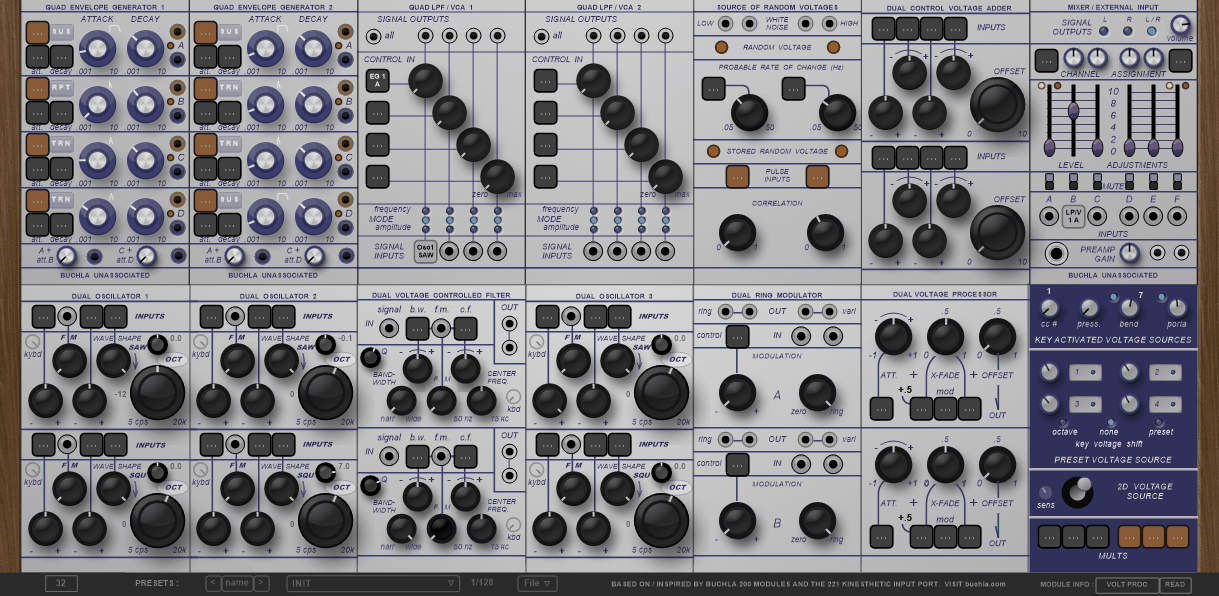
Closing out the list, KBplugs 200 C offers a free semi-modular experience rooted in the classic patchable hardware tradition. The panel design is intentionally minimal, keeping oscillator, filter, and modulation sections visible and approachable so that newcomers aren’t buried under options.
Patch jacks let you redirect the default signal flow and experiment with alternative routings at your own pace. The synthesis engine covers bass, lead, and pad territory with solid fundamentals. It won’t match the depth or polish of the premium plugins above, but as a no-cost gateway into semi-modular thinking, it earns its spot and provides genuine hands-on value for curious beginners.
Hello, this blog is about more than just chorus, bass and synths. In fact, I started it to cover best VST plugins and Kontakt libraries, so you have easier time finding the right tools and instruments for your music production needs, mixing, as well as mastering. New tools and instruments are constantly evolving and need to get in front of audience, because even some of the best brands like Antelope Audio aren’t talked about enough – that’s what I want to change. I want to promote plugins that are less known but are perfectly relevant for certain topics.