
A standard oscillator gives you one static shape. A wavetable oscillator lets you glide between hundreds of shapes in real time, and that simple difference is the reason this synthesis method has become the backbone of so much modern electronic, pop and cinematic production.
The best wavetable synths available right now take that core concept much further, folding in granular processing, spectral engines, sample playback and flexible modular routing to create instruments that cover enormous sonic territory from a single plugin window.
This roundup looks at eleven standout options. Some are deep, premium workstations packed with every engine type you could want, others are lightweight and CPU-friendly, and three of them are completely free.
Whatever your production style or budget, there is a wavetable synth here that fits.
1. Xfer Serum 2
- Compatibility: Windows/macOS
- Format: VST3/AU/AAX
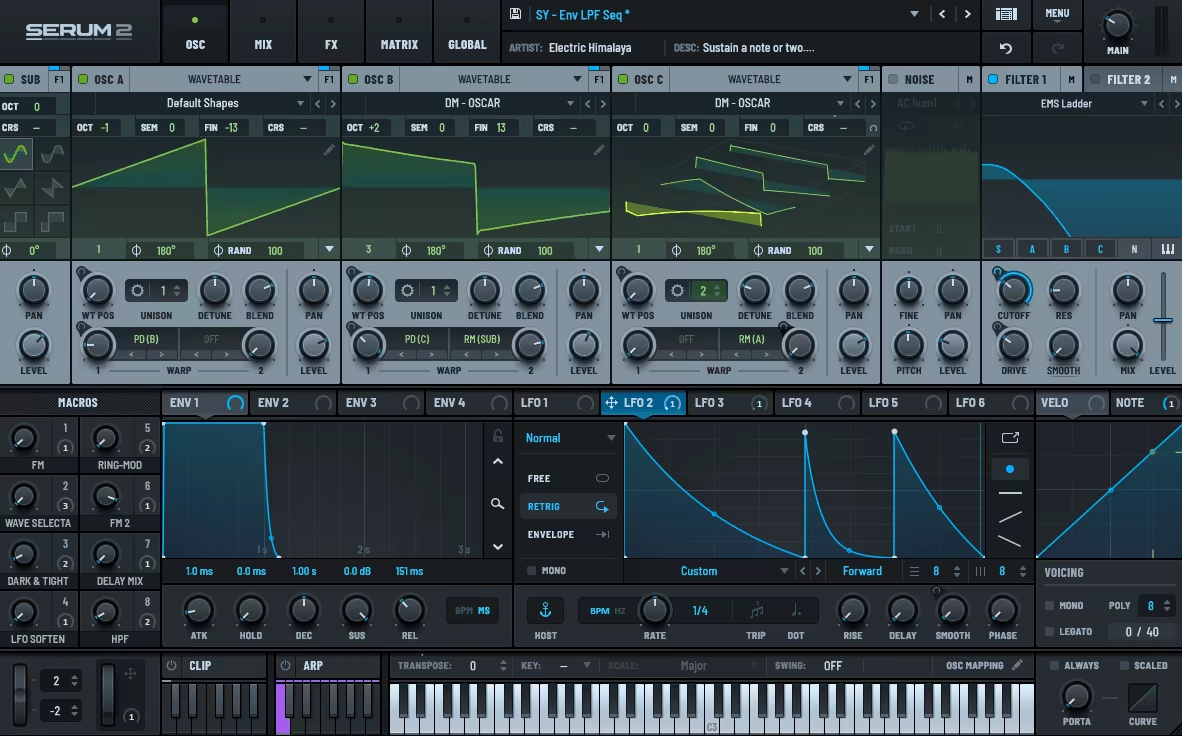
The first Serum became so deeply embedded in electronic music production that it essentially set the visual and functional template other wavetable synths have been measured against ever since. Xfer Serum 2 does not simply refine that template. It rebuilds the instrument into a five-engine hybrid where wavetable, granular, spectral, sample and multisample oscillators all share the same three-slot architecture, each slot independently switchable between any type.
The multisample engine deserves particular attention because it marks a significant shift in what Serum can do. A factory collection of orchestral strings, acoustic piano and guitar recordings in open SFZ format ships with the plugin, which means you can layer real instrument textures underneath wavetable processing without leaving the interface. The wavetable engine itself gains dual warp modes, phase distortion and new morphing behaviours, and a dedicated sub oscillator handles low-end reinforcement.
Filtering has been expanded with dual multimode filters configurable in serial or parallel, and the new model list includes MG Ladder, Acid Ladder and a fully drawable custom shape editor. Ten LFOs now include chaos generators based on Lorenz and Rössler attractors alongside sample-and-hold. Four envelopes with BPM sync and the signature drag-and-drop modulation system keep complex routings manageable. The effects section runs across two independent buses where you can stack multiple copies of the same processor, and a convolution reverb with factory impulse responses joins the lineup. An integrated arpeggiator with 32-step custom patterns and a clip sequencer for recording MIDI phrases directly inside the synth complete the picture. Factory content totals 626 presets and 288 wavetables, and anyone who owns the original Serum receives the full upgrade at no additional cost.
2. Minimal Audio Current 2
- Compatibility: Windows/macOS
- Format: VST2/VST3/AU/AAX
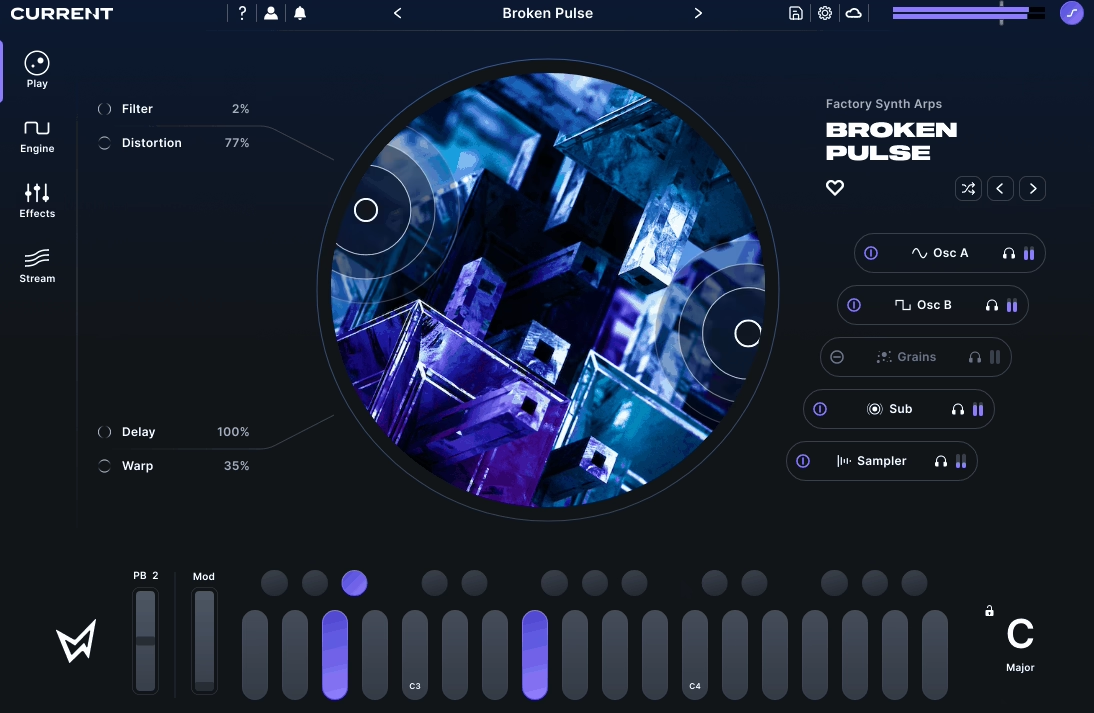
Minimal Audio Current 2 packs two spectral wavetable oscillators, a granular engine, a time-stretching sampler and an additive harmonic sub oscillator into a single instrument. That alone would be a competitive feature set, but the real reason this synth stands apart is the effects architecture.
Nine effect slots load full versions of Minimal Audio’s acclaimed standalone processors, not stripped-down internal copies. Rift, Cluster Delay and the v2-exclusive Wave Shifter are all available, and you can stack, reorder and modulate them just as aggressively as the oscillators themselves.
The Wave Shifter is especially interesting: it combines frequency shifting with FM, AM and ring modulation in one module, producing metallic, glitchy and otherworldly textures that most conventional effects chains simply cannot reach.
Dual multimode filters with over 50 modes handle everything from morphing and vowel filtering to comb and standard low-pass types, with gain-compensated routing in series or parallel.
Nine modulation source slots support LFOs, envelopes, curve sequencers, audio followers and MIDI controllers, all connected through drag-and-drop with no cap on connections per source. A pop-up matrix gives you a bird’s-eye view of every active routing at once.
The Play View maps dual XY pads to four performance macros, and a mixer panel lets you solo, mute and balance individual engines without diving into submenus. The factory library delivers over 400 presets, 170+ wavetables and 800+ samples across 32-voice polyphony, with additional sound content arriving through the integrated Stream platform.
3. Arturia Pigments 7
- Compatibility: Windows/macOS
- Format: VST2/VST3/AU/AAX
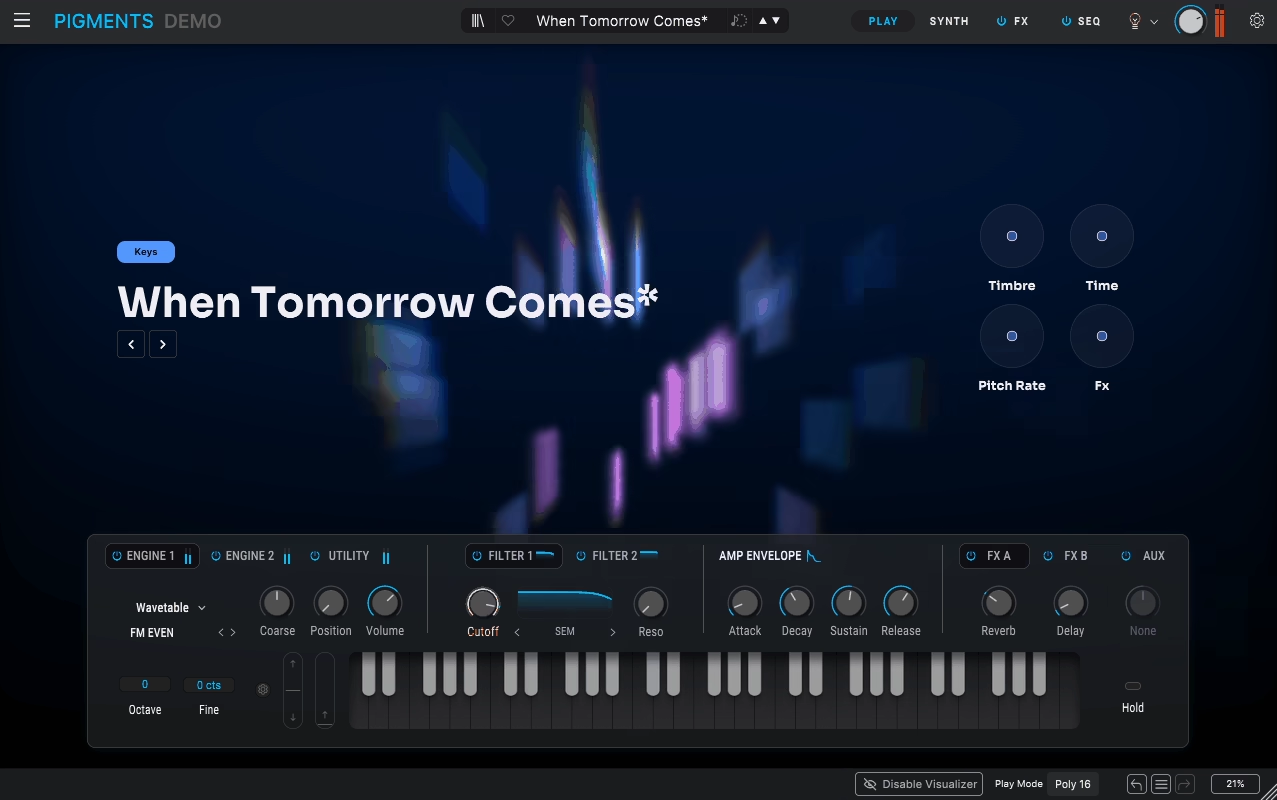
Every major version of Pigments has been delivered as a free update for existing owners, and the seventh release continues that trend while adding physical modelling as a sixth synthesis engine. Arturia Pigments 7 now covers virtual analog, wavetable, harmonic additive, granular, sample and modal/physical modelling, any two of which run simultaneously in a twin-engine configuration.
The v7 filter additions are worth a closer look. Rage places multiple distortion circuits (Diode, SoftClip, Tape, Transistor, Distortion) inside the filter’s own feedback loop, which generates polyphonic saturation that responds differently per voice rather than colouring the entire mix equally.
Ripple introduces phase-shifted peaks and notches that create moving formant-like resonances. Reverb integrates spatial processing directly into the filter path for thickening bass-heavy patches. A new Corroder module handles frequency-selective degradation, letting you apply bit-crushing and lo-fi effects to isolated frequency bands while keeping everything else clean.
Refined S-shaped amplitude envelopes eliminate transient clicking and sharpen note attacks. CPU usage has been trimmed through internal optimisations. The modulation system uses colour-coded drag-and-drop routing where depth rings display actual semitone or hertz values, and the generative sequencer with arpeggiator creates evolving melodic and rhythmic patterns.
The Play View provides an audio-reactive visualiser with circular macro controls for quick preset tweaking, and the full library now exceeds 1,700 presets across all seven versions. Version 7 specifically adds 150 new patches, 50 wavetables, 30 samples and 20 noise layers, plus built-in tutorials accessible from the preset browser.
4. Native Instruments Massive X
- Compatibility: Windows/macOS
- Format: VST2/VST3/AU/AAX
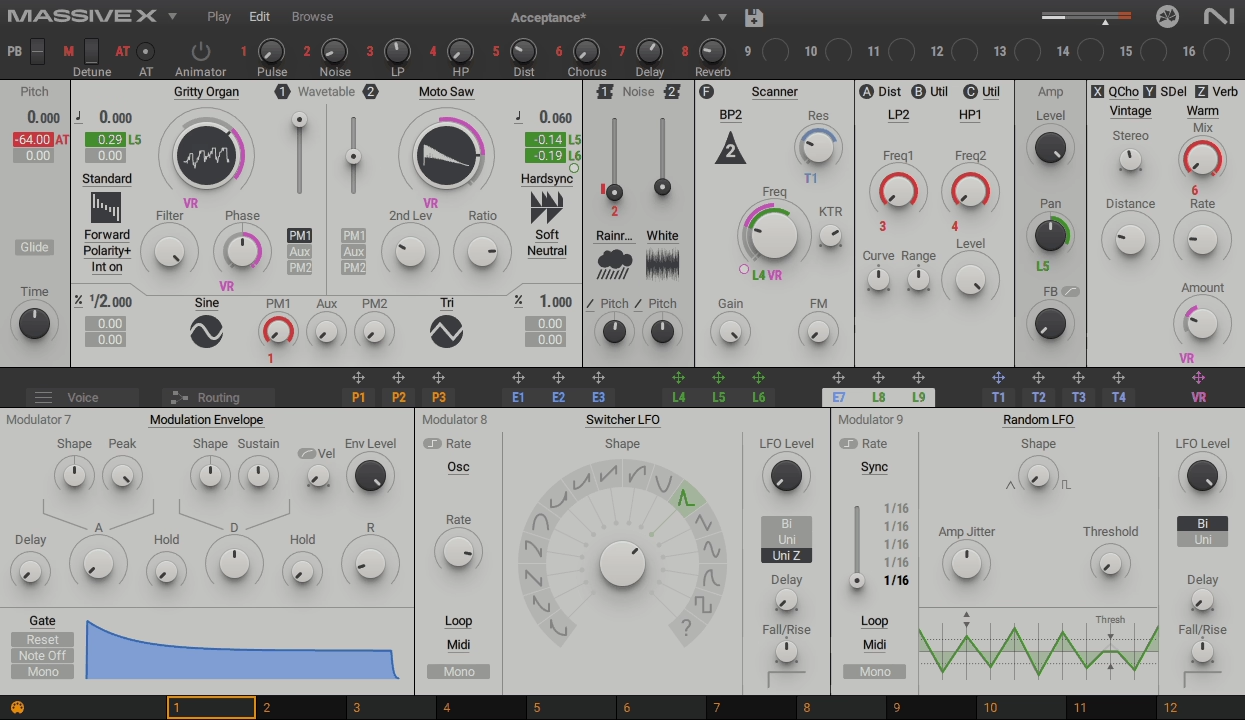
Where most modern synths compete on engine count, Native Instruments Massive X takes a different path entirely. The focus here is signal flow: your sound passes through configurable insert processors (waveshapers, frequency shifters, ring modulators) before reaching dual filters that can be arranged in serial, parallel or split topologies, and that routing flexibility gives Massive X a tonal range that goes well beyond what its two-oscillator front end might suggest.
Each wavetable oscillator provides ten distinct modes for wavetable playback and manipulation, plus integrated phase modulation and noise generation. The insert effect stage sitting between oscillators and filters is a genuine differentiator because it lets you reshape harmonic content before any filtering takes place, a processing step that most competing instruments do not offer at all.
Nine modulation sources include LFOs, envelopes and two specialised modules that deserve attention. Performer is a drawable modulation pattern editor that loops rhythmically in time with your DAW, capable of driving pitch, filter cutoff, effects parameters and routing changes simultaneously.
Tracker translates incoming MIDI data such as velocity, note position and aftertouch into live modulation signals, making patches feel more responsive and expressive. A routing overview tab makes even the most complex signal paths easy to understand and modify. Native integration with Komplete, Maschine and Komplete Kontrol hardware provides seamless browsing and hands-on control.
5. Kilohearts Phase Plant
- Compatibility: Windows/macOS
- Format: VST3/AU/AAX/CLAP
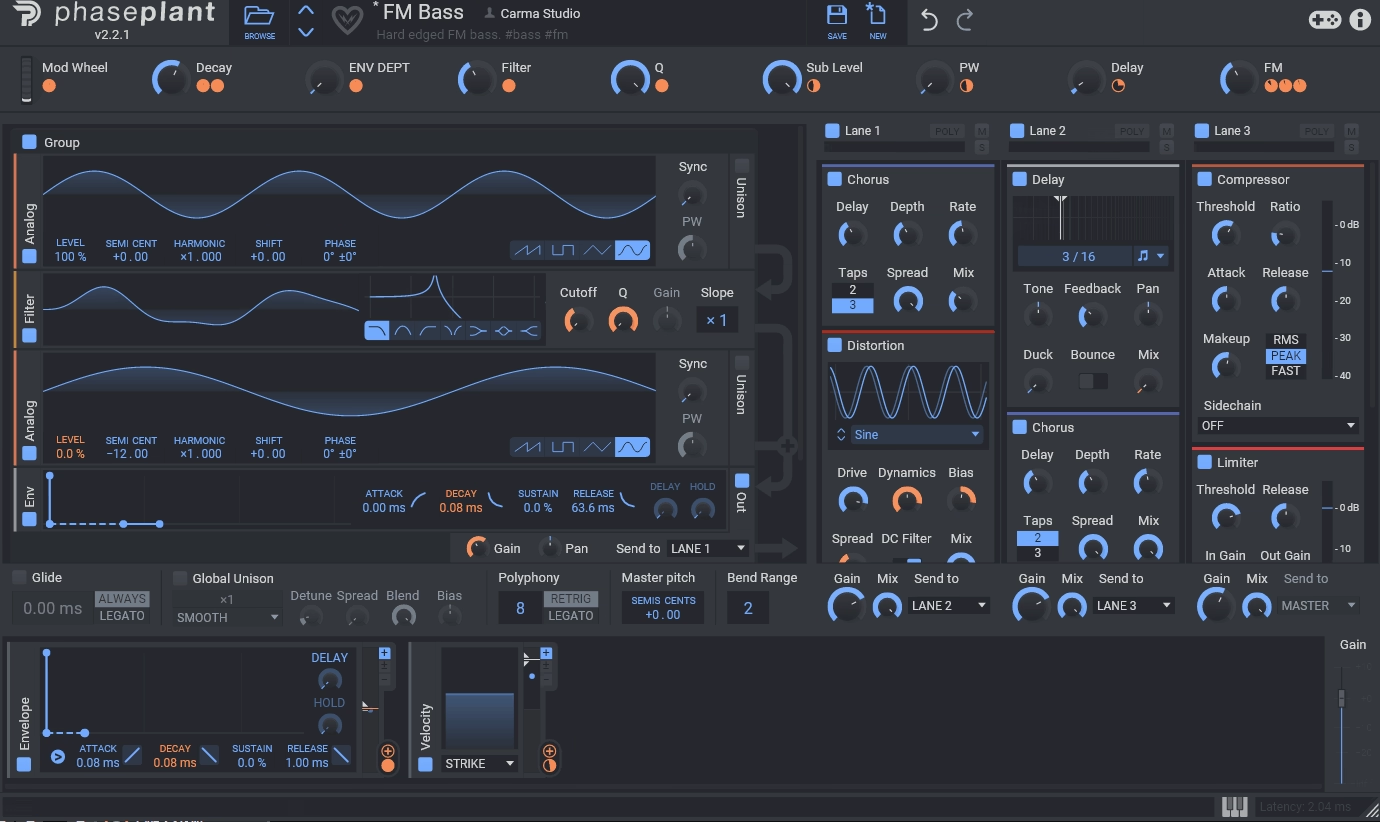
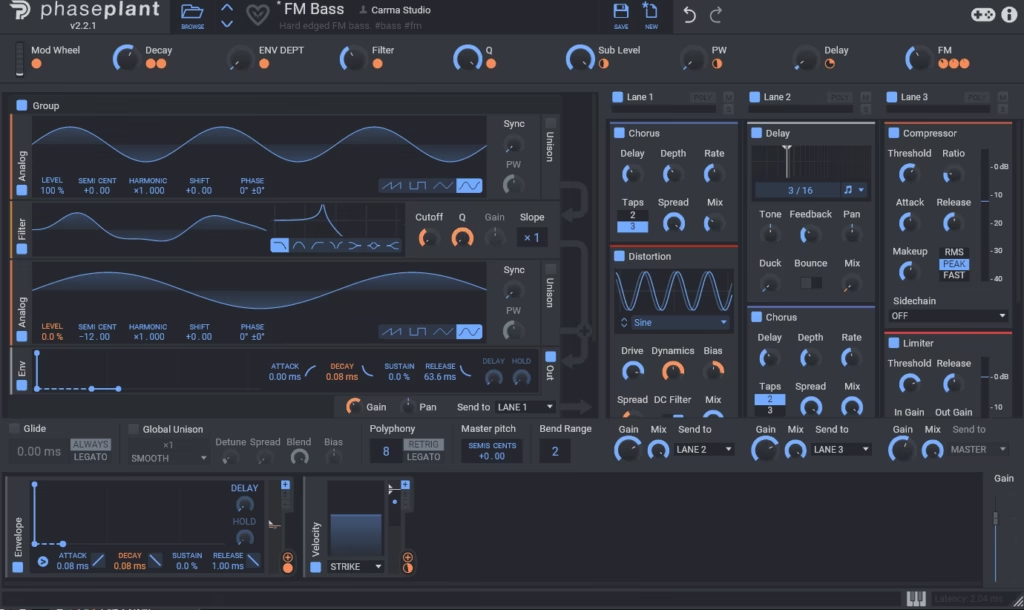
Open Kilohearts Phase Plant for the first time and you will find an empty canvas. No oscillators loaded, no filters assigned, no default effects chain. Everything is yours to build from zero: wavetable oscillators, analog generators, sample players, noise modules, filters and effects drop into the workspace in whatever order and quantity your patch requires, with complete freedom over how signals route between them.
Groups of generators can feed independent filter and effect lanes, creating layered patches where each layer has its own processing chain. The effects themselves load as Kilohearts Snapins, the same modules available as standalone plugins across the wider Kilohearts ecosystem (Disperser, Multipass, Faturator, Slice EQ and others). Your Snapin library grows alongside your Phase Plant capabilities whenever you pick up a new one.
The poly toggle is the feature that truly sets Phase Plant apart from other modular-style synths. Engaging it processes each polyphonic voice through its own independent effects instance rather than summing all voices first, which means a chorus applied per-voice creates subtle variations between notes in a chord, or a random modulator can assign different characteristics to every key you play.
LFOs, envelopes, MIDI sources and macro controls connect to any parameter via drag-and-drop. The blank-canvas design does mean a steeper learning curve than fixed-architecture synths, and the preset library, while solid, is best treated as a set of jumping-off points rather than finished sounds. Producers who enjoy constructing patches from scratch will find Phase Plant endlessly rewarding.
6. u-he Hive 2
- Compatibility: Windows/macOS
- Format: VST2/VST3/AU/AAX
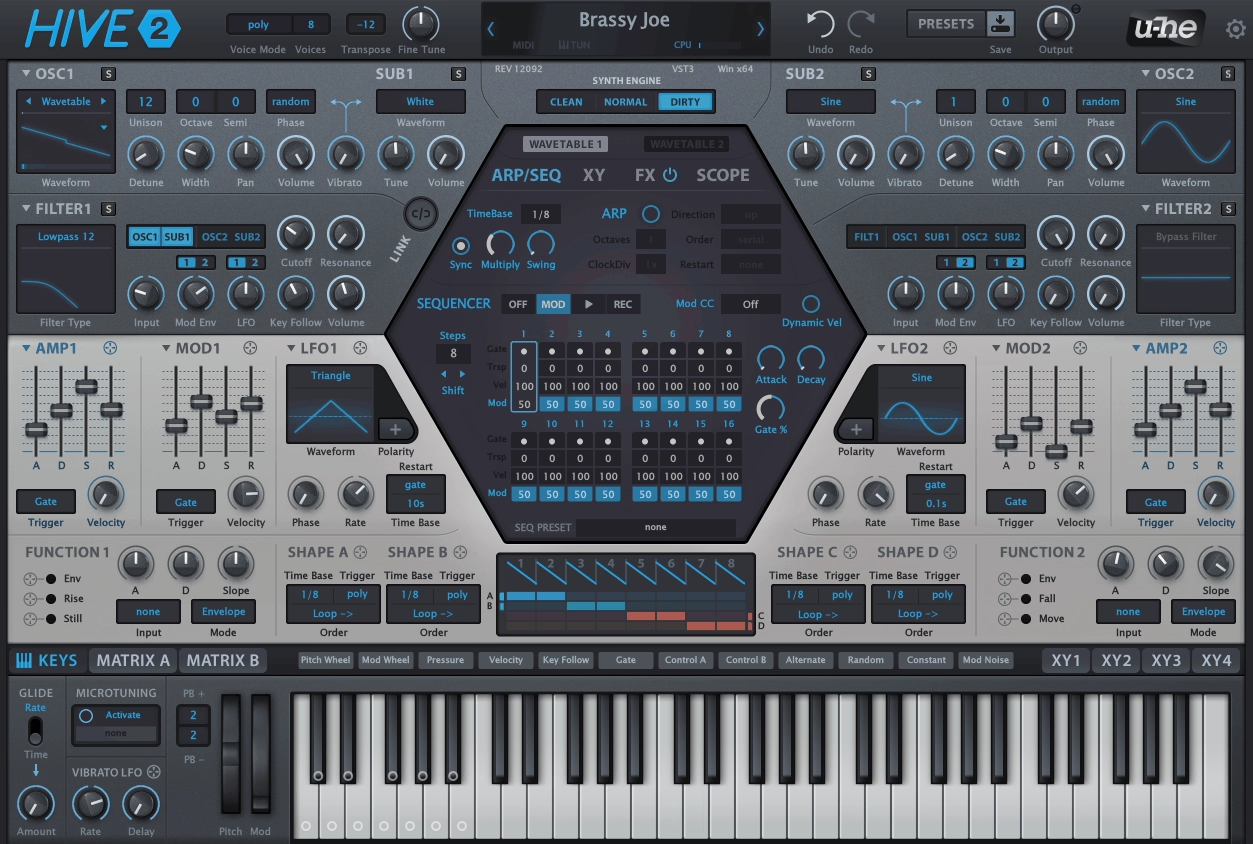
CPU efficiency was the guiding principle behind u-he Hive 2, and the results speak for themselves. Stacking ten or twelve instances in a busy session is entirely practical on a modern system, something that cannot be said for u-he’s own Diva or Repro synths, which prioritise analog modelling accuracy at the cost of heavier processing.
Two oscillators toggle between analog waveforms and wavetable mode with smooth position sweeping. Self-FM and cross-FM between the oscillators introduce metallic and bell-like harmonics without requiring a dedicated FM engine, and a sub oscillator adds weight at the bottom end. Dual multimode filters cover low-pass, high-pass, band-pass, notch, comb and allpass responses, routable in series or parallel configurations.
The modulation matrix connects LFOs (with drawable custom shapes), multi-stage envelopes, step sequencers and MIDI sources to targets throughout the instrument. Hive 2’s built-in step sequencer is more than a simple modulation source: it handles pitch sequences, rhythmic triggers and parameter automation at the same time, acting as a compact performance tool that can bring a static preset to life without any external MIDI programming.
Effects include chorus, phaser, delay, reverb and distortion. Every control lives on a single panel with no tabbed sub-pages, which keeps the workflow fast and transparent. For producers who value a synth that sounds clean, loads quickly and never becomes the bottleneck in a heavy session, Hive 2 is a smart pick.
7. Universal Audio Opal Morphing Synthesizer
- Compatibility: Windows/macOS
- Format: VST3/AU/AAX
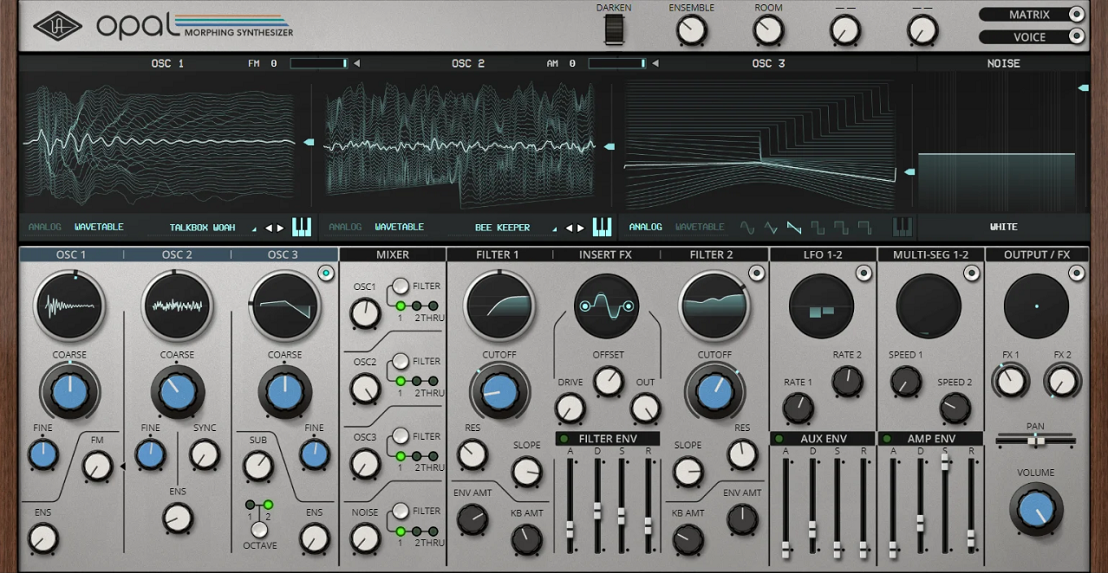
Continuous morphing runs through every layer of UAD Opal Morphing Synthesizer. Rather than selecting filter modes or oscillator shapes from a list and jumping between them, Opal lets you sweep smoothly and seamlessly through low-pass, band-pass, high-pass and notch responses on both multimode filters in a continuous loop, creating fluid tonal transitions that stepped parameters simply cannot produce.
The three oscillators each switch between analog modelling and wavetable playback. A library of 91 factory wavetables spans digital, synth, complex, vocal and instrument categories. FM on the first two oscillators, AM on oscillators two and three, and a hidden-source sync feature on oscillator two that delivers hard sync tones without sacrificing a separate oscillator slot provide the harmonic toolkit.
Per-oscillator ensemble stacking adds detuned voices for stereo width. The factory preset collection is well organised and immediately usable, though the lack of custom wavetable import will be a drawback for sound designers who rely on building personal libraries. Polyphony tops out at 12 voices.
Universal Audio’s professional studio background is most evident in the effects. Insert and output processors include modelled vintage spring reverb, tape delay, modulation effects and the 1176 compressor complete with the well-known all-buttons-in setting. These draw directly from UA’s respected plugin catalogue rather than being simplified synth-grade alternatives. The instrument runs natively on Mac and Windows systems with no requirement for UA hardware.
8. BLEASS Megalit
- Compatibility: Windows/macOS/iOS
- Format: VST3/AU/AAX/AUv3
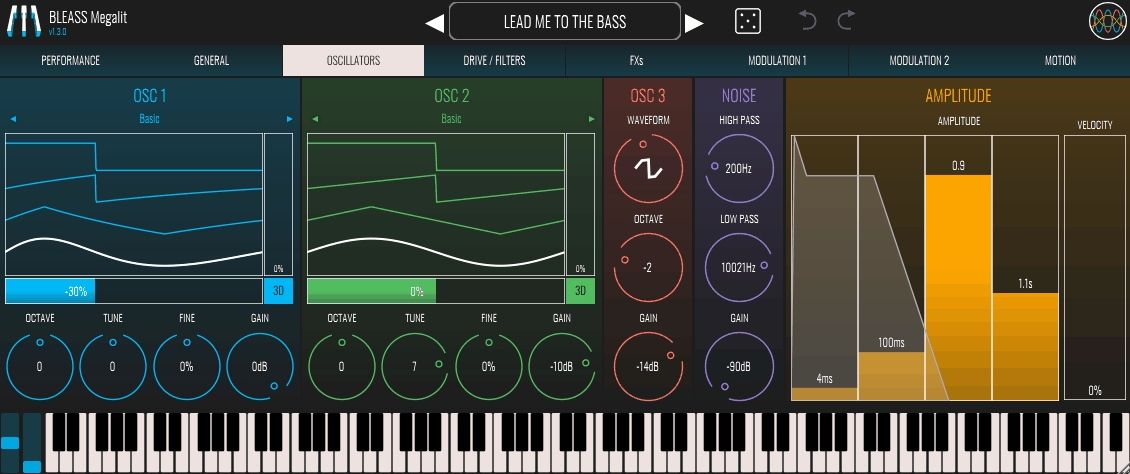
You can spot a BLEASS plugin from across the room. Bold colour blocking, chunky interactive controls, and a layout where every knob simultaneously functions as a live meter showing parameter movement in real time. BLEASS Megalit brings that unmistakable visual identity to a three-oscillator hybrid that bridges wavetable complexity and analog subtractive warmth in a surprisingly deep package.
The two wavetable oscillators draw from 135+ factory tables, with user wavetable import supported since version 1.2. Each includes position and fold parameters. Fold works like a variable pulse-width control applied to the current waveform shape, giving you a second tonal axis that can be modulated independently for evolving movement. The third oscillator produces classic subtractive waveforms for grounding digital patches in something more familiar, and a noise generator with dedicated high-pass and low-pass filtering adds presence and air.
Sound-shaping options go deeper than the streamlined interface implies. Up to seven unison copies per oscillator, independent FM from a dedicated modulator on each oscillator, and configurable routing through waveshaper and bit-crusher stages before the resonant filter pair open up semi-modular possibilities. Four LFOs with variable timing curves and smoothed output, a motion sequencer, an arpeggiator and a multiband compressor with upward and downward dynamics control cover modulation and output processing. The plugin’s light CPU footprint traces back to the developer’s roots in iOS audio software, and the AUv3 version runs on iPhone and iPad alongside the desktop formats.
9. SocaLabs Wavetable
- Compatibility: Windows/macOS/Linux
- Format: VST3/AU/LV2
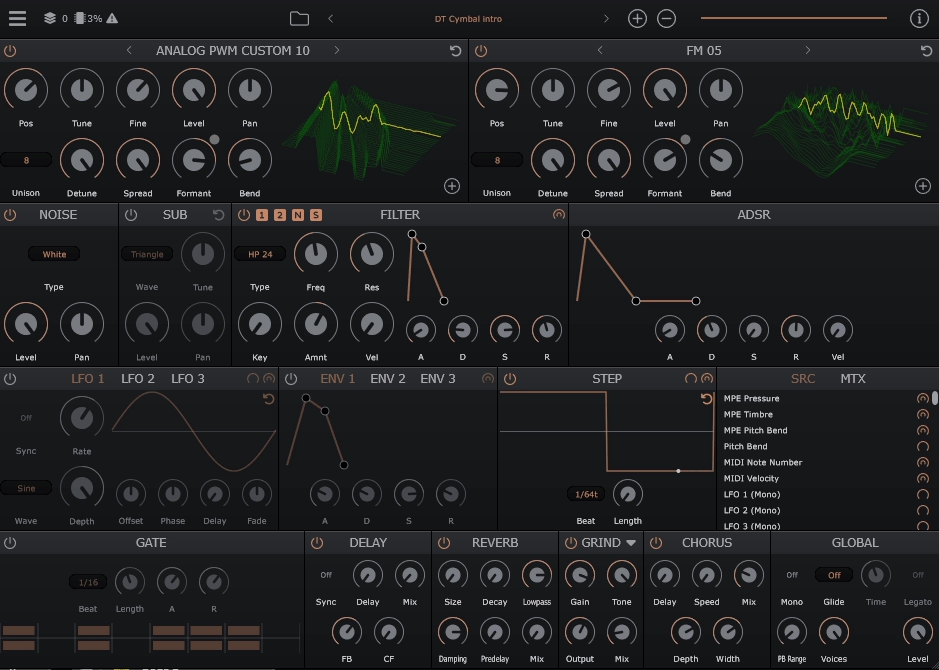
Completely free and built on open-source code published on GitHub, SocaLabs Wavetable is one of the most accessible ways to get into wavetable synthesis without spending anything or being locked to a single operating system. It runs natively on Windows, macOS and Linux.
Two wavetable oscillators with 150 factory tables form the foundation. Each supports unison up to eight voices with spread, formant and bend controls for thickening and shaping the stacked output. A sub oscillator and a noise generator fill out the lower and upper registers. Where this free synth genuinely impresses is the modulation system: six LFOs split between three monophonic and three polyphonic, 17 available waveform shapes, three assignable envelopes, and a matrix that separates per-voice and global targets. That level of modulation sophistication is uncommon in free plugins.
Five onboard effects, a 3D wavetable visualiser, MPE support and MTS-ESP microtonal tuning round out the specification. The developer has been actively adding features based on community input since launch, including LFO retrigger modes and expanded wavetable content. Effects processing and wavetable editing remain simpler than what you would find in commercial alternatives, but the core synthesis and modulation engine hold up well, and KVR user reviews consistently note strong sound quality and reliable performance. For producers testing the wavetable waters or working on a Linux setup where commercial options are scarce, this is an easy recommendation.
10. Matt Tytel Vital
- Compatibility: Windows/macOS/Linux
- Format: VST/VST3/AU/CLAP/LV2
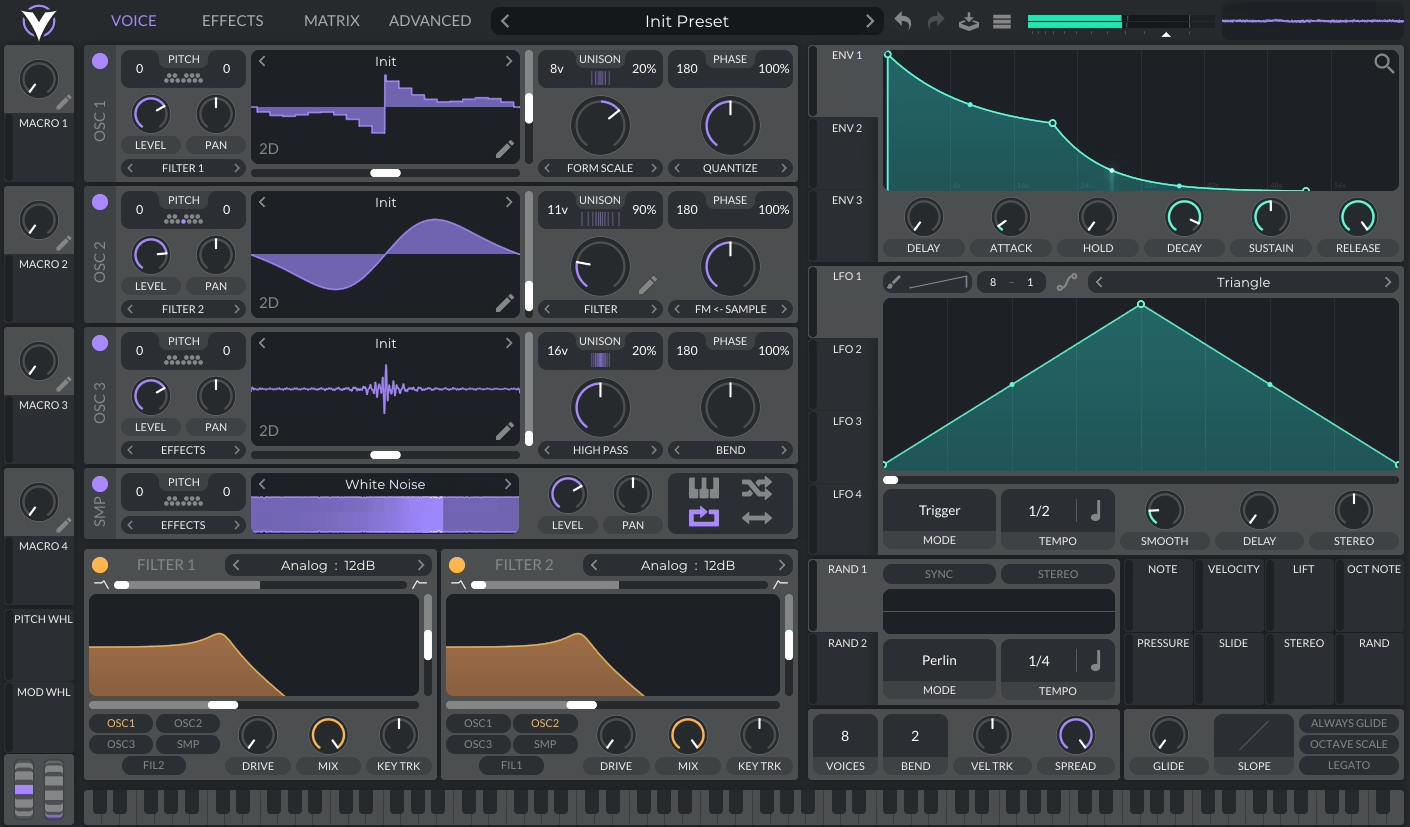
Matt Tytel Vital ships in four editions: Basic (free), Plus, Pro and a subscription tier. The critical detail is that the synthesis engine, filters, effects, modulation system and wavetable editor are identical across all four. Higher tiers unlock larger preset and wavetable libraries plus text-to-wavetable conversion, but nothing about the sound design capability itself changes between free and paid.
Three oscillators handle wavetable playback with spectral warping modes that stretch, compress, shift and skew harmonic content in ways conventional morphing cannot replicate. A built-in wavetable editor provides freehand drawing, audio file import, frame interpolation and the ability to generate tables from typed text. Each oscillator carries independent unison up to eight voices with adjustable phase and detune.
Modulation is where Vital becomes genuinely formidable. Drag-and-drop assignment with no ceiling on the number of connections, eight LFOs with drawable custom shapes and stereo splitting, six ADSR envelopes with hold stages, and four random generators create a modulation environment deep enough to rival instruments at any tier of the market. Two multimode filters with drive and key tracking feed into a bank of onboard effects covering reverb, delay, chorus, flanger, phaser, distortion and compression. The interface animates every active modulation path in real time, making it straightforward to trace signal flow even in heavily modulated patches. Multiple consecutive KVR Readers’ Choice Awards and a thriving third-party preset scene across nearly every genre reflect how widely this synth has been adopted since its 2020 launch.
11. Surge XT
- Compatibility: Windows/macOS/Linux
- Format: VST3/AU/CLAP/LV2/Standalone
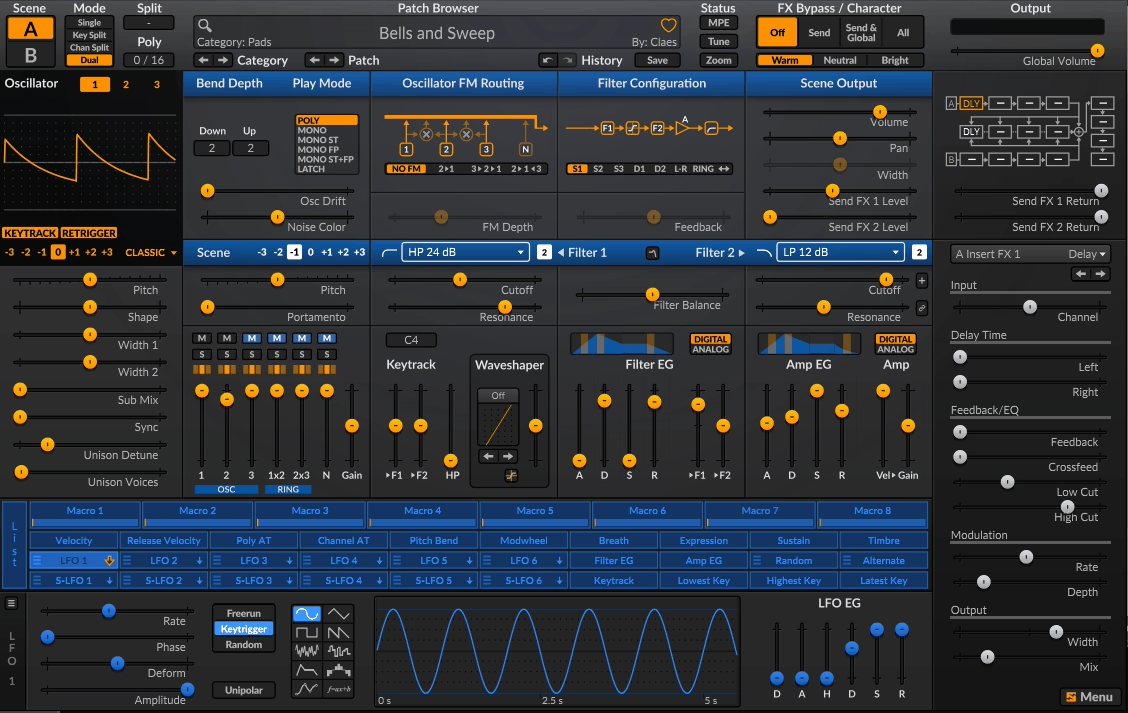
What began as a commercial synthesizer by Claes Johanson evolved into one of the most ambitious open-source audio projects available. Surge XT is maintained by a community development team that delivers new synthesis algorithms, filter models, effects and interface improvements at a pace that keeps the instrument competitive with premium paid alternatives.
Each of the three oscillator slots selects independently from a menu of synthesis types: classic analog waveforms, wavetable with formula-driven processing, window oscillators, FM with up to three operators, sine harmonic additive generation, and audio input for routing external signals through the internal processing chain.
That flexibility means one Surge XT instance can run a wavetable pad, an FM metallic texture and a processed vocal sample simultaneously without requiring separate plugin loads. Dozens of filter models span analog ladder emulations, state variable designs, CMOS types, OB-style circuits and more experimental options, each with its own distinct sonic fingerprint.
A dual-scene architecture sets Surge XT apart structurally. Two fully independent patches, each with their own oscillators, filters, modulation and effects, coexist inside a single instance and can be layered, split across the keyboard or crossfaded between in real time.
Sixteen effect slots distributed across four buses provide reverb, delay, chorus, rotary speaker, vocoder, ring modulation, frequency shifting, waveshaping and distortion. Per-voice and per-scene LFOs, customisable envelope shapes, step sequencers and formula-driven modulators offer deep expressive control.
MPE support, Scala and MTS-ESP microtonal tuning, thousands of factory presets and detailed documentation are all included. That this entire instrument is free and open-source makes it one of the most generous tools in the plugin world.
Hello, this blog is about more than just chorus, bass and synths. In fact, I started it to cover best VST plugins and Kontakt libraries, so you have easier time finding the right tools and instruments for your music production needs, mixing, as well as mastering. New tools and instruments are constantly evolving and need to get in front of audience, because even some of the best brands like Antelope Audio aren’t talked about enough – that’s what I want to change. I want to promote plugins that are less known but are perfectly relevant for certain topics.